
The family kitchen is a special place. For many culinary professionals, it’s where their passion for cooking was born.
It’s why we’re taking this moment — the week of Mother’s Day — to recognize the women who shape how we cook. From aunties and sisters, to nonnas, nannies and neighbors, the bonds formed over simmering aromas and time spent in the kitchen are often the clarion call to a future in culinary arts.
Long before attending culinary school or working in restaurant kitchens, the skills used in professional cooking are introduced at home, through repetition, observation and shared meals.
We asked our Chef-Instructors what they learned from their mothers and how those lessons show up in their work today.
The First Lessons Start Early
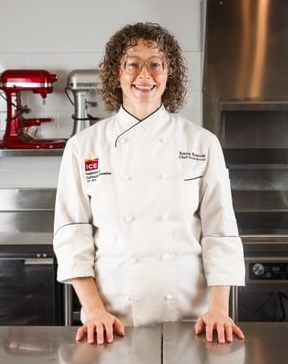
For former Pastry & Baking Arts Chef-Instructor Kierin Baldwin, one of the earliest lessons was simple: don’t waste.
“I joke with my students that my grandmother taught me how to properly scrape out a bowl,” she says. “She lived through the Great Depression and didn’t condone waste.”
That attention to detail carries directly into the kitchen. From her mother, Baldwin learned something just as lasting: an appreciation for cooking from scratch.
“My earliest taste memories are of food she grew, cooked and baked herself,” she says.
Technique, Built Over Time
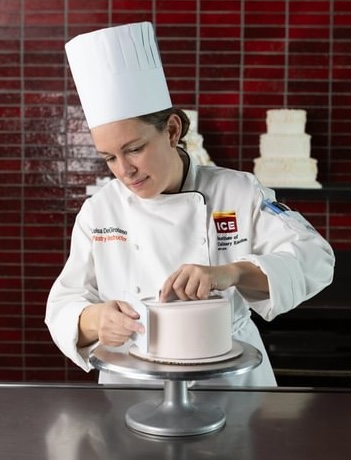
For Chef-Instructor Luisa DeGirolamo, learning to cook was a tradition.
“I grew up in an Italian family, so Sundays were the best day to learn,” she says. “We’d cook meatballs on the stovetop to get a good sear, then finish them in tomato sauce.”
Cooking is a skill built via progressive learning — over time, that learning yields good instincts and an understanding of flavor.
The Kitchen as a Shared Space
For Chef-Instructor Carrie Smith, cooking has always been a shared, family-centered experience — one that continues today.
“I involve my kids in making dinner and ask for their input,” she says.
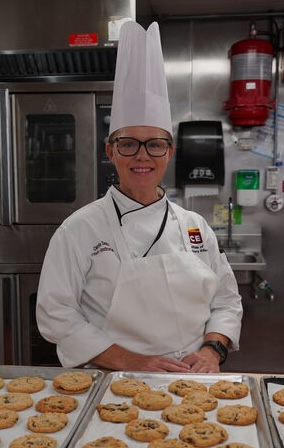
That approach reflects how she grew up. “My mom taught me how to manage time. We worked together as a family to make meals.”
She brings that same family-centered approach into her teaching. “I am a better parent because I'm a teacher — and a better teacher because I am a parent.”
Balancing the Work
For Lead Chef-Instructor Missy Smith-Chapman, balancing a kitchen career and family life requires a strong foundation.
“It’s all about the support system around you,” she says. “Without that support, balancing both would be very difficult.”
Her experience as a parent also shapes how she connects with students.
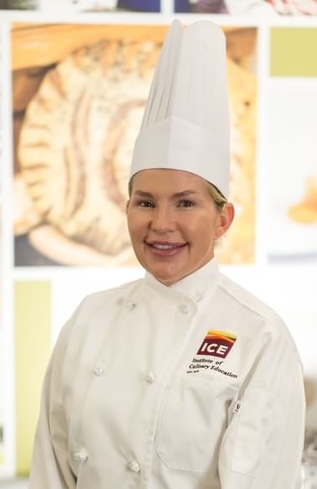
“With many of our students being young, having a child helps me relate to them in a different way."
More Than Recipes
For many chefs, the most lasting lessons aren’t technical. Rather, they’re about discipline, care, efficiency and awareness — qualities that often begin long before professional training.
The truth, of course, is that some of the most important things we know about food come from the people who loved us — and taught us — first.
By enrolling in a formal culinary training program, students have the opportunity to either acquire — for those who lack a longstanding relationship with cooking — or strengthen existing skills; first, in the classroom, and later, in a real-world externship.
👩🍳 Want to create your own culinary memories? Learn more about career-training programs offered on campus in Los Angeles and New York City, as well as online.