Pastry careers are sparked in many ways — baking at home, working at a patisserie, watching a cooking show that made you think ‘I could do that.’ However, what separates curiosity from career is knowing where to start.
People interested in a pastry career are often home bakers who are drawn to the precision and craft of making beautifully plated sweets.
They’re also people of all backgrounds and experiences. Some are recent high school grads who grew up watching “The Great British Bake Off”; some are career changers eager to trade the tedium of nine-to-five for a more creative and inspiring work life; and some are international students, military veterans or university alumni looking to pursue their passion.
Turning that passion into a professional career as a pastry cook is a meaningful step forward, and one that can benefit from technical training, discipline, and a real understanding of how professional kitchens operate.
That’s because a career in pastry goes far beyond making desserts. It’s about developing consistently reliable skills and working in fast-paced environments where timing and technique matter just as much as creativity.
For individuals who enjoy structure, detail, and hands-on work, becoming a pastry cook can provide the foundation for a long-term culinary career with numerous potential trajectories.
What Is a Pastry Cook?
A pastry cook is a professional culinary team member who works specifically in the pastry section of a kitchen. This role is generally considered entry-to-mid level, but it can play a critical role in the success of restaurants, bakeries, hotels, and catering operations.
Pastry cooks focus on executing recipes accurately, preparing components for service, and supporting the broader pastry team. In professional kitchens, consistency, speed and precision are typically preferred over improvisation.
For many advanced career pastry professionals, working as an entry-level pastry cook helped them hone the discipline, habits, and technical skills required for their current role.
Job Description & Responsibilities
A pastry cook’s day revolves around preparation, consistency, and precision. Typical responsibilities include:
- Preparing doughs, batters, creams, and fillings
- Baking cakes, pastries, cookies, and breads
- Making custards, mousses, glazes, and garnishes
- Tempering chocolate and working with sugar
- Assembling and plating desserts for service
Additionally, pastry cooks work within a clear kitchen hierarchy, often reporting to a pastry sous chef or executive pastry chef. As such, soft skills like communication, steadiness, and the ability to perform under pressure are vital to one’s success.
Where Do Pastry Cooks Work?
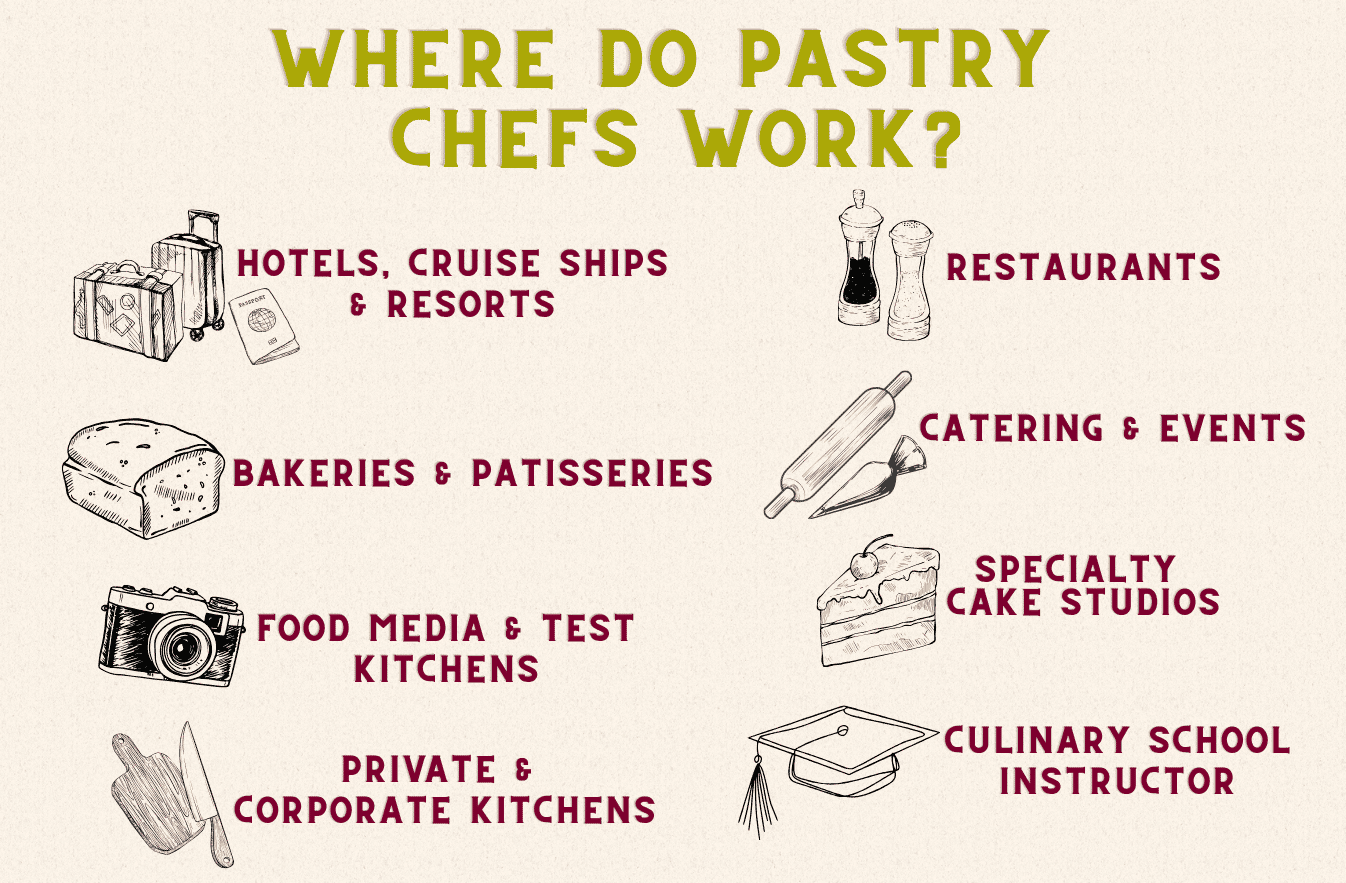
Pastry cooks are employed across a wide range of foodservice environments, each offering a slightly different experience. Among these are:
Restaurants
From casual dining to fine dining, pastry cooks in restaurants focus on preparing plated desserts, preparing components for service, and supporting menu execution during busy service periods. Pastry cooks who work in restaurants often find the fast pace and the sense of camaraderie among their culinary colleagues to be deeply rewarding.
Hotels and Resorts
Hotels often have larger pastry teams. Pastry cooks may rotate between banquet production, breakfast pastries, desserts for multiple outlets, and special events. Those who like to travel might consider hotel, cruise line and resort work. Often, the opportunity to relocate — either domestically or internationally — and experience new people, places and foods is one of their biggest draws.
Bakeries and Patisseries
In bakeries, pastry cooks often focus on high-volume production of breads, viennoiserie, and pastries, with early morning schedules and strong emphasis on consistency. The best bakeries in the world can become food travel goals — destinations around which enthusiasts center their vacations. For pastry cooks who want to make their mark on the culinary culture, bakery work can provide the path to fulfillment.
Catering Companies and Event Kitchens
These environments prioritize large-scale production, tight deadlines, and adaptability — skills that are highly transferable across the industry. There is something electric about working behind the scenes at once-in-a-lifetime events — crafting the wedding cake that makes a room gasp or curating a dessert display that guests talk about for years.
Resorts and Cruise Ships
Pastry cooks on cruise ships and at destination resorts serve guests around the clock, producing everything from morning pastries to elaborate desserts for themed dinners. For those who dream of visiting a different city every day, baking with global ingredients, and sharing their work with appreciative folks from every corner of the world — resorts and cruise ships might be the ticket.
Specialty Cake Studios
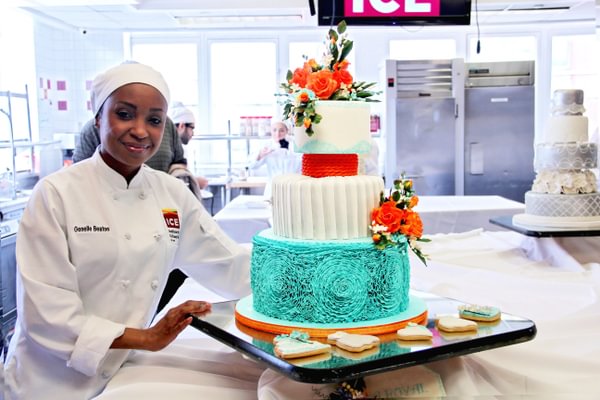
Custom cake studios and artisan dessert shops are a natural home for pastry cooks with strong decorating instincts and an eye for design. There is something deeply personal about creating the centerpiece of someone's wedding, birthday, or once-in-a-lifetime celebration. For pastry cooks who crave human connection through food, this work environment can be incredibly meaningful.
Food Media and Test Kitchens
TV shows, food magazines and cookbook publishers employ pastry cooks to develop, test and photograph recipes; and social media enables upstart influencers to write their own professional tickets (without the need of being “hired” by someone else). Few culinary career paths offer this scope — for pastry cooks who want their work to inspire a generation of bakers or pastry chefs, roles in these environments are a natural fit.
Culinary School Instructor
Pastry cooks who work in culinary school kitchens — whether at the trade school, secondary, post-secondary or recreational education levels — assist in teaching and demonstrating techniques to the next generation of professionals. For those who find deep fulfillment in sharing their knowledge and seeing others grow, few roles in the industry are as personally meaningful (because students never forget a great mentor). Additionally, the impact that culinary school instructors have on the culinary industry cannot be overstated. As mentors to the next generation of food leaders, they preserve essential culinary traditions while driving the industry toward new, creative heights.
Private and Corporate Kitchens
From private households and corporate dining rooms to the galleys of luxury yachts, pastry cooks in private settings serve some of the world’s most discerning clients. For those drawn to the challenge of creating personalized experiences — where a dessert is crafted not for a hundred anonymous guests but for a single guest whose preferences you know by heart — private and corporate work offers a level of intimacy that other settings find difficult to replicate.
The degree of foundational training can influence whether a person lands a role in any of the above settings.
Skills That Are in Demand for a Pastry Cook
Becoming a successful pastry cook requires more than a love of desserts. Professional pastry kitchens demand a balance of technical expertise, discipline, and mental focus. While creativity is often associated with pastry, consistency and execution help to create long-term success.
Technical Skills of a Pastry Cook
At the professional level, pastry is a science as much as an art. Pastry cooks are expected to understand not just how to follow recipes, but why techniques work. Key technical skills include:
- Baking Fundamentals: Creaming, folding, laminating, proofing — these are the methods every professional kitchen runs on. Without them, things can fall apart… fast.
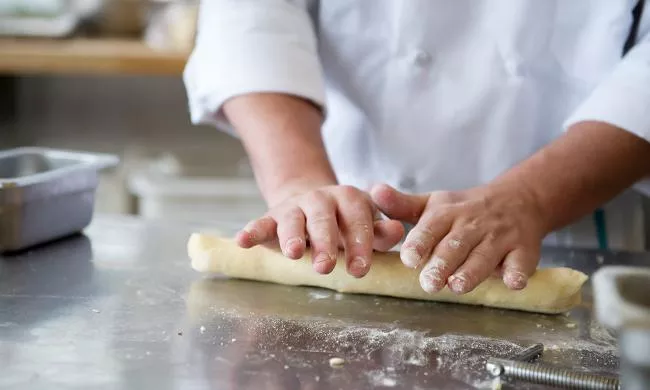
- Dough and Pastry Preparation: Puff pastry, choux, shortcrust, brioche — each dough has its own logic, its own temperament, and its own rewards. Understanding the differences between them is a key pastry cook skill.
- Chocolate and Confectionery: Tempering chocolate, building ganaches, crafting pralines and truffles — these skills help to define a pastry cook's range. Fluency here helps to unlock a richer creative vocabulary, the results of which tend to speak for themselves.
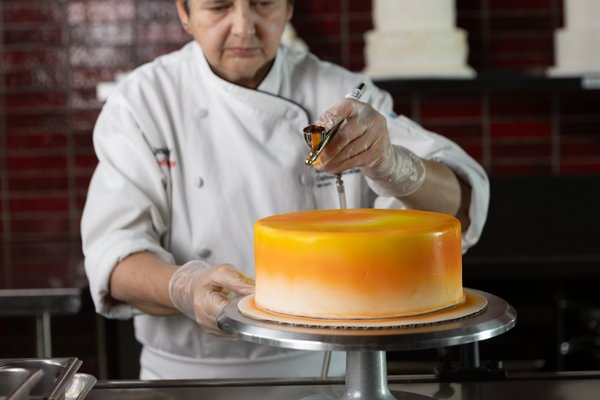
- Dessert and Pastry Decoration: Piping, glazing, sugar work, chocolate showpieces — this is where technical skill and artistic vision come together. Developing a strong decorative hand takes time and repetition. It’s also a deeply rewarding aspect of the craft, and one of the areas that tends to make a portfolio stand out.
- Recipe Measurement and Scaling: Precision is not a constraint in pastry — it is a creative tool. The pastry cook who understands how ingredient ratios affect texture, flavor, and structure can adjust a recipe with confidence rather than guesswork. That fluency is often the difference between executing someone else's vision and developing your own. Recipes lock you in; ratios set you free.
- Ingredient Knowledge: Flour types, fats, sugars, leavening agents — understanding how these interact is what gives a pastry cook real command over their craft. It is also what makes troubleshooting feel intuitive rather than stressful. (It can accelerate career advancement.)
Soft Skills for a Pastry Cook
Technical skills build the foundation. Soft skills are the habits that lay the foundations for increasing technical skills.
- Attention to Detail: In pastry, the details are not a finishing touch — they are the product. The cook who learns to care about precision consistently, under pressure, is building one of the most powerful tools in the profession’s arsenal.
- Time Management: Cakes in the oven, doughs proofing, fillings chilling — a pastry cook is always managing multiple timelines at once. Strong organizational instincts can make a busy service feel manageable (versus chaotic), and can provide pastry cooks with the mental space needed to execute their best work.
- Creativity: Great pastry is not just technically correct — it is compelling. The curiosity to experiment with new flavors, presentations, and combinations is the fuel for a lasting pastry career.
- Organization: A clean, well-organized station is not just efficient — it’s an indication of professionalism. Kitchens notice the pastry cooks who maintain their standards when the pace picks up, and those habits tend to travel well into more senior roles.
- Communication: Pastry cooks work within a larger kitchen ecosystem. The ability to communicate clearly — with supervisors, culinary teams, and front-of-house staff — can turn a skilled cook into a highly valued cook.
- Problem-Solving: A broken emulsion, an ingredient shortage, a recipe that isn't behaving — these things happen in every kitchen. A pastry cook who can think clearly and adapt quickly under pressure tends to be trusted with more responsibility over time.
- Teamwork: The best pastry kitchens run on collaboration. Being a generous, reliable colleague is not just a soft skill — it’s a contributor to the kind of professional reputation that can shape an entire career.
These qualities often matter as much to employers as raw talent — and they are habits that formal training actively cultivates through structured feedback, instructor correction, and a learning environment designed to help students grow.
Why Professional Training Can Make a Difference
While it’s possible to learn pastry on the job, professional training can accelerate development by teaching fundamentals correctly from the start — and that head start could matter more than people expect.
There's a broader conversation happening right now around the value of specialized training. Many industries are moving toward focused, hands-on programs that build practical skills quickly.
Pastry is no different. The culinary world has always placed experience at its center — and structured training is one way to build that experience with intention.
A structured culinary program is also designed to accelerate the learning process in ways that a “learn on the job” approach cannot. In formal education, students can:
- Build foundational skills and techniques in a deliberate, sequenced curriculum
- Explore the why behind methods — not just how to execute them, but why they work
- Practice under the guidance of Chef-Instructors with real industry experience
- Develop the professional habits and kitchen confidence that employers tend to value
- Make mistakes in a supported environment, where feedback is part of the process
That preparation counts when it comes time to enter the job market. Candidates with formal culinary training may find that their resume reflects a level of readiness that stands out — not just the skills listed, but the signal that they invested seriously in their craft.
As Russell Hirsh, Pastry & Baking Arts alum and current Junior Sous Chef at Wolfgang Puck Catering, put it: “Use your time at culinary school to ask as many questions as you can — making mistakes is part of the process, and it’s better to make them at school than on the job.”
For many employers, that combination of foundational training, externship experience, and professional credentialing can help reduce onboarding time and support consistency from day one.
The culinary world is relationship-driven. Getting your foot in the door — through an externship, through an instructor connection, through a program's alumni network — is often how careers begin to take shape.
For the food business owner accepting externs, trust is key; specifically, the trust that graduates are afforded by culinary leaders who know the caliber of the school’s curriculum. As Missy Robbins — alum, James Beard Award winner and co-owner of NYC’s Lilia and Misi Pasta — put it: “I know I can rely on the school and its alumni.”
Programs that Support a Culinary Career
For aspiring pastry professionals who want to train in a hands-on, professionally equipped environment, the Pastry & Baking Arts program is designed to provide the kind of structured, technique-forward education that professional kitchens value. The program is available at the school's New York City and Los Angeles campuses — and for students who are unable to relocate, an online option is available in select U.S. states.
Training in the Heart of Two Culinary Capitals
There is something that classroom instruction alone cannot replicate: the energy of training in a city that lives and breathes food. ICE campuses in New York City and Los Angeles place students at the center of two of the most dynamic culinary communities in the world — cities where the restaurants, the people, and the culture that define American food are happening all around them, every single day.
That proximity matters. Students don't just learn inside professional kitchens — they are surrounded by the industry they are training to enter. Guest chef events, campus programming, and the dense network of culinary professionals that both cities attract can offer the kind of exposure and connection that can be difficult to find elsewhere.
The New York City campus spans 754,000 square feet in Lower Manhattan, with 12 teaching kitchens, a bean-to-bar Chocolate Lab, a Hydroponic Garden, and a Culinary Technology Lab, which houses specialized industry level equipment.
The Los Angeles campus offers 38,000 square feet of professional facilities in a city defined by food innovation, farm-to-table culture, and one of the most diverse culinary landscapes in the country.
For students who are unable to relocate and who reside in approved U.S. states, our online Pastry & Baking Arts programs are designed to bring the same curriculum and instructor expertise wherever a student is based.
What the Curriculum Covers — Including Techniques That Take Time to Develop on the Job
The Pastry & Baking Arts programs can be completed in as little as eight months. Its curriculum comprises many of the techniques and knowledge areas that professional kitchens value most — including several that are quite difficult to develop through on-the-job experience alone.
In a busy kitchen, there is rarely time to explain the why behind a technique. Recipes are executed, but the science behind them is typically unexplored. Culinary school programs can fill that gap — aiming to build both technical ability and the scope of knowledge that enables troubleshooting, adaptation, and creating with confidence.
The Externship: Where Training Meets the Real World
After completing classroom instruction and hands-on practice, students can enter a 210-hour externship — working on-site at a real culinary operation, in a real professional kitchen, alongside working professionals.
The school's Career Services team works with students to help identify a placement that aligns with their goals and background. Externship sites span restaurants, bakeries, hotels, catering companies, and more.
For many students, the externship is where professional relationships begin to form and where the transition from training to career begins to take shape.
Pastry Cook Career Path
One of the most appealing aspects of pastry as a profession is its clear and achievable career ladder. Pastry Cook is an entry-level role that, in many cases, has the opportunity for rapid growth.
“This is particularly prevalent in Pastry departments,” says Chef and ICE SVP of Culinary Operations Barry Tonkinson. “Here, teams are generally smaller than they are on the culinary side, so pastry cooks have more opportunities to work closely with their team lead.”
He adds that these opportunities “strengthen a pastry cook’s professional skills and experience.”
Unlike some fields, advancement in pastry is typically based on skill, experience, and leadership ability. So what is the career progression for a pastry cook? It varies depending on one’s professional goals, but among the roles that can follow a pastry cook are:
Pastry Sous Chef
As pastry cooks gain experience, they may move into a sous chef role. Responsibilities typically expand to include:
- Supervising daily production
- Training junior staff
- Managing prep schedules
- Assisting with quality control
This role introduces leadership while maintaining hands-on work.
Assistant Pastry Chef
Assistant pastry chefs typically take on greater responsibility for:
- Menu development support
- Recipe testing
- Inventory and ordering
- Team coordination
This position often bridges execution and creative leadership.
Executive Pastry Chef
At the top of the ladder, executive pastry chefs:
- Design dessert menus
- Lead pastry teams
- Oversee budgets and food costs
- Set creative direction
- Maintain brand and quality standards
- Enforce Department of Health requirements
While fewer positions exist at this level, the role offers the greatest creative freedom and professional recognition.
Pastry Cook vs. Pastry Chef
While it’s common to hear the terms used interchangeably, they describe different roles:
- A pastry cook executes recipes, prepares components, and supports production.
- A pastry chef designs desserts, manages the pastry team, oversees quality, and leads the program.
In a classic kitchen brigade system, pastry cooks are usually entry- to mid-level professionals, and pastry chefs are more senior leadership and advanced career roles.
This doesn’t mean — as earlier mentioned — that pastry cooks are less important. In fact, they are often the backbone of successful pastry programs: they execute with precision and ensure desserts reach the guest as intended. Without skilled pastry cooks, even the most visionary pastry chef cannot deliver consistently.
Additional job benefits include:
- Satisfaction: Pastry cooks get to pursue their passion daily. People choose this field because they love to bake and to see the joy their creations give others.
- Artistry: Generally, pastry cooks are creative people who want to make things that look as beautifully delicious as they taste. In this role, “art every day”isn’t just a philosophy – it’s a lived experience.
- Service: Sharing one’s food and art with others is an intensely personal interaction – and when your art is your food, there’s a feeling of deep connection to oneself and others.
- Camaraderie: Most kitchens offer a powerful social camaraderie that is often lacking in desk jobs and other fields. Working in this environment exposes cooks to people from all over the globe, sharing a common goal.
- Job security: Pastry cooks master a craft that is always in demand (sweet and savory treats) – and they can leverage their craft anywhere in the world.
- Working with your hands: Pastry cooks are “doers” (versus deskers). They work with their hands every day, and many report this to be one of the most gratifying aspects of the job.
- Personal growth: Constant learning, growth and adaptation are vital to this work.
- Opportunity: Pastry cooks get to see firsthand what works and doesn’t work in a small business, yielding entrepreneurial knowledge and opportunity by mere proximity.
- Respect: Pastry cooks are respected and recognized for having a unique and useful skillset.
Is a pastry cook role the right career start for you?
Though typically an entry-level role, the pastry cook position is an important one. It’s where early career professionals have the opportunity to learn how real kitchens function, how to manage time under pressure, and how to apply technical skills consistently.
Qualified pastry cooks are highly valued, with even the most experienced pastry chefs often relying on them to execute their vision.
This is also where training can make a noticeable difference. Pastry cooks who enter kitchens with strong fundamentals may adapt more quickly, take on responsibility sooner, and feel more confident as they grow into advanced leadership roles.
Taking the Next Step
If you’re considering a career as a pastry cook, exploring our Pastry & Baking Arts program can be a useful next step.
Admissions Representatives are available to discuss your goals, walk you through program options at the New York or Los Angeles campuses, and help you understand the financing and scheduling choices available.
To connect with an Admissions Representative or request more information, visit ice.edu.
PASTRY COOK CAREER FAQs
What is the difference between a pastry cook and a pastry chef?
A pastry cook is typically an entry- to mid-level professional who executes recipes, prepares components, and supports daily production. A pastry chef is a more senior role that involves leading a team, designing menus, and overseeing the pastry program. In most professional kitchens, the pastry cook role is where a culinary career in pastry tends to begin — and where foundational skills are developed.
How do I start a pastry cook apprenticeship?
Apprenticeships and externships are two different things. In pastry, apprenticeships typically result from industry associations and network connections. Many culinary programs — including our Pastry & Baking Arts program — require completion of a structured externship that places students in professional kitchens training alongside working professionals. These externships apply academic learning to a real-world capstone.
Do I need to go to culinary school to become a pastry cook?
Formal training is not required, but structured culinary programs can help aspiring culinary professionals develop foundational techniques in a deliberate sequence and build a professional network through externships. It can also yield a more competitive application — particularly for roles in higher-end establishments.
How long does it take to become a pastry cook?
Here, professional diploma programs can be completed in as little as eight months.
Where can I find pastry arts schools near me?
We offer in-person Pastry & Baking Arts programs at campuses in New York City and Los Angeles. An online program is available to students in select states.
Are there online pastry courses for beginners?
We offer online Pastry & Baking Arts diploma and degree programs to students in select states. This remote program is designed to deliver the core curriculum and instructor expertise of the in-person program, with the flexibility to study from home. The program culminates in an in-person externship at a professional kitchen.