
4 Private Chefs Share Advice (and Hard Truths) About Their Unique Culinary Careers

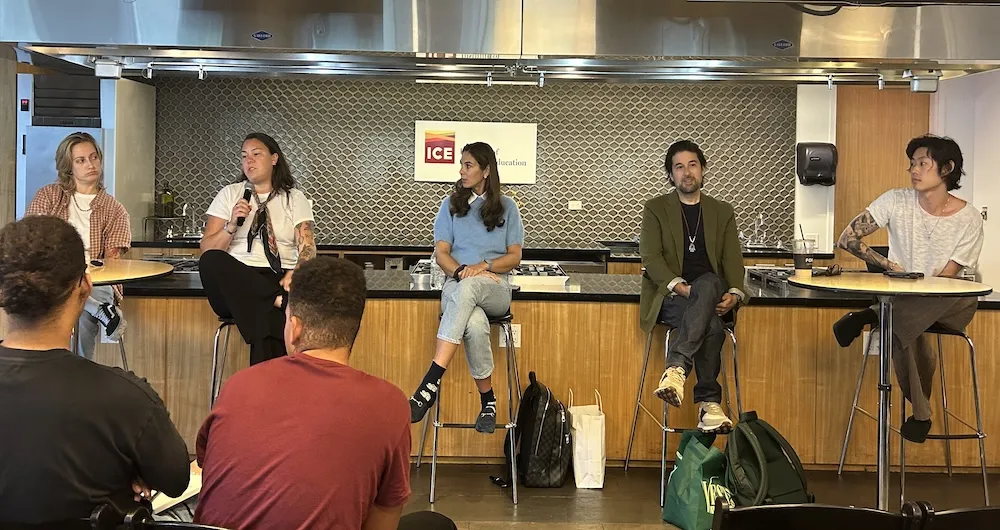
Understanding the careers that exist within the culinary industry — and often, meeting the people who can connect you to them — is one of several reasons to attend culinary school. Last week, our New York campus hosted an education and networking event with this precise purpose in mind. Here, four personal chefs spoke about the benefits and challenges they’ve experienced in their profession. From career advice to wild client requests, these culinary pros provided an insider’s look at the world of private cheffing.
Twenty years ago, chefs climbed the rungs of restaurant hierarchies in hopes of one day opening their own place. At the time, private cheffing was decidedly uncool.
That changed when Covid-19 shuttered the doors of hospitality businesses around the country. Unable to work, many chefs reflected on their work, leading them to pursue culinary careers like private cheffing.
At the same time, food content was blowing up on social media (sourdough, anyone?), and numerous culinary professionals leveraged their skills to become full-time content creators. Private chefs in particular, including ICE alumna Maddy DeVita, racked up followers with day-in-the-life videos that lent clout to this career path.
The discussion on private cheffing was held in partnership with Culinistas, a service that connects clients with private chefs for short-term gigs (like dinner parties and weekly meal prep) and longer-term setups.
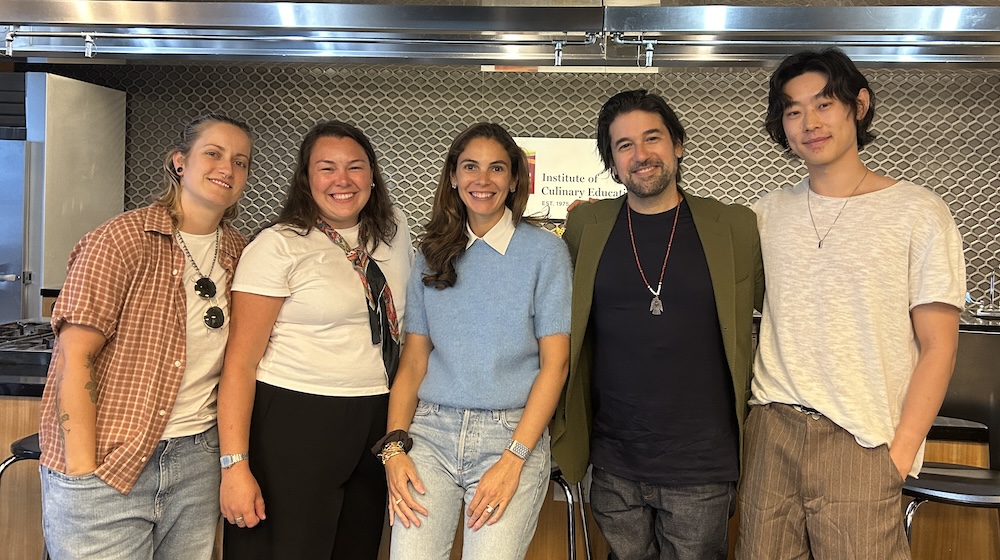
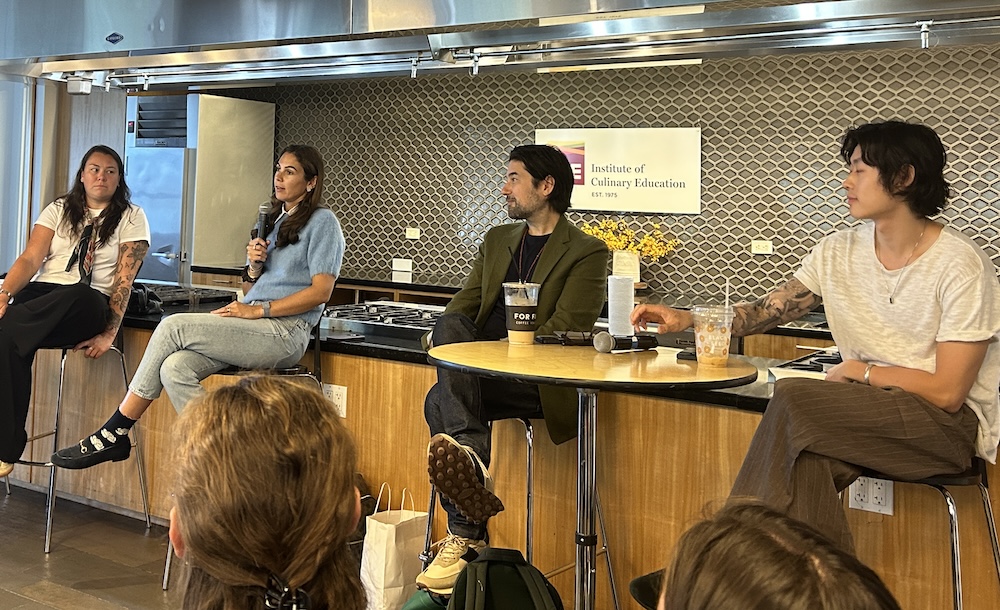
ICE alumni and current students heard from Culinistas Founder Tiana Tenet and four chefs on the panel: Bri Marriott, Ayla Ochoa, Charleston Yang and ICE alum Dave Shamoon. They pulled no punches, divulging both the good and the bad, the favorite and the least favorite aspects of their job. They also offered rich career advice.
Restaurant experience helps… a lot
There’s no single path to becoming a private chef, but all four panelists stressed the importance of restaurant experience. Learning foundational cooking techniques in culinary school is a great place to start, and reinforcing and building on them in a restaurant is invaluable.
(It’s no surprise that most ICE career-training programs culminate with an externship, which gives students real-world experience in restaurants or other culinary and hospitality businesses.)
Working in restaurants “teaches you speed, it teaches you knife skills; and when you’re in the weeds at a restaurant, you gotta be able to hustle and bustle, you gotta be able to think on your feet,” shared Chef Bri, who transitioned to private cheffing after 10 years in the industry. With mastery of kitchen fundamentals, timing, and adaptability, private chefs stay prepared and ready to accommodate all sorts of client requests — like an earlier-than-expected dinner time.
For Chef Ayla, who worked at Via Carota and Alta before her five years as a private chef, the benefit of restaurant work was learning from the whole team.
“As a private chef, you are the dishwasher, the prep cook, the chef, the maître d’, the everything,” she said. Being able to wash dishes quickly, work cleanly and stay cool under pressure — all skills she picked up in restaurants — enables her to provide gourmet experiences for her clients without feeling the heat.
On a related note, restaurant experience can also help to mitigate imposter syndrome. Chef Dave, whose resume boasts stints at Blue Hill and Gramercy Tavern, emphasized how the repetitive nature of restaurant cooking creates a skills tool kit.
At restaurants, “you’re cooking the same dish maybe 200 to 300 times every night, so you’re sautéing the same lamb chop dish every single time, and you learn to be so good at it. You have a base of things that you just know you’re good at, he said, adding that "if you lean on the things you learned in restaurants, [the things] that you know you can do, I think that will give you confidence.”
Of course, resumes matter. Securing a gig is a lot easier when the restaurants you've worked in are top tier. According to Tiana, clients always pick the chef whose resume shows the name of a high-profile restaurant.
Instagram vs. reality: a day in the life as a private chef
Private cheffing isn’t what you see on social media. On this, all four panelists agreed. It's less glamorous, they explained, than Instagram would have you believe, and many of the platform's most popular “private chefs” no longer work in the industry.
One consistent issue is clients who lack essential cooking equipment. Chef Bri said she often arrived to private kitchens that didn't have a blender or peeler (and so she peeled carrots with a spoon).
Chef Charleston told a tale about a client's very specific wish for a particular chip flavor: “I was in Chinatown, [a neighborhood] brimming with shrimp chips. I walked to three different Targets, and I finally found them. At the end of the day, I hit 21,000 steps.”
Shorter hours doesn't mean less work
Depending on the type of private chef job, the workdays can be longer or shorter than their restaurant equivalents.
Chef Dave, who favors long-term gigs with a single family, shared an overview of his schedule, wherein he prepares lunch and dinner for his clients Tuesday through Saturday. His day begins with grocery shopping (about 90 minutes), and he arrives to the client’s house by 10:00 a.m.
“For lunch for two people, maybe a kid and some guests, [you] definitely need a little muscle to get lunch done… in the afternoon, there’s a little bit more time to work on dinner. You may not think that a family dinner will take several hours, but if it’s just you, it does,” he said.
With dinner service at 6:30 p.m., Chef Dave’s day wraps between 8:00 and 9:00 p.m. (For contrast, when he worked in restaurants, he would leave between 11:00 p.m. and 1:00 a.m.)
Unusual client requests
As a private chef, your job is to make sure the client is happy. That sometimes means complying with odd requests – like Chef Charleston’s chip adventure. This question, about the wildest requests these chefs have been asked, was met with laughs and gasps from the audience.
Chef Dave offered a story of a client who requested squirrel. Apparently, said client's grandfather had shot squirrels and their grandmother cooked them, so they wanted to give it a try. Another client asked him to make cheese… from breast milk. He politely declined both requests.
Chef Charleston's stories centered on unrealistic asks. To his mind, wild requests owe to the fact that clients haven't worked in restaurants, and therefore, have no idea about the kind or scale of food that can be prepared at home.
Asked, for example, if he could make Peking Duck in a client's home, he replied, “Absolutely not. That’s literally impossible. You don’t have the equipment, and it would take days.”
Finally, all private chefs raised their hands when asked if they'd cooked for clients’ pets.
Peeling back the onion on private cheffing
Not surprisingly, the matter of money was a hot button topic.
Tiana and the Culinistas noted that salaries vary dramatically — in part because there are so many different types of private cheffing (for example: one-off events, celebrity functions, long-term cooking for a family). The panelists all agreed that if you're willing to work hard, there is good money to be made.
As Chef Ayla explained, when you want to earn more money, you simply work more events or gigs. The private chefs noted, however, that there can be dry weeks wherein you might make substantially less than you did the week before.
Overall, the consensus was that chefs can make more in the private world, but it won’t be as consistent as a restaurant paycheck.
The panel discussion covered even more topics, including travel opportunities and tips for nailing an interview, thus proving that there’s more to know about this career path than Instagram shows.
Culinary school is a great first step if you’re interested in private cheffing, and your ICE Career Services Advisor can provide helpful resources for landing your first gig. My main takeaway from the panel: you won’t know if it’s the career for you until you give it a try.