
Culinary Lessons Learned: These are the 10 Skills ICE Alumni Say They Still Use Every Day

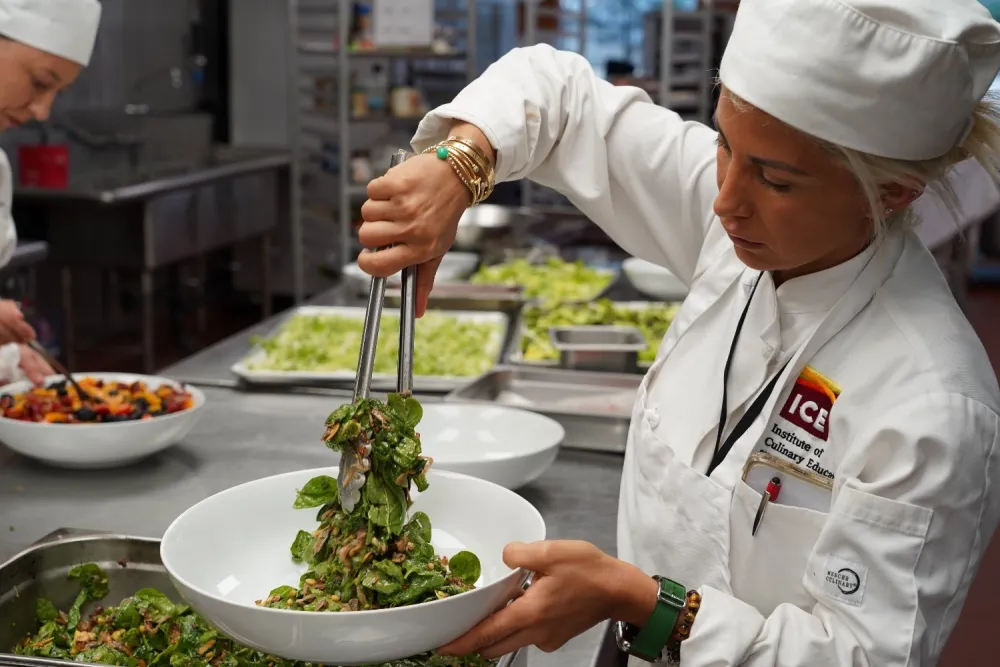
Culinary school is more than recipes — it’s where future culinary professionals are taught skills that, when properly absorbed and applied, can be used throughout their careers.
When reflecting on their time in culinary school, alumni described the lessons that helped them transition to real-world jobs and that continue to inform and influence how they work today — in some cases, more than 20 years after graduating.
These lessons range from habits and mindset, to business acumen and technical foundation, and they are practiced in careers spanning media, restaurants, hospitality leadership and culinary medicine.
Cultivating Your Culinary Intuition
In restaurant kitchens, mindset can matter as much as skill. Curiosity, discipline, organization and respect for the craft help chefs navigate the fast pace and high expectations of the industry.
Culinary school is often where students begin developing this mental framework — learning how to approach challenges, refine their processes and continuously improve.
For these alumni, the mindset they built during their Institute of Culinary Education training continues to shape how they cook, lead teams and solve problems in the kitchen.
Georgianna Hiliadaki, Chef/Founder, IODIO
Culinary Arts and Restaurant & Culinary Management, 2003
“I learned the fundamentals — not just of technique, but of discipline, precision and respect for the craft. Those early lessons shaped the way I moved in a kitchen, how I approached ingredients and how I communicated with a team.
But more than anything, I learned that cooking at a high level isn’t about perfection — it’s about consistency. That mindset helped me build a solid foundation when everything else around me was still new and unknown.”
For Hiliadaki, this lesson helped lay the groundwork for a prestigious distinction; she is the only Greek female chef to hold two Michelin stars.
Matt Hyland, Chef/Co-Owner, EMILY Pizza, Emmy Squared, Sí Baby-Q
Culinary Arts, 2005
“Cooking is a learning process, and we are always learning new techniques no matter how long we have been in the business. If you see a new technique, always question why it’s done this way. Culinary school helped me look at cooking with both love and curiosity.”
According to Hyland, the fact that Emmy Squared serves Detroit-style pizza was an accident, but one he rolled with. Out-of-the-pizza-box thinking — pun intended — is an entrepreneurial imperative, and it’s little wonder the brand currently has 24 locations in and around New York, Nashville, Philadelphia, Louisville and Washington D.C.
Kerry Brodie, Founder/Executive Director, Emma’s Torch
Culinary Arts, 2016
“‘Mise en place’ applies to everything in life. If you’re not prepared and organized, things will get messy — literally and figuratively. I think about that a lot in my day-to-day work and how we prioritize things as a team. We need everything in its place, ready to create something larger than the sum of its parts.”
This approach to mental organization is part of what helped Brodie earn a CNN Heroes award for her work empowering refugees through culinary education at Emma’s Torch.
Michelle Palazzo, Director of Pastry Operations, Frenchette Group
Pastry & Baking Arts and Restaurant, 2009
“Setting yourself up for success, using the right tools for the job and time management, especially in pastry, are crucial. Those lessons were honed at ICE and have been foundational in my career.”
Hear more of Michelle's reflections on her career and her culinary school experience in the video below.
Developing Strong Kitchen Habits on Day One
The small habits chefs develop early — like arriving early, tasting constantly and keeping uniforms clean — can be the difference between chaos and control during a busy service. And building these habits early can prevent the need to unlearn bad ones later in a career.
At the Institute of Culinary Education, students are reminded that these habits aren’t optional; they’re essential. Over time, they become second nature.
Rebecca Roth Gullo, Owner/CEO, The Gallows Group
Culinary Arts, 2005
“Taste constantly. Label everything. Never skip the prep.”
Gullo should know, since she’s the entrepreneur behind three beloved Boston institutions: Banyan Bar + Refuge; Blackbird Doughnuts (seven locations); and Sally’s Sandwiches (three locations).
Georgianna Hiliadaki, Chef/Founder, IODIO
Culinary Arts and Restaurant & Culinary Management, 2003
“Knife skills matter — and so do sharp knives! I’ll never forget Chef Ted’s line: ‘A dull knife means a dull mind.’ To this day, I always make sure I’m carrying the sharpest knives in the kitchen.”
As Hiliadaki learned, sharp knives reflect a chef who is proactive, prepared and committed to quality. These traits (and sharp knives) helped her open IODIO, a seafood restaurant in Athens that marries tradition with creativity.
Practicing Essential Kitchen Techniques
While mindset and habits shape how chefs work, technical skills form the backbone of professional cooking. From knife work to sauce-making, mastering core techniques gives chefs the tools to execute dishes with confidence — and adapt as they grow in their careers.
Our "structured progression" curricula emphasize these foundations, ensuring students understand not only how techniques work, but why. These courses create a base for continued culinary growth across cuisines, cooking styles and career paths.
For many alumni, those fundamentals continue to influence how they cook every day.
Dan Segal, Executive Chef, Bali’s Jade by Todd English
Culinary Arts, 2002
“Learning about emulsified sauces led me to Harold McGee’s book, "On Food & Cooking," and I use lessons from that book every single time I cook. A smarter chef is a better chef, and the chefs at the Institute made sure I left smarter.”
Segal’s curiosity about the “why” behind cooking helped launch a global career that includes executive chef roles at esteemed restaurants in Hong Kong, Singapore and now Bali.
Dr. Nate Wood, Director of Culinary Medicine, Yale New Haven Health
Culinary Arts, 2018
“Sauce-making is the biggest thing that I still use. But there are other things, too, like time management. We're using knife skills all the time. Knowledge of ingredients is huge. For instance, if we're using apples and cheese, I may be like, ‘This is giving Normandy. Let's add some pork.’ That kind of academic stuff also affects the way I cook and teach. And, of course … dishwashing.”
Dr. Wood explains how he helps patients manage their health through food and cooking in the video below.
Training for the Real World
Culinary school can also prepare students for the professional realities of the industry. Learning how to move on a line, communicate clearly with teammates, and calibrate oneself under pressure can smooth the transition into a working kitchen.
For many alumni, the experience helped build the confidence and awareness they needed to take their first professional steps.
Susan Stockton, Former SVP of Culinary Productions, Food Network
Culinary Arts, 1993
"A big takeaway from school was the importance of how to behave while working on the line. Listening, attitude, a sense of immediacy, teamwork. These are all great lessons. Later, when hiring staff for Food Network Kitchen (whether a researcher, shopper, culinary producer or cook-stylist), I found myself giving extra consideration to those with professional kitchen experience.”
As the person largely responsible for turning Food Network into the media behemoth it is today, Stockton knows what it takes to be (and what to look for when hiring) a great food writer, restaurant reviewer and recipe developer.
Suzanne Cupps, Chef/Owner, Lola’s
Culinary Arts, 2005
“I learned basic knife skills, kitchen terms and techniques, none of which I knew coming in. This allowed me to have the confidence to interview in a New York City restaurant, and the externship was very helpful in the transition to a kitchen, with less pressure than going into a line cook position."
She adds: "I think the most important lesson from my time in culinary school is to have awareness in the kitchen. To know how to move around gracefully, use all your senses, and understand what is going on around you.”
Cupps’ experience with a comprehensive and structured curriculum (something that may be difficult to gain independently on YouTube) helped her step into and confidently lead in the kitchen.
For many chefs, the first months in a professional kitchen can feel overwhelming. But the foundation built in culinary school — from technical skills to kitchen mindset — can make all the difference.
Learn more about the career-training programs offered on our campuses in Los Angeles and New York City, as well as online.
* Experience varies by student, with outcomes contingent on factors including graduate aptitude, job market, place of residence and work history, among others.