
Baking History: The U.S.A.’s 250th Birthday Cake Will Be Made By a Culinary School Alum

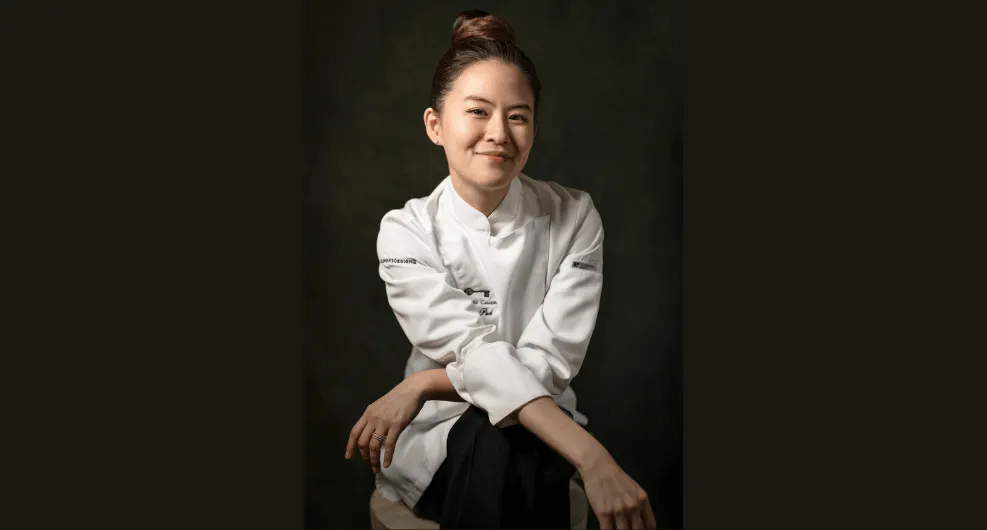
Grace “Grey” Pak, founder of the bespoke fine-art cake studio Duchess of Cameron, is no stranger to monumental culinary challenges.
Her hyper-realistic edible sculptures have captivated millions. But her latest project is, quite literally, one for the history books.
Pak has been named an Official Programming Partner of America250. In this capacity, she’s spearheading the creation of the Nation’s 250th Birthday Cake (to celebrate the U.S. Semiquincentennial).
It’s a project that carries deep personal significance; Pak’s husband currently serves as a Marine reservist in the Marine Innovation Unit. It’s also a task that requires extraordinary coordination.
Pak is working alongside Marine Corps Enlisted Aides — all of whom are volunteering their time outside of normal duty to assist with the effort — and representatives from all 50 states and U.S. territories will hand-finish the cake before it’s displayed in the nation's capital.
Projects of this magnitude combine creativity, food science and structural engineering.
“My culinary school training provided the foundational discipline that allows me to execute work at this level,” says Pak.
The Art and Engineering of Modern Cakes
While the USA250 cake presents a unique historical opportunity, it also reflects a massive shift in the world of pastry and baking arts. Modern cakes are no longer mere table sweets; they are entertainment, centerpieces and storytellers.
A fascinating trigger within the human mind may be partly responsible. Pak, who is a former psychologist, explains it in a concept she calls “perceptual dissonance.”
“When a knife cuts through [what looks like] a shoe and exposes cake inside, our expectations are proven incorrect and our brains have to reconfigure that information,” says Pak. “This mental gymnastics is actually enjoyable. Our brains love the cognitive experience, and we want more of it.”
Of course, the viral videos that spotlight these edible masterpieces rarely capture the behind-the-scenes work it takes to create them.
“Sculptural cakes require complex internal structures, and cake artists spend days engineering well before we get to the baking,” Pak notes, pointing to things like “determining the necessary wire gauge and the diameter of threaded rods,” as well as “whether to weld specific joints or use bolts and screws.”
Put simply, you can’t just wing it. Executing sculptural cakes at scale demands specialized training, which is exactly why aspiring pastry artists turn to programs like the Institute's Advanced Cake Decorating course.
“Building a time-intensive cake is as much about project management as it is about baking,” Pak explains, adding that “the Institute teaches the science behind how these materials react to temperature and timing.”
“Without that foundational ability to manage this workflow under pressure,” she says, “even the best artistic concept will collapse before it reaches the table.”
Building a Foundation with Formal Culinary Training
Before her intricate sugar work became highly sought after, Pak had two uniquely different careers. But at age 30, the web designer-turned-neuroscientist dropped everything to become a professional cake artist.
There was one hurdle: she didn't know how to bake.
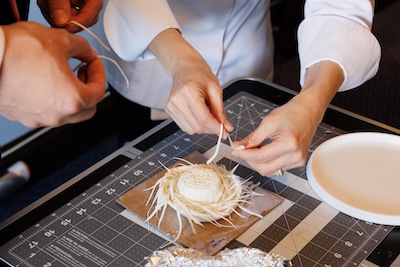
So, rather than spending years on trial and error, Pak sought formal training. In 2017, she graduated from the International Culinary Center, earning a prestigious Grand Diplôme with Distinction.
The skills she acquired in the intensive program didn’t just enable her baking; they fast-tracked her career.
By training in one of America’s culinary capitals — Pak studied and completed her hands-on externship in New York City — she positioned herself in the center of the industry's action.
“I landed my first TV cake show just three weeks out of culinary school because one of our final judges was a TV chef,” Pak shares. “That’s not an opportunity self-taught bakers can easily come across.”
While raw artistic talent is essential, the Institute's networking power and geographic advantage can transform a passionate student into an industry leader.
Shaping the Next Generation of Pastry Leaders
For prospective pastry students, Pak offers a clear directive: stop looking at Pinterest or social media for inspiration. Those styles already exist. Instead, cultivate a personal point of view and design something the world hasn’t yet seen.
She encourages students to view their work through the lens of a gallery space, treating cake as an edible art medium.
“Think of all the renowned artists — they each have a distinct style and signature that set them apart — so find yours,” she advises.
Developing that signature style requires pulling inspiration from outside industries, leaning into experimentation, and embracing occasional failure. Building that level of creative confidence starts with a rock-solid technical foundation.
🎂 For those ready to step into the kitchen and shape the future of edible art, the Institute offers career-training programs and advanced Continuing Education programs designed to elevate your craft.