
Global Food Stars Celebrate 50 Years of ICE at "Grand Reunion" Party

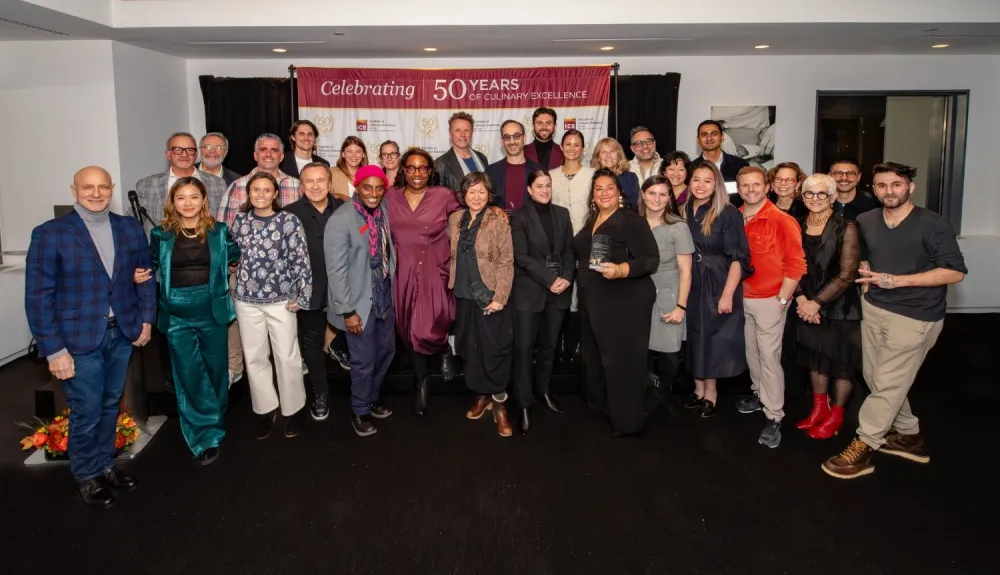
At ICE’s New York campus, there’s an electric buzz of a grand reunion. It’s the excitement of the school’s 50th anniversary party.
On Monday, December 1, the Institute of Culinary Education celebrated its 50th anniversary at its New York campus. Culinary luminaries — including Marcus Samuelsson and Daniel Boulud — joined industry icons like Tom Colicchio and Angie Mar to celebrate the school’s achievements and honor 50 distinguished alumni.
Among the ICE alumni in attendance was James Beard Award winner Mashama Bailey, Top Chef judge Gail Simmons, and head pastry chef at three-Michelin-starred Le Bernardin, Orlando Soto.
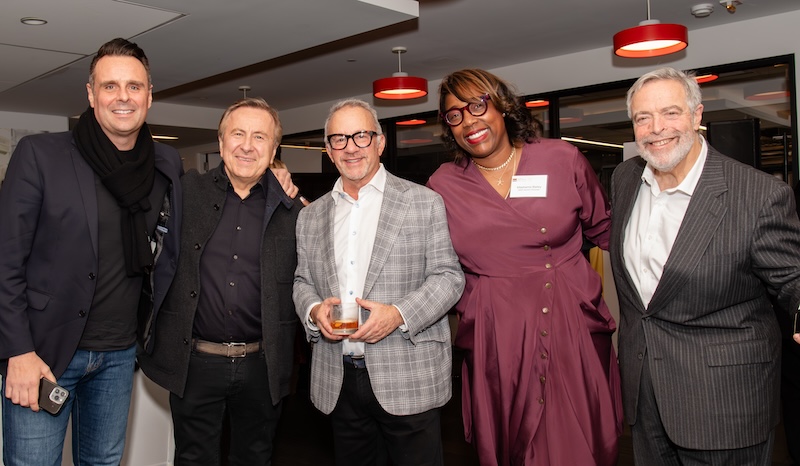
But this wasn't just a party; it was a timeline of and a tribute to ICE's impact on the global culinary scene.
Over the course of its 50-year history, ICE has graduated more than 20,000 students; earned multiple #1 positions on esteemed school rankings’ lists; and provided the foundational skills for countless cookbook authors, food media stars, and James Beard Award nominees and winners.
The celebration honored this history, as well as the 30-year leadership of ICE CEO & Chairman Rick Smilow. In his remarks, Smilow related the story behind the school's tagline, "Find your culinary voice," and how it fits the accomplishments of so many alumni.
Watch the video below for scenes from the party.
Five Decades of Culinary Evolution
Since 1975, ICE has been committed to the vision of founder Peter Kump: teaching techniques, not recipes, that empower culinary students to find their culinary voice.
What began as a five-student class in Kump’s Upper West Side studio apartment has since advanced to become the Institute of Culinary Education, a nationally recognized school with campuses in two culinary capitals — New York City and Los Angeles; remote online career programs; and coursework that covers all facets of the hospitality industry.
The school evolved to meet the growing needs of culinary professionals, moving beyond Culinary Arts and Pastry & Baking, to develop core programs focused on Health-Centered Culinary Arts; Restaurant & Culinary Management; and Tourism, Travel & Hospitality Management. With the opening of the Los Angeles campus (2018) and the acquisition of the respected Natural Gourmet (2019) and French Culinary Institutes (2020), ICE has cemented its place of importance in America’s culinary education landscape.
A Celebration of Community
The party’s vibe was convivial and warm — akin to a family reunion. Between food and drink from several ICE kitchens, alumni and industry leaders networked, laughed and reminisced about memories and experiences at ICE.
Attendees offered testament to the school’s influence.
TV personality Esther Choi held court near the award stage, while lauded chefs like Missy Robbins and Mary Attea mingled with rising stars Samuel Caucci and John Reilly. Marc Murphy chatted with old friends and took photos with excited fans. (All of these are ICE alumni.)
Every facet of the food world was represented, from chefs, pastry chefs and restaurateurs, to food policy experts, cookbook authors and food media icons.
Reach, Range and Restaurateurs
Suzanne Cupps, ICE alum and the chef/owner of Lola’s in NYC, noted the vital professional pipeline the school provides. “Being a restaurant owner, it’s so important to have a school in New York City,” she said. “We need that kind of talent pool to [staff] our restaurants.”
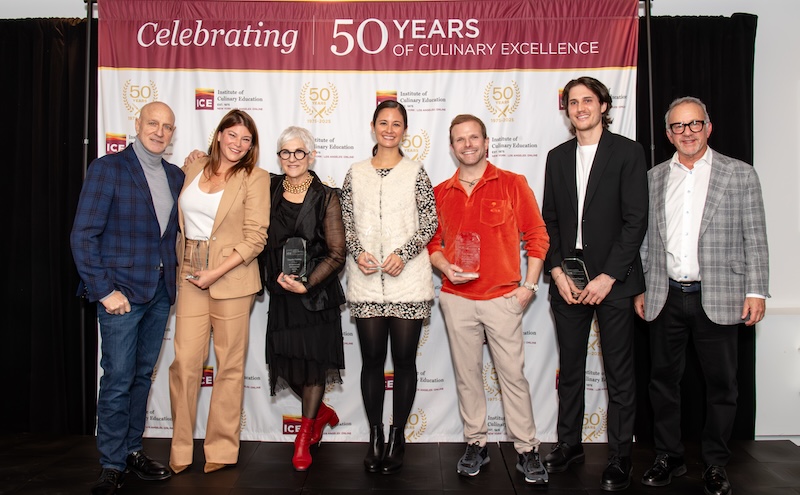
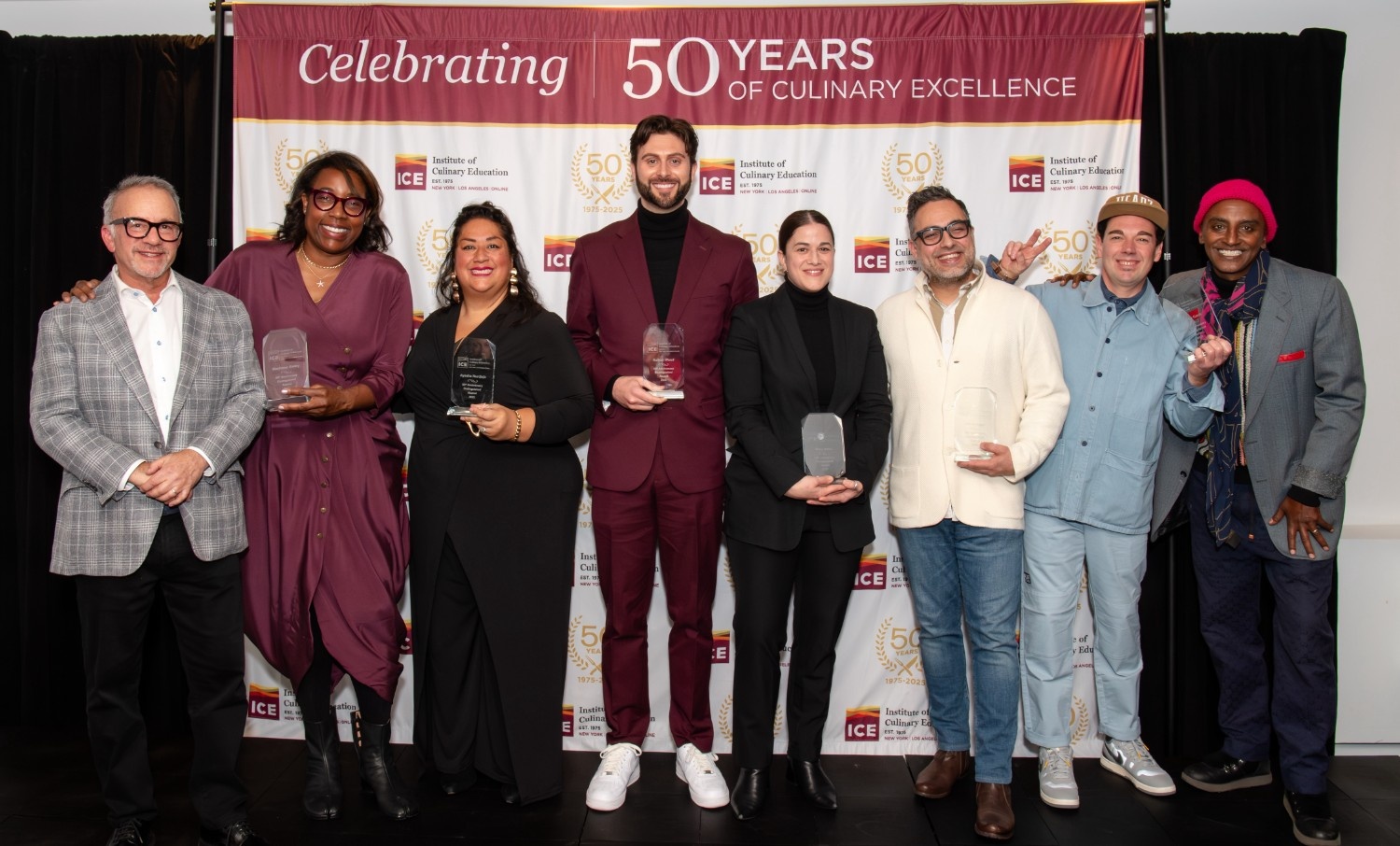
Tom Colicchio repeated this sentiment while presenting awards to alumni honorees. “It’s a real testament to the school,” he said, “to have these extraordinary people up here who have already made significant contributions to the culinary landscape.”
Alumni Honoree Voices
Throughout the night, alumni reflected on how ICE impacted their culinary journeys. Many were reminded of the enduring value of their training, no matter where their careers have taken them.
- “ICE gave me the alphabet,” said Zac Young, reflecting on his transition from theater to pastry. “It was on me to learn the language, but the toolkit I got here was everything.”
- Dr. Nate Wood, now Director of Culinary Medicine at Yale, emphasized how ICE allowed him to bridge the gap between medicine and nutrition. “I had medical knowledge, but I worried people would see me as just a doctor who likes to cook,” Wood explained. “I wanted more credibility to have a bigger impact, so I realized I needed formal training.”
- Robby Cook, the chef behind Coral Omakase, highlighted the importance of real-world preparation and training. “ICE gave me a base,” Cook said. “That’s where I learned to work with a team, to respect a kitchen.”
- Andrew Rigie, Executive Director of the NYC Hospitality Alliance, highlighted the breadth of the network. “You have very high-profile, well-known chefs and restaurateurs, but you also have people that are just grinding it out in kitchens across the globe,” Rigie observed. “It’s a special community that has incredible people doing a lot of really great work at all levels of the restaurant industry.”
A Tribute To Legacy
The evening’s emotional anchor came when Daniel Boulud addressed ICE’s impact on the industry. The legendary chef’s presence was a nod from the highest tier of the industry to the institution that cultivates the talent it runs on. Boulud praised the passion and investment behind the school, before offering the night’s most humble and memorable quip: “I wish I could come to ICE and graduate from ICE,” Boulud joked to the crowd. “I might become a great chef one day.”
The Next 50 Years
The celebration felt less like an ending and more like a shift change. While the night honored ICE’S 50-year journey, the real story was the energy in the room. ICE’s alumni network is one of its greatest assets — living, breathing proof of culinary education’s vital contributions to our collective food landscape.
Closing Remarks from ICE founder Rick Smilow
As has been written, to celebrate the school’s 50 years, we chose 50 alumni to represent the range of career directions, success and achievement that we see amongst our alumni. But it was hard to pick just 50, because there are so many alumni who have reached the Executive Chef level, become successful entrepreneurs, or food authors or myriad other ways to have a culinary career. So please understand, with 20,000 alumni, around the nation and world…it was hard to choose. Beyond that, I learned long ago that “success can be defined in many ways." There are countless ICE alumni who may not be in a position to win particular awards, but whose careers are interesting and fulfilling. So from my perspective, I want to say…I’m proud of all of you!
*Header image credit: Ken Goodman.