
At NYC’s Coral Omakase, Chef Robby Cook Never Crowds the Plate (and Always Has a Plan)


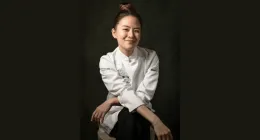
To celebrate 50 years of ICE, we’re honoring 50 distinguished ICE alumni. Meet Robby Cook, the sushi chef behind Coral Omakase, a ten-seat counter hidden inside Midtown’s MetLife Building. A graduate of ICE’s Culinary Arts program, Chef Robby trained under Morimoto and went on to lead his flagship sushi bar before launching Coral, a deeply personal omakase experience where tradition meets innovation.
Robby Cook never set out to become one of New York’s most respected sushi chefs. He just wanted to continue learning and growing.
The Iowa native and graduate of ICE’s Culinary Arts program moved to NYC after training at the California Sushi Academy. Working nights behind a sushi counter and attending morning classes at ICE, Chef Robby quickly absorbed the rhythms of professional kitchens, gaining classical technique and industry insights that would accelerate his career.
That discipline paid off. Cook landed at Morimoto, where he rose through the ranks to become head sushi chef, running the omakase bar at one of Manhattan’s most prestigious restaurants for over a decade.
“Being a non-Japanese person, I had to work my butt off,” he says. “But when Morimoto promoted me, it meant everything.”
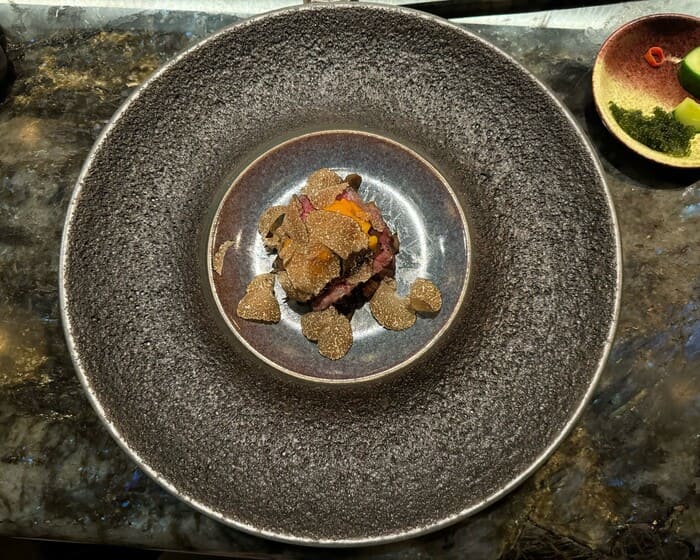
Today, Chef Robby channels that precision and humility into Coral Omakase, the ten-seat counter he opened in 2023 inside the MetLife Building’s Point Seven. His style is minimalist yet exacting: kinmedai topped with calamansi and sea salt; seasonal vegetables dressed in house-made sauces; and fish sourced directly from Tokyo’s Toyosu Market and vendors like Yama Seafood.
Each dish starts with a considered balance: “I try not to overcrowd,” he says. “Usually it’s a fish, a flavorful sauce, and one veg. That’s it. But it has to be right.”
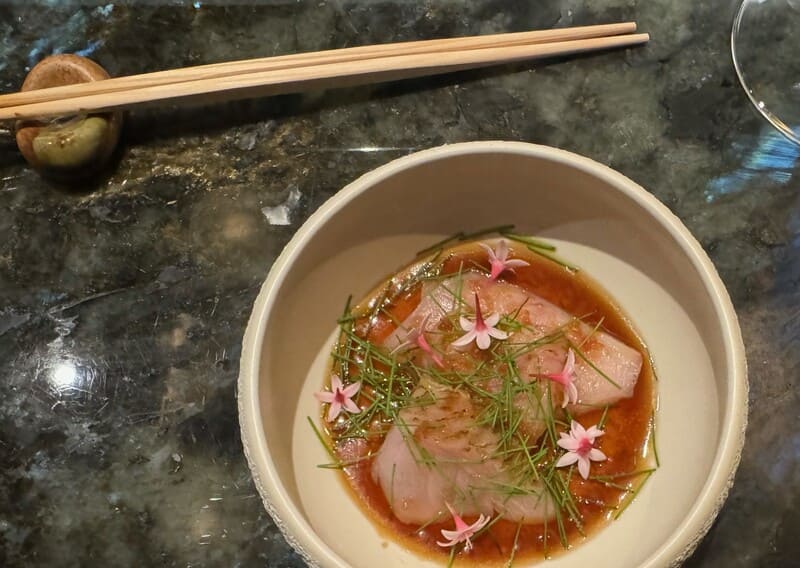
Chef Robby’s mentorship from chefs like Makoto Okuwa and Kaiseki master Ishii, and his foundation in classical culinary technique, is evident in every knife stroke.
“ICE gave me a base. That’s where I learned to work with a team, to respect a kitchen,” he recalls.
He’s passing that on now. Several of Chef Robby’s former colleagues work at Michelin-starred restaurants or have opened their own sushi bars.
“It’s great to see. I try to tell younger chefs to slow down, think things through.”
Coral is a reflection of that mindset: quietly focused, technically sharp, and deeply rooted in the seasons. Whether you’re seated at the sushi bar or grabbing a takeout box from Chef Robby’s adjacent concept, Bento by .7, you can taste the decades of repetition and refinement that delivered him from Emmetsburg, Iowa to the center of NYC’s fine-dining scene.
In a recent conversation, we discussed mentorship, spring fishing, and the importance of great knives. Here’s what Chef Robby had to say.
* The following interview has been condensed and edited for clarity.
ICE: What do you consider to be your biggest professional achievement?
Chef Robby: I’d say there are two. First, running the Morimoto Sushi Bar at such a young age, and being promoted by Chef Morimoto was huge. It was a big, busy restaurant, and I did that for 13 years. That’s something I’m really proud of. And now, opening Coral Omakase and running my own small omakase bar, it’s been great to see how much people love the space and the food.
ICE: Can you describe your creative process?
Chef Robby: It always starts with seasonality. I’ve got a buyer in Tokyo who sources from Toyosu Market, plus a uni buyer, and I use local produce from Union Square. I usually start with the protein and build from there — just a fish, a flavorful sauce and a veg. I try not to overcrowd. My sauces are really important; they’re not just soy and wasabi. But all of it comes back to having a strong foundation in traditional technique before you start creating new things.
ICE: To what factors do you attribute your success?
Chef Robby: Creativity, hard work, and drive. Being a non-Japanese person getting into the sushi world, I had to work my butt off and keep my head down. You also have to be a sponge, just watch and absorb. In Japanese kitchens, they’re not always teaching you directly. You learn by repetition, by doing. My dad was a jeweler. [He] worked with his hands. I think I picked that up, creating something people love and getting that instant reaction. It’s amazing.
ICE: What does a typical day look like for you?
Chef Robby: I’m up early with my kid at 7 a.m. We have breakfast and do the school drop-off. Then I check OpenTable to see what reservations we’ve got. I place fish orders three to four days in advance since a lot comes from Japan. I break down the fish, set up plateware, sharpen my knives — different [knives] for prep and service. Then we do two staggered seatings of six to 10 guests.
I love seeing a beautiful fish delivery and then watching someone’s face light up when they eat a great piece of toro or uni.
ICE: When did you realize you had a passion for food, and when did that turn into “I want to work in food?”
Chef Robby: I started cooking more when I worked at a natural co-op, kind of like Whole Foods before Whole Foods blew up. I met farmers. I cooked a lot on my own. Then Iron Chef got big around 2000, and I started practicing sushi at home. Eventually, I quit college, went to sushi school in California, and moved to New York for ICE.
ICE: When you think of ICE, what’s the first word that pops into your mind?
Chef Robby: Foundation. It gave me a solid base for how to cook, how to work in a kitchen, and how to be part of a team.
ICE: What made ICE feel like the right fit for you?
Chef Robby: I didn’t want to leave the city. I already had a sushi job when I moved here, so ICE let me go to school in the mornings and work at night. I didn’t want to go to CIA or be out of New York. ICE helped me get into the industry faster.
ICE: Do you have a core memory from ICE?
Chef Robby: We were just cooking and eating non stop. I remember burning the hell out of my hand during one of the tests, chicken au poivre, I think. I still have the scar.
ICE: Do you have a guilty pleasure food?
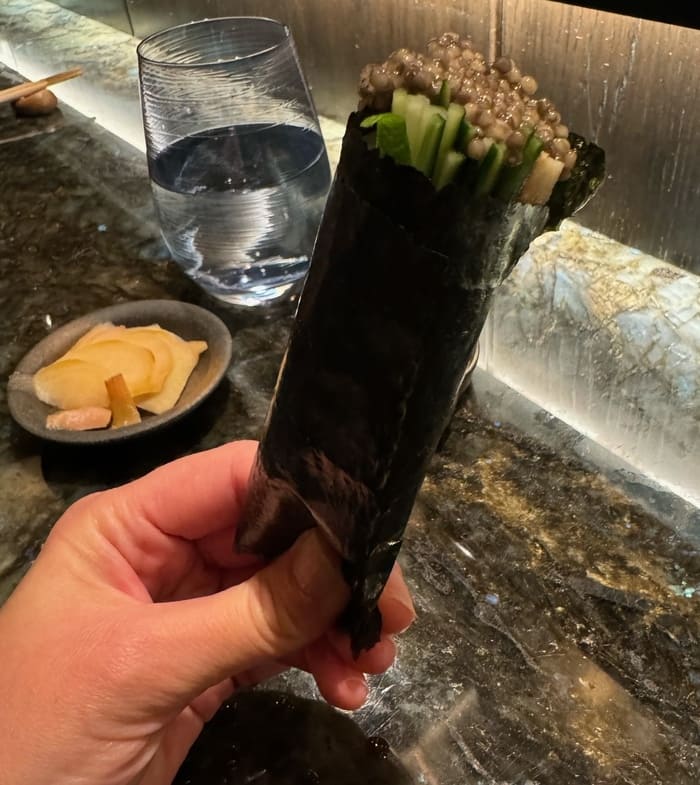
Chef Robby: Sea urchin and lobster rolls. I could eat a hand roll every day.
ICE: Conversely, is there a food or ingredient that no matter how hard you’ve tried, you just don’t like?
Chef Robby: Melons. Watermelon, cantaloupe, muskmelon, I just don’t dig it. Everyone goes crazy for them in summer, but I could leave it. Same with shirako — that’s cod or blowfish sperm. It’s very seasonal and traditional in Japan, but I’ve never gotten into it.
ICE: What did you learn at ICE that helped you, specifically, at the start of your career?
Chef Robby: My externship was at a French-Japanese restaurant. Having the kitchen knowledge from ICE plus my sushi training made it easy to fit in right away … School gave me more tools to do the job better.
ICE: Who inspires you?
Chef Robby: My dad, for sure. His work as a jeweler had him creating art with his hands. Now, I do too. I also draw inspiration from the artists I meet. For instance, I met a lot of DJs and musicians through Morimoto, and they’re all artists in their own right … Being around that creative energy keeps me going.
ICE: Let’s talk mentorship. Who mentored you, and how do you pass it on?
Chef Robby: Masaharu Morimoto, Makoto Okuwa, and Yoshinori Ishii. Makoto taught me sushi foundations. Ishii taught me about seasonality and attention to detail. It’s great seeing chefs I’ve worked with go on to open their own sushi bars or work at Michelin-starred places. I try to tell younger chefs to slow down and think things through.
ICE: Do you tell them anything else?
Chef Robby: Be ready for long hours and a tense environment. But stay focused, have a game plan, and work hard.
QUICKFIRE QUESTIONS
Favorite kitchen tool? Knives. One I use is called Nenox from Japan. It’s my first custom knife — the handle is made of coral. It’s funny the restaurant is called Coral now. That one’s very sentimental to me.
Salty or sweet? Salty.
Favorite food holiday? Christmas. Our house goes with lobsters, king crab, steak, stuff like that.
Favorite food city? Tokyo. Not just Tokyo, but Japan as a whole. Outside of Tokyo, you get these small mom-and-pop places making one dish. That’s the stuff I love.
Cook, bake, eat… in order of preference? Cutting, preparing, eating. I don’t really bake anymore, or at all.
Favorite cuisine? Japanese.
Go-to “easy” recipe? There’s a dish called mushi nabe. “Mushi” means steam. “Nabe” is a clay pot. You just layer Napa cabbage, thin slices of pork, bean sprouts, maybe carrots, shiitake and scallions. Season lightly and cook on low, [then] dip it in ponzu on the side. It’s super easy and refreshing.
Go-to “wow” recipe? A bone-in pork rib roast, center cut, cooked over wood or coals. It’s got the loin, the ribs, really rich, all the different cuts.
Most-used ingredient? Sea urchin, or assorted citrus like yuzu, sudachi, and calamansi, sourced from Yuzu Lemons Vivek in Princeton, New Jersey.
Favorite food season? Spring. After the heavy winter fish, it’s nice to get baby fish, baby squid, baby octopus, and cherry blossom salmon — and start working with fresh produce again.
* Experience varies by student, with outcomes contingent on factors including graduate aptitude, job market, place of residence and work history, among others.