Culinary careers are sparked in many ways — a summer job waiting tables, a Sunday family meal that turned into an obsession, a moment in a professional kitchen that made everything else feel quiet by comparison. For the cooks who stay with it, one question tends to surface eventually: What would it look like to lead a kitchen of my own?
The executive chef role provides one answer. It sits at the top of the kitchen brigade and brings together the disciplines a cook builds over years of work — technique, leadership, operational judgment, fiscal prowess, and the kind of creative vision that shapes how a restaurant or hotel feeds its guests.
The people who reach this role come from many starting points. Some begin as line cooks fresh out of culinary school. Some are career changers who entered the industry later. Some are military veterans, former hospitality managers, or self-taught cooks who built their skills one station at a time.
Though their backgrounds are varied, what they tend to share is a love of food and a willingness to keep learning, keep showing up, and keep building the technical and personal foundation that the role demands.
Service, of course, is at the core of all culinary careers, and the executive chef role is no exception. Chef and Institute of Culinary Education Los Angeles campus President Lachlan Sands, Ph.D., highlights this rewarding aspect of the work.
“Sharing your art and creativity with others is an intensely personal interaction,” he says, “and when your art is your cooking, it’s an opportunity only found in foodservice.”
That said, the executive chef role also comprises variable hours, managerial responsibility, and the rare opportunity to define the tone of a kitchen. For individuals drawn to this kind of work, understanding what an executive chef actually does is a useful place to start.
What Is an Executive Chef?
An executive chef is the senior culinary leader of a kitchen or hospitality operation. They oversee the full culinary program and typically report to ownership, general management or a corporate culinary office.
Unlike line-level roles, the executive chef position blends creative leadership with operational and financial management. Menu design and plate composition matter, but so does forecasting labor for a holiday weekend, negotiating a produce contract and implementing new plans when a key cook calls out the morning of service.
In larger operations — hotels, resorts, multi-outlet restaurants, and banquet operations — an executive chef may oversee several sous chefs, chefs de cuisine and the broader culinary team. In smaller operations, they may still be on the line during service, working a station alongside the cooks they lead.
The scope of the title varies. The responsibility for the kitchen's output rarely does.
Job Description & Responsibilities
An executive chef's day rarely looks the same twice, but the work tends to revolve around a recurring set of responsibilities:
- Designing and developing menus, including seasonal updates and special programming
- Managing food costs, inventory and supplier relationships
- Sourcing ingredients from vendors, producers and farmer’s markets
- Hiring, training, scheduling and supervising kitchen staff
- Setting and enforcing quality standards across every plate that leaves the kitchen
- Ensuring food safety compliance and Department of Health readiness
- Coordinating with front-of-house leadership and ownership on service flow and guest experience
- Setting creative direction and protecting the culinary identity of the operation
- Managing kitchen budgets, labor cost percentages and overall financial performance of the culinary program
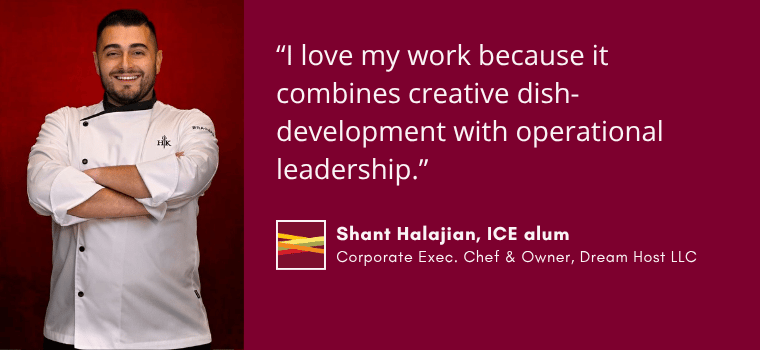
For Shant Halajian, an LA campus alum and the Corporate Executive Chef & Owner of Dream Host LLC, the above list described his ideal role.
“I love my work because it combines creative dish-development with operational leadership,” he says. “Also, I enjoy mentoring rising chefs and crafting memorable meals and experiences for guests.”
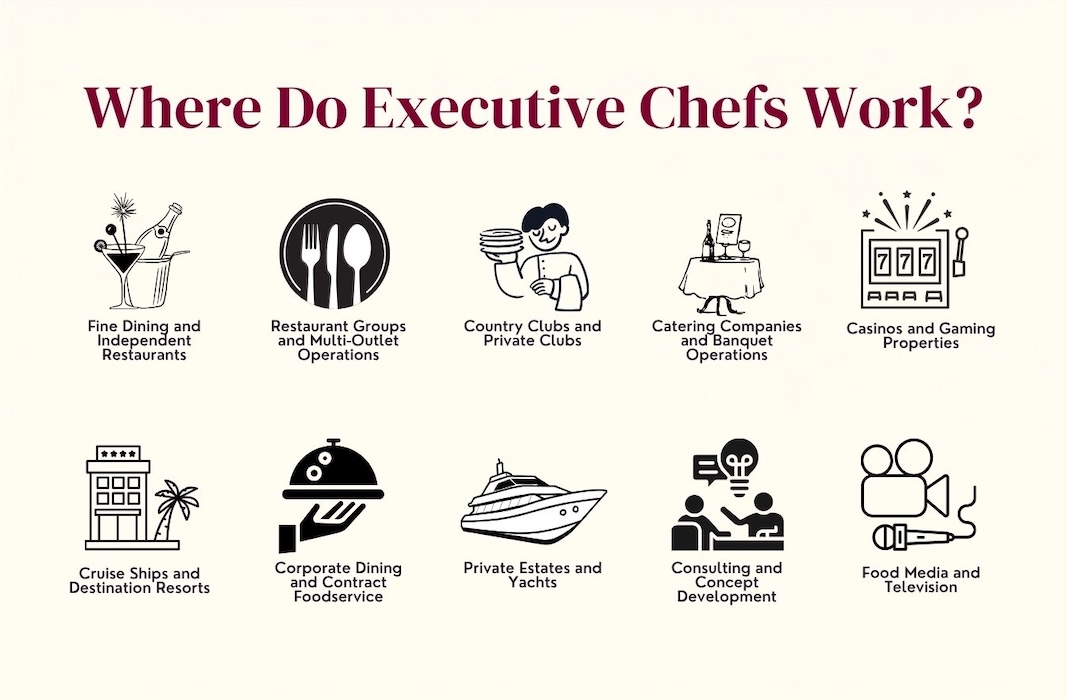
Where Do Executive Chefs Work?
Executive chefs lead culinary programs across a wide range of foodservice environments. The role looks different in each, and the kind of operation a chef chooses to run can shape their career as much as the role itself.
Fine Dining and Independent Restaurants
Here, the executive chef is often the creative voice of the restaurant — sometimes the public face of it, sometimes a partner or co-owner. The work tends to be intensely hands-on, with strong personal investment in the menu, the ingredients and the team.
For chefs who want their cooking to be the defining identity of a place, independent restaurants can offer the deepest creative freedom — and the highest personal stakes.
Hotels and Resorts
Hotel executive chefs often oversee several outlets at once — a fine dining restaurant, an all-day cafe, in-room dining, banquets, employee dining and special events. The scope is enormous, the volume substantial and the role demands strong operational and leadership instincts.
For chefs who enjoy running large teams across complex programming, hotels and resorts can offer some of the most stable, structured career paths in the industry.
Restaurant Groups and Multi-Outlet Operations
Restaurant groups often employ executive chefs at the unit level (running a single restaurant) and at the corporate level (overseeing multiple concepts across a region or company). Both paths offer leadership scope.
The unit-level role keeps a chef closer to the food and the team. The corporate path tends to involve more travel, more concept development and more time spent shaping culinary identity across a portfolio.
Country Clubs and Private Clubs
Private clubs typically offer a quieter rhythm than restaurants, with more regular hours and more predictable service, as well as a year-round calendar of events that are planned months ahead of time. In these environments, executive chefs often build deep relationships with club members, and they have the opportunity for long tenures. Those who value stability and a strong sense of community may find club work an exceptionally good fit.
Catering Companies and Banquet Operations
Catering and banquet executive chefs build programs around volume, logistics and consistency. The role demands strong production planning, deep coordination with event teams and the ability to deliver hundreds of delicious and consistently plated dishes at once. For chefs who thrive in the controlled chaos of large-scale execution, this work can be exhilarating.
Cruise Ships and Destination Resorts
Cruise lines and destination resorts run some of the largest culinary operations in the industry, with executive chefs overseeing multiple dining venues and hundreds of staff who serve guests around the clock. This work can take a chef around the world. Those drawn to travel, scale and the experience of leading culinary programs in international settings, this path can provide a unique combination of professional and personal opportunity.
Casinos and Gaming Properties
Casino properties often house multiple full-service restaurants, buffets and event spaces — all running at high volume, often twenty-four hours a day. Executive chefs in these environments lead large teams across several concepts, with the operational complexity of a hotel and the energy of a busy restaurant district. The role rewards chefs who enjoy scale, leadership and the rhythm of a high-traffic environment.
Corporate Dining and Contract Foodservice
Corporate dining, hospitals, universities and cultural institutions are often operated by contract foodservice companies that employ executive chefs to lead their kitchens. The hours tend to be more regular than in restaurants, and the work can carry a strong sense of mission — feeding hospital patients, university communities and museum guests, for example. For chefs who want culinary leadership minus the rhythms of restaurant life, this sector can prove a meaningful path.
Private Estates and Yachts
Some executive chefs build careers in private service — running culinary programs for individuals, families or yacht operations. The work is intimate, the standards are high, and the personal connection to the client is central to the role. For chefs who want to cook at the highest level for a small, specific audience, private work can be deeply rewarding.
Consulting and Concept Development
Experienced executive chefs sometimes move into consulting — helping operators open new restaurants, develop menus, train teams and build culinary programs from scratch. This work draws on every skill acquired en route to the executive chef role, and it offers advanced culinary professionals the chance to apply their experience across multiple operations.
Food Media and Television
Cookbook publishing, television production, recipe development for food brands and the broader food media world all employ executive chefs in creative and on-camera capacities. For chefs who want their work to reach audiences beyond a dining room, this path can extend a career in directions traditional kitchens may not.
The setting an executive chef leads in often shapes the rest of their career — and the foundational training and early experience they bring to the role can influence the kinds of operations open to them.
Skills That Are in Demand for an Executive Chef
By the time a cook reaches the executive chef role, technical ability should be a given. So which skills distinguish one chef from another at this level? The answer is multi-pronged, but chief among them is the depth of judgment they bring to the food, the team and the operation.
Technical Skills of an Executive Chef
At the senior level, technique is less about executing a single dish and more about understanding the systems behind a culinary program. Key technical areas include:
- Culinary fundamentals across cuisines: Sauces, stocks, butchery, charcuterie, pastry and global techniques — the executive chef sets the standard for the kitchen, and that standard rests on broad technical fluency.
- Menu development and engineering: Building menus that balance flavor, seasonality, operational practicality and profitability is one of the most distinctive skills of the role. A great menu reads as creativity. It is also a piece of financial engineering.
- Food cost analysis and yield management: Understanding cost per plate, yield percentages and how seasonal pricing affects the menu is typically part of the daily work. Chefs who understand numbers tend to be trusted with greater responsibility.
- Recipe development and standardization: Building recipes that can be executed consistently by a team, in real conditions, across many services — this is the work that turns a chef's vision into a repeatable kitchen output.
- Plate composition and presentation: At the executive chef level, plating is a language. It signals identity, intention and standard.
- Food safety and Hazard Analysis Critical Control Point (HACCP) knowledge: Department of Health compliance and food safety protocols are the executive chef's responsibility. The cost of failure here is high — restaurants can be shut down for weeks or months — so running clean, safe operations is vital.
- Production planning: Forecasting prep, scaling for events, anticipating volume — this represents the operational side of cooking, and it can separate a smooth service from a chaotic one.
- Beverage and wine literacy: An executive chef working closely with sommeliers and beverage directors benefits from a real understanding of how food and drink interact on the plate and in the glass.
Soft Skills for an Executive Chef
Technical mastery sets the floor. Leadership, judgment, and presence set the ceiling.
- Leadership: An executive chef sets the tone of a kitchen — its standards, its culture, its rhythm. Those who do this well tend to build teams that stay, grow and produce better food year after year.
- Communication: Clear communication with cooks, sous chefs, front-of-house leadership, ownership and vendors is constant. The executive chef who communicates clearly and consistently makes everyone around them more effective.
- Decision-making under pressure: Service is a rolling series of decisions. So is a busy production day and the morning when a piece of equipment goes down. The role typically rewards calm, fast sound judgment.
- Financial acumen: Reading a Profit & Loss report, understanding food and labor cost percentages and managing a kitchen budget are usually part of the job. Chefs comfortable with numbers and finances often advance faster.
- Adaptability: Menus change. Vendors change. Teams change. The executive chef who adapts gracefully tends to build the most durable career.
- Mentorship: Executive chefs who train the next generation well tend to be the most respected. Their kitchens are often where careers begin — and where loyalty forms.
- Resilience: The role can be demanding, both physically and mentally. Resilience is not a bonus skill — it is a baseline.
- Vision and creativity: A menu is a point of view. Executive chefs who develop a distinctive voice tend to be the ones whose work people remember.
These soft skills are not usually learned in a single class or a single job. They tend to be built over years — through education, experience and making the kinds of mistakes that a learning environment surfaces and corrects.
Why Professional Training Can Make a Difference
Is it possible to reach an executive chef role without attending culinary school? Indeed, it is. But formal culinary education can shorten the distance between starting and developing the foundation that advanced roles require.
The argument for structured training is not that it replaces experience — nothing does. Rather, it helps build the technical fundamentals, the professional habits and the network connections that can help a cook apply and retain skills more efficiently when they enter a professional kitchen.
Gail Simmons, NY campus alum and the multi-Emmy Award-winning exec producer and host of Bravo’s “Top Chef” feels this way: "Culinary school gives a foundation that can't be matched."
In a structured culinary program, students are given the opportunity to:
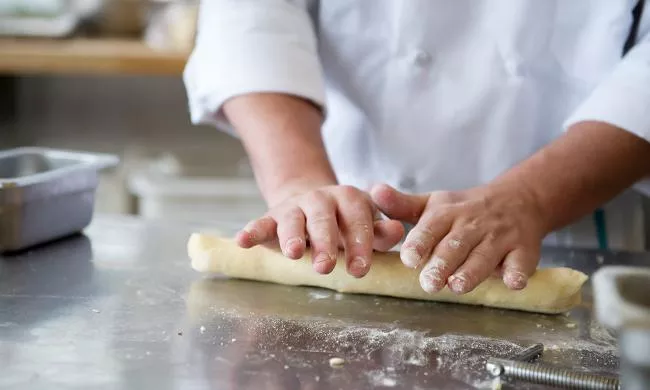
- Develop foundational technique in a deliberate, sequenced curriculum
- Explore the why behind methods — not just how to execute them, but why they work
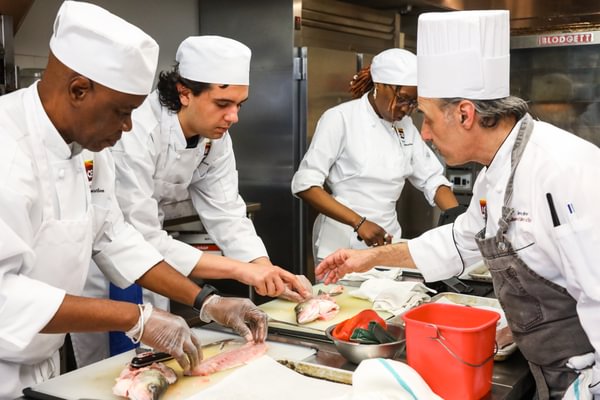
- Practice under the guidance of Chef-Instructors with real industry experience
- Cultivate the professional habits and kitchen confidence that employers tend to value
- Make mistakes in a supported environment, where feedback is part of the process
- Build relationships with peers and mentors that often become professional connections later
That preparation can shape the trajectory that follows. Candidates with formal culinary training may find that their resume reflects a level of readiness that stands out — not just the skills listed, but the signal that they invested seriously in their craft.
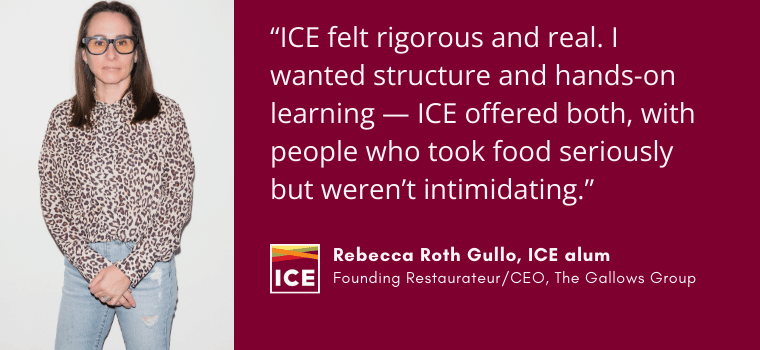
Rebecca Roth Gullo, another Culinary Arts alum and the founder and CEO of Boston-based restaurant conglomerate, The Gallows Group, seconds Gail’s opinion.
“Culinary school felt rigorous and real,” she says. “I wanted structure and hands-on learning — The Institute offered both, with people who took food seriously but weren’t intimidating.”
Additionally, the culinary world is relationship-driven. A first externship, an instructor's introduction, a program's alumni network — these are often where careers begin to take shape, and culinary school can facilitate all three. The chefs who advance into executive roles are often those who built relationships early and cultivated them over time.
Programs That Support a Culinary Career
For aspiring culinary professionals who want to train in a hands-on, professionally equipped environment, the Career Culinary Arts program at the Institute of Culinary Education is designed to provide the structured, technique-forward training that professional kitchens value. The program is available at the school's New York City and Los Angeles campuses — and for students who are unable to relocate, an online option is available in select U.S. states.
Training in the Heart of Two Culinary Capitals
There is something that classroom instruction alone cannot replicate: the energy of training in a city that lives and breathes food. The Institute’s campuses in New York City and Los Angeles place students at the center of two of the most dynamic culinary communities in the world — cities where the restaurants, the people and the culture that help define American food are happening all around them, every single day.
That proximity matters. Students apply skills inside professional kitchens — they are surrounded by the industry they are training to enter. Career fairs, guest chef events and the dense network of culinary professionals that both cities attract can offer the kind of exposure and connection that can be difficult to find elsewhere.
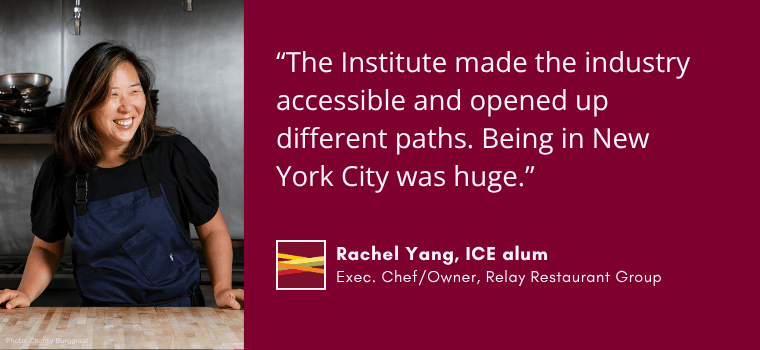
Rachel Yang, a NY campus alum and the executive chef and co-owner of three Seattle restaurants, attests to this value. “The Institute made the industry accessible and opened up different paths,” she said. “Being in New York City was huge.”
For students who reside in approved U.S. states and are unable to relocate, the online Culinary Arts programs are designed to deliver the same curriculum and instructor expertise to wherever a student is based.
What the Curriculum Covers
The Culinary Arts programs can be completed in as little as eight months, depending on schedule and campus. Coursework is built around techniques, knowledge areas, and professional habits that culinary operations value — including several that can be hard to acquire through on-the-job experience alone.
In a busy kitchen, there is rarely time to explain the why behind a technique. Recipes are executed, but the science behind them often goes unexplored. Culinary school programs can fill that gap — building both technical ability and the broader knowledge that enables troubleshooting, adaptation and confident decision-making in the kitchen.
The Externship: Where Training Meets the Real World
After completing classroom instruction and hands-on practice, students enter a structured externship — working on-site at a real culinary operation, in a real professional kitchen, alongside working professionals.
The school's Career Services team works with students to help identify a placement that aligns with their goals and background. Externship sites span restaurants, hotels, catering companies, private clubs and more.
For many students, the externship is where professional relationships begin to form and where the transition from training to career begins to take shape.
The Executive Chef Career Path
Reaching an executive chef role is rarely a straight line. The path typically runs through a sequence of kitchen positions — each helping to build the technical, operational and leadership foundation the role demands.
Among the roles that often lead toward an executive chef position:
Line Cook / Commis
This is a frequent entry point for many kitchen careers. Line cooks learn the rhythm of service, the discipline of a station and the foundational techniques that future skills build on. Time spent here is rarely wasted — the cooks who advance furthest tend to be the ones who treated this stage as one requiring serious craft (versus a mere stepping stone).
Chef de Partie (Station Chef)
Chefs de Partie are responsible for a specific station — saucier, garde manger, poissonnier, and so on. At this level, a cook owns the standards of their station and can begin to build a reputation for reliability and judgment.
Sous Chef
The sous chef role is the first true leadership role in the path to a culinary career. Sous chefs supervise the line, manage prep schedules, train junior staff and step in for the head chef when needed. Here is where the people-management instincts that senior leadership requires most often begin to take shape.
Chef de Cuisine
The Chef de Cuisine (CDC) runs a specific kitchen or outlet. CDC’s often handle daily kitchen operations, menu execution, and team leadership — and in larger organizations, they often report to an executive chef. (In smaller operations, the head chef and the executive chef can be the same person.)
Beyond the executive chef role, some paths continue to expand further:
Corporate / Group Executive Chef
This role has oversight across multiple kitchens, concepts or properties — often within a restaurant group, hotel company or hospitality brand. It typically involves significant travel, concept development and strategic culinary leadership across a portfolio.
Restaurateur or Owner
Some executive chefs eventually open their own operations — alone or with partners. Ownership combines culinary leadership with the broader work of running a business: real estate, financing, hiring, branding and the unending logistics of independent operation.
Culinary Consultant and Concept Developer
Experienced chefs sometimes step into consulting roles, helping operators open new restaurants, develop menus, train teams and shape the culinary identity of new concepts. This work draws on every skill an executive chef has built and applies them across many operations.
Each step on this path tends to take years, and advancement is generally earned through demonstrated skill, leadership and the trust of the operators who promote chefs into greater responsibility.
Executive Chef vs. Chef de Cuisine
The terms executive chef and Chef de Cuisine are sometimes used interchangeably. However, in larger operations, they describe different roles:
A chef de cuisine runs a specific kitchen or outlet, manages the daily team and oversees menu execution.
An executive chef sits above the head chef in larger organizations, leading the culinary program across multiple kitchens, setting creative direction, managing budgets and reporting to ownership or senior leadership.
In a single-restaurant operation, the executive chef and the chef de cuisine can be the same person. In a hotel, resort or restaurant group, the two roles are usually distinct — and the executive chef's scope is significantly broader.
This distinction matters for cooks thinking about their long-term path. The journey from line cook to chef de cuisine is one trajectory. The journey from chef de cuisine to executive chef is another — and it often involves a deliberate shift from cooking-focused leadership to operational and strategic leadership across a larger program.
Additional benefits of the executive chef role:
- Creative authority: Executive chefs typically shape the culinary identity of their operations. The menu, the standards, the voice — these become an expression of the chef's point of view.
- Leadership impact: Executive chefs often hire and manage cooks who go on to lead kitchens elsewhere. In this way, their influence can extend far beyond their own operation.
- Operational command: The role frequently includes responsibility for the financial performance and operational health of a culinary program — a level of ownership many cooks find deeply satisfying.
- Industry recognition: Executive chefs are often the most visible culinary figures in their operations and communities, yielding both a public profile and professional standing.
- Mentorship: Few roles offer the opportunity to shape another cook's career as directly as the executive chef does. The chefs who take this seriously often build legacies that continue long after their career ends.
- Long-term career stability: Senior culinary leaders tend to build deep relationships, durable reputations and the kind of career capital that opens doors over decades — not just one job at a time.
Is the Executive Chef Path Right for You?
The path to an executive chef role can be long, challenging and non-linear. The cooks who reach the role tend to share a few qualities: a passion for the work, the patience to build skills over years rather than months, and the leadership instincts that emerge when a cook looks beyond their station and takes stock of the whole kitchen. For those who succeed, it can be a deeply rewarding role.
In a recent interview, David Viana, Culinary Arts alum and multi-time James Beard Award Best Chef semifinalist, highlighted the passion and pride advanced culinary professionals often feel. “I’m really proud of being a chef,” he said. “I think it’s more meaningful than it’s ever been.”
While culinary school can’t instill this passion and pride, it can support their pursuit.
Culinary school graduates who enter kitchens with strong fundamentals may adapt more quickly, take on responsibility sooner, and feel more confident as they grow into the leadership roles their careers may eventually yield.
For people considering this path, the most useful first step is rarely a leap to leadership. Instead, it is the deliberate building of the foundation — technique, discipline, professional habits and mentor relationships that can dramatically impact careers.
Taking the Next Step
If you're exploring a long-term culinary career, our Culinary Arts program can be a useful next step in building the foundational skills, professional habits and industry connections that support advancement over time.
Admissions Representatives can discuss your goals, walk you through program options at the New York or Los Angeles campuses and help you understand the financing and scheduling choices available.
Click here to request more information.
EXECUTIVE CHEF CAREER FAQs
What do you need to be an executive chef?
Reaching an executive chef position takes a strong foundation of technical culinary skill, leadership experience and operational knowledge. While there are several pathways toward the role, a formal culinary education can offer a structured starting point — giving aspiring culinary professionals deliberate technical training, hands-on practice in professionally equipped kitchens, an externship at a working culinary operation and the kind of industry connections that help to support long-term advancement.
How long does it take to reach an executive chef role?
There is no fixed timeline. The path typically involves years of progressive kitchen experience — line cook, chef de partie, sous chef, chef de cuisine — with the pace varying based on a person's background, the operations they work in and the opportunities that come along the way. Formal culinary training may help cooks move through the early stages with stronger fundamentals and a larger professional network.
Do I need to go to culinary school to become an executive chef?
Formal training is not a definitive requirement, but a structured culinary program can offer a strong pathway into a culinary career — and a deliberate foundation for the years of progressive kitchen work that follow.
Culinary school provides instruction in a sequenced progression, layering skills over time, allowing for hands-on practice under chef-instructors with industry experience, helping land externship placements at working culinary operations, and providing access to alumni networks that can open doors to long-term opportunities.
While some executive chefs have advanced without formal education, structured culinary training can help cooks enter the industry with the kind of credentials culinary employers recognize.
Is it hard to become an executive chef?
The path is demanding and rarely quick. It typically involves long hours, years of progressive kitchen experience, and the steady accumulation of technical, leadership and operational skills. That said, it’s a viable pursuit for culinary professionals who commit to the work, learn from each kitchen position and remain committed to building experience and relationships over time. Structured culinary training can shorten parts of the early learning curve by providing foundational skills and industry connections from the start.
Where can I find culinary schools near me?
We offer in-person Culinary Arts programs at our New York City and Los Angeles campuses — two of the country's culinary capitals — with access to professionally equipped teaching kitchens, chef-instructors with industry experience and externship placements at working culinary operations. In New York, career program graduates earn diplomas; in LA, career programs include both diploma and associate degree options.
For students who are unable to relocate and reside in approved U.S. states, our online Culinary Arts program delivers our quality curriculum and instructor expertise remotely, and culminates in an in-person externship at a professional kitchen.
Are there online culinary programs?
We offer online Culinary Arts diploma and online Culinary Arts degree programs — designed to deliver the same core curriculum, chef-instructor expertise and structured learning experience as our in-person programs at the New York City and Los Angeles campuses.
The online format gives students the flexibility to study from home with live instruction, hands-on assignments and a sequenced technical curriculum. Every program culminates in an in-person externship at a working culinary operation, where students apply what they have learned alongside working professionals.