
Sous Chef Supreme: At LA’s Michelin-Starred Meteora, Keita Suzuki’s Skills Shine

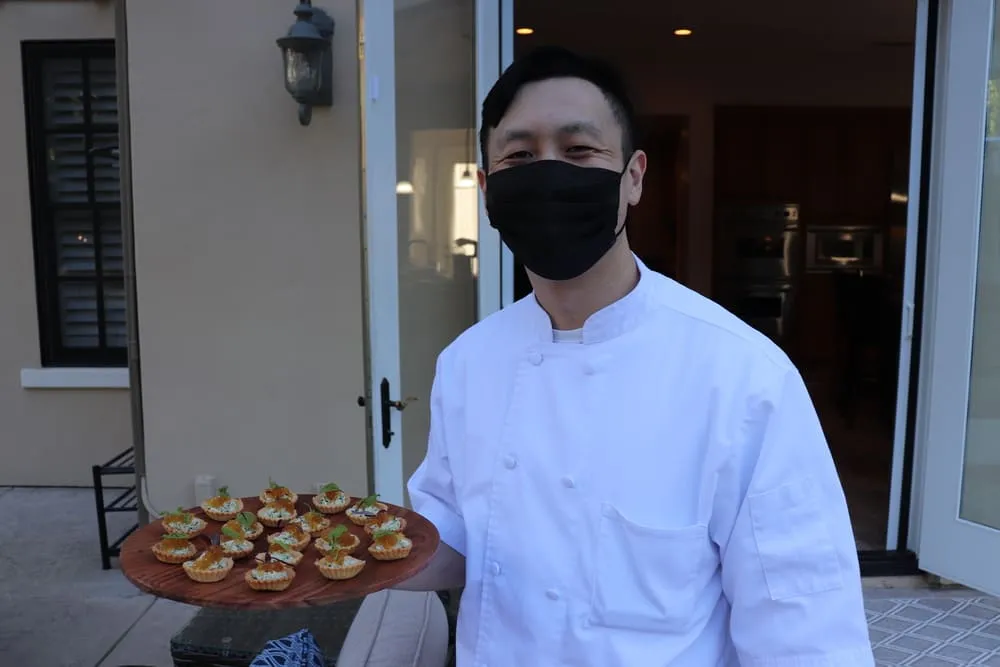
To celebrate 50 years of ICE, we’re honoring 50 distinguished ICE alumni. Meet Chef Keita Suzuki, a graduate of ICE Los Angeles’ inaugural class and a key contributor to LA’s Meteora restaurant earning a Michelin star.
Keita Suzuki starts his day in the kitchen the same way he did when he was a student, checking every detail. The produce. The mise. The mood.
It’s a rhythm born of discipline, sharpened by repetition, and driven by a clear goal: excellence.
As Sous Chef at Michelin-starred Meteora, Suzuki helped to lead one of LA’s most talked about fine-dining destinations. His journey there was anything but traditional.
Born and raised in California, Suzuki didn’t grow up dreaming of white tablecloths or culinary stardom. He knew he loved food, especially the kind his mother made, and he eventually realized that working with it gave him a tremendous sense of purpose.
He decided to take a tour of ICE’s Los Angeles campus — and when he did, a spark ignited.
“ICE gave me the foundation,” he says. “If it weren’t for ICE, I don’t believe I would have been half as ready to face a real kitchen.”
That foundation proved critical. After graduation, Suzuki joined the team at Wolfgang Puck’s iconic Spago, then — amidst the COVID-19 pandemic — launched a catering and takeout business. After that, he joined the kitchen at Destroyer, a progressive concept from Chef Jordan Khan, where his work ethic and exactitude stood out.
Within a few years, he was promoted to sous chef at Meteora, one of Khan’s newest ventures, where Suzuki’s skill and leadership helped earn the restaurant its first Michelin star.
Ask Suzuki what drives him and he won’t mention prestige or press. He’ll talk about details. About how to know when cabbage is at its sweetest. About brunoise cuts and service flow and why every dish has to taste right, every single time.
His mentors — chefs like Justin Katsuno, Justin Ealy, Ki Kim, and Jordan Kahn — taught him that how you present yourself in the kitchen is as important as how you plate a dish.
That attitude, sharpened by ICE’s hands-on curriculum and chef mentorship, helped him thrive in one of the country’s most competitive restaurant markets.
In a recent conversation, we talked about his ICE education; what he’s learned from some of the toughest and most precise kitchens in Los Angeles; and how discipline, mentorship, and an obsession with detail have shaped him.
Here’s what he had to say.
* The following interview has been condensed and edited for clarity.
ICE: What do you consider your biggest professional achievements so far?
Keita Suzuki: Being part of the team that earned a Michelin star for Meteora.
ICE: Can you describe your creative process?
KS: I mostly find inspiration from food I grew up with. There are a lot of dishes that my mother made that formed the base of every dish I made later.
ICE: To what factors do you attribute your success?
KS: My mentors and colleagues. They taught me everything from the necessary attitude to considering the tiniest details before we even looked at food — because all of those [things] transfer over to how we think about and plate [the dishes].
ICE: What does a typical day look like for you?
KS: I wake up at 8 a.m. I go to the gym at 9 a.m. I drive to work by 10 a.m. Then, I check produce, handle a.m. and p.m. prep lists, scan invoices, scan emails, and place orders.
From there, we coordinate with the a.m. sous chef, prepare for the family meal at 3 p.m., then line up with FOH (Front of House) at 4 p.m. to go over menu changes.
I then taste every station’s mise at 4:30 p.m. I set up on the pass by 5 p.m. And the doors open at 5:30 p.m.
After service ends at 10 p.m., I start orders for the next day, ensure the stations are cleaned, and complete any remaining prep. To finish up, I try to have paperwork done by 11 p.m., then I download with managers and FOH staff before leaving around 12:30 a.m.
ICE: What do you love most about your work?
KS: [When guests say,] “Thank you for an amazing meal, chef.”
ICE: What advice would you give to someone pursuing a career path similar to yours?
KS: Find a good mentor, accept you’ll fail, continue to improve daily (everywhere and anywhere), and never stop learning.
ICE: When did your passion for food begin, and how did it lead to a career?
KS: I never really thought about [making food a profession] until after I went to ICE. The passion came from working with great mentors that showed me how fun cooking good food truly is.
ICE: What made you choose ICE for your training?
KS: I was researching schools for their culinary programs, and ICE was the closest one to me at the time. I did a tour of the LA campus, and after talking with a few of the staff, I realized I wanted to be there.
ICE: How was the transition from student to professional kitchen? Was there anything you learned at ICE that helped with that transition?
KS: In hindsight, the transition was easy, but it still felt daunting in the moment due to embarrassment for not being as fast or experienced… [l learned] all the key terms — China cap, sauté, sous vide, 86, etc., which were incredibly useful. It’s strange how these lexicons can greatly affect your speed and understanding in a kitchen.
ICE: What comes to mind when you think of ICE now?
KS: Foundation. ICE provided me with the necessary understanding of the basics of the kitchen. If it weren’t for ICE, I don’t believe I would have been half as ready to face a real kitchen.
ICE: Do you have any particularly memorable moments from your time at ICE?
KS: The first time I properly cut a brunoise will forever be a core memory to me because I failed so many times. I remember Chef Pergole would tell me that the reason I was struggling to cut straight was because I was holding my knife at an awkward angle.
ICE: What inspires you? And what lessons did your mentors teach you?
KS: [A quote from] Nietzsche: “He who has a why to live can bear almost any how.”
As for mentors, Chef Justin Katsuno, Executive Sous Chef of Spago taught me how to get faster at prep and the importance of enjoying your day regardless of how difficult it is. He also taught me how to properly write recipes into a notebook for future reference.
Chef Ki Kim, the Chef-Owner of Restaurant Ki, taught me how to properly divide tasks, when to ask for help, and how to be a better leader.
[In my current role], Chef Justin Ealy, the former Executive Chef of Meteora, Vespertine and Destroyer, taught me the importance of presentation and how to train staff. Our Director of Operations, Allison Wiseman, taught me how to be a manager — things like understanding P&L and KPIs, and how to handle your responsibilities. And of course, the restaurants’ Chef-Owner, Chef Jordan Kahn, taught me how to understand flavor pairings and the necessity of learning pastry to become a well-rounded chef.
ICE: Is there a lesson from ICE that you still use today?
KS: Double chinois and China cap to drain stocks faster.
ICE: What advice do you have for prospective culinary students?
KS: Even if you don’t go into restaurants specifically, if you love the detailed aspects of food, you will enjoy culinary school.
QUICKFIRE QUESTIONS
Guilty pleasures? I love fermented foods, natto in particular. Dessert-wise, I love anything mango.
Foods you’ve tried to love but can’t? Bitter melon … Despite many different preparations, I just can’t get into it.
Favorite kitchen tool? Mandoline
Salty or sweet? Salty
Favorite food holiday? National Strawberry Day, February 27.
Favorite food city? Tokyo, but Los Angeles is a close second.
In order of preference: cook, bake, eat? Cook, bake, eat.
Favorite cuisine? Japanese.
Go-to “easy” recipe? Popcorn chicken.
Go-to “wow” recipe? Japanese omelette.
Most frequently used ingredient (beyond basic pantry staples)? Cabbage.
Favorite food season? Fall.
* Experience varies by student, with outcomes contingent on factors including graduate aptitude, job market, place of residence and work history, among others.