

Curious About Culinary School? Here’s How to Choose the Best Culinary School for You

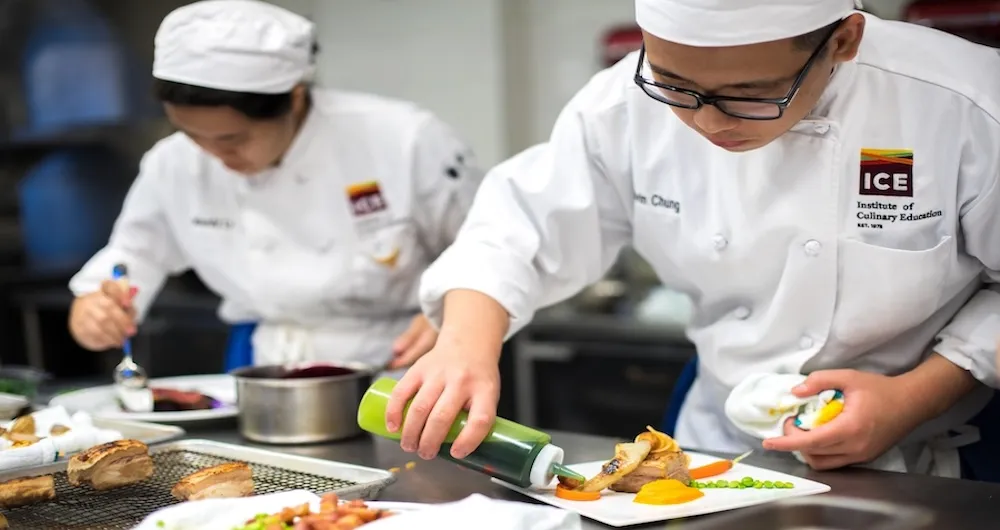
Awards abound in the culinary industry. From culinary schools and restaurants, to the best croissants in a single city, it can feel like everything is ranked.
Knowing the ranking of a culinary school within a list of top schools is great, but understanding the evaluation criteria that got it on the list in the first place is far more important.
With regard to culinary schools, awards and honors can make it easier to assess a school’s value.
The Best Culinary Arts Certificate Program in New York
Recently, ICE earned the top spot in Chef’s Pencil's ranking of Culinary Arts certificate programs in New York. (FYI: This program is also offered at ICE’s Los Angeles campus — which, incidentally, was also named the best culinary school in California by Chef’s Pencil1.)
For their 2025 list, the Chef’s Pencil team graded schools on five criteria: program size, graduation rate, earnings after graduation, LinkedIn reputation, and tuition and attendance costs.
Let’s dive into the five areas of assessment and what they reveal about culinary schools.
#1 Criteria: Program Size
This consideration is key when evaluating culinary schools. Not only does program size contribute to its available pool of resources, which includes things like the quantity and variety of program-specific courses and the level of attention and support individuals can receive, it can also influence industry exposure and networking opportunities.
Chef’s Pencil ranked the Culinary Arts program at ICE as the largest certificate program in New York — with over 330 graduates in a single year.
But while the program is large, individual class sizes are small — averaging about 12 students.
These classes commence continually throughout the year and are offered on morning, afternoon, evening and weekend schedules
Related: ICE’s flexible scheduling options accommodate full-time students and working professionals
Small cohorts facilitate one-on-one mentorship with ICE’s chef instructors and enable students to connect with their peers, sometimes forming lasting relationships long into their careers.
The large program size, on the other hand, enhances opportunities to explore different aspects of the industry through ICE’s expansive offerings and to network with aspiring chefs and restaurateurs through the school's extracurricular activities.
As Rick Smilow, ICE Chairman and Founder, puts it, “We’re large enough to help launch and support careers throughout the culinary world, and small enough to help each student find their unique culinary voice.”
#2 Criteria: A Strong Graduation Rate
Graduation rate is an indicator of student support and satisfaction. A high graduation rate suggests students feel they received good value for their dollar, whether owing to skills acquisition, networking opportunities, career services support, or some combination of these and other benefits of culinary school.
Chef’s Pencil listed ICE’s graduation rate as 88%, which was the highest of all the schools reviewed in New York.
ICE students (across all programs) are supported by:
- An entire institution solely focused on culinary and hospitality education
- Highly qualified chef-instructors with years of industry experience who provide technical instruction and career advice
- The Office of Student Affairs, which oversees student welfare, advocates for students, and fosters a positive and inclusive campus environment
- A Career Services department focused solely on culinary and hospitality career counseling, from which each student is assigned an advisor who assists with externship placement, interview skills and job placement, and who can provide ongoing career support post-graduation.
Inferring student satisfaction can be tricky, but a great place to start is alumni reviews.
According to a 2025 survey, 95% of students polled said they would recommend ICE to a friend who is interested in this type of training2.
Mary Attea, Executive Chef of Michelin-starred Musket Room and an ICE alum, said this of her experience: “My time at the Institute of Culinary Education was an invaluable experience that sent me on a strong path forward in my career… From the coursework to the instructors, I felt that care was taken in making sure I was prepared to enter the culinary industry.”
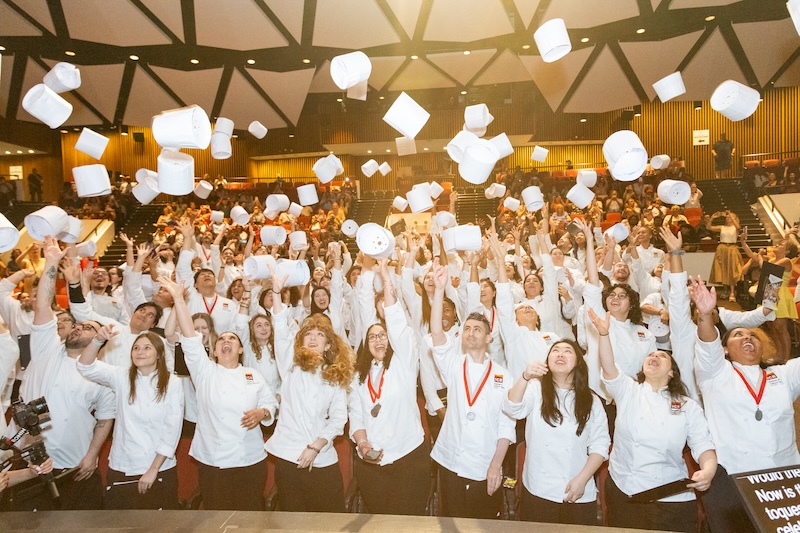
#3 Criteria: Highest Reported Earnings After Graduation
Another benchmark for comparing schools is reported earnings post-graduation. Though not conclusive, this number hints at the quality of skills and techniques taught and the strength of a school’s industry connections.
Chef’s Pencil reported that ICE graduates have the highest average earnings (five years post-completion) of the reviewed certificate programs in New York.
When ICE students finish their classroom training, they apply (and add to) their knowledge with an externship — a hands-on work experience at a culinary business of their choice. Externships support students by offering real-world experience that: a) can help them identify the work environment aligned to their goals; and b) can be leveraged when seeking employment.
With ICE's location in two of America’s culinary capitals (NYC and LA), the breadth and number of potential externship sites are hard to match. Externships often result in job offers, and many top chefs and restaurateurs recruit ICE graduates.
Related: An ICE Alumna’s Advice for Choosing an Externship
Top Chef judge and James Beard award-winner Chef Tom Colicchio said, “I’ve been working with ICE students in New York for years and they are consistently among the best young chefs in my restaurants.”
Award-winning chef and restaurateur Wolfgang Puck said, “Having a culinary school of ICE’s caliber in [the LA] market will only enhance the city’s standing as a major culinary center in the U.S.”
#4 Criteria: Exceptional LinkedIn Reputation
Looking at LinkedIn can help you further assess a school’s effectiveness and value. For Chef’s Pencil, this meant examining the number of chefs and executive chefs on LinkedIn who are associated with each program. According to Chef’s Pencil, this provides a “real-world measure of [a school’s] alumni success and industry presence.”
Chef’s Pencil assigned ICE a LinkedIn reputation score of “Very High” — the best ranking awarded amongst certificate programs. Based on the chefs and executive chefs associated with ICE’s LinkedIn, the Chef’s Pencil ranking points to:
- A robust network amongst leading chefs and restaurateurs: This leads to supplementary education opportunities, like on-campus panel discussions and culinary demonstrations. (Chefs Daniel Boulud and Eric Ripert; culinary entrepreneurs Ellen Yin and Todd Birmbaum; and award-winning chefs and Michelin Guide favorites Sohui Kim and Shenarri Freeman, who are both ICE alumni, have all recently been on campus.)
- A strong presence in the hospitality scene: Notable culinary organizations host events at ICE, and students are often invited to attend and/or volunteer at these events. These resume-building and network-creating opportunities are a key part of ICE’s overall value. Recently, the school set the stage for the New York City Wine & Food Festival, the Parabere Forum and The Chef’s Conference (where hospitality leaders like Danny Meyer and Gail Simmons gathered).

#5 Criteria: Tuition and Attendance Costs
It’s important to consider the cost of culinary school – specifically, tuition and other potential costs of attendance including rent and other living expenses.
“As a private institution, ICE’s tuition and overall attendance costs are substantially higher than those of public programs. However, its strong career outcomes make it a worthwhile investment for many students,” concluded Chef’s Pencil.
A student at ICE studies at an institution whose sole purpose for the past 50 years is culinary and hospitality education. During that time, the school has helped 20,000 graduates find their voice in America’s top culinary capitals.
Making a Fact-Based Decision
While there are numerous factors to consider if you’re thinking of attending culinary school, these five should be top of mind.
A program can launch or advance a culinary career, influence cooking style and professionalism, and serve as a guiding light for years to come.
As ICE alum Chef David Viana, a three-time James Beard Award nominee, Top Chef contestant and chef/owner of four New Jersey restaurants, puts it: "I think my time at ICE was so special. I really had a love for my chef-instructors and the way they made me feel. They broke down what cooking is and distilled it in a way that — looking back on it — I use as a reference for how I approach all of our guests."
That said, the best culinary school is always the one that’s best aligned to your career goals – and, of course, those goals (and how you measure their success) will vary. For some, success looks like owning multiple restaurants or working at a Michelin-starred restaurant; for others, success means becoming a private chef or launching an online culinary business.
What all of these have in common is a passion for culinary creativity, and a drive to turn that passion into a profession. ICE, according to Chef’s Pencil — and numerous other ranking authorities — is the #1 place to make that happen.
Experience varies by student, with outcomes contingent on factors including graduate aptitude, job market, place of residence and work history, among others.