
[VIDEO] From ICE To Icon: Tour Heirloom Kitchen with Chef David Viana

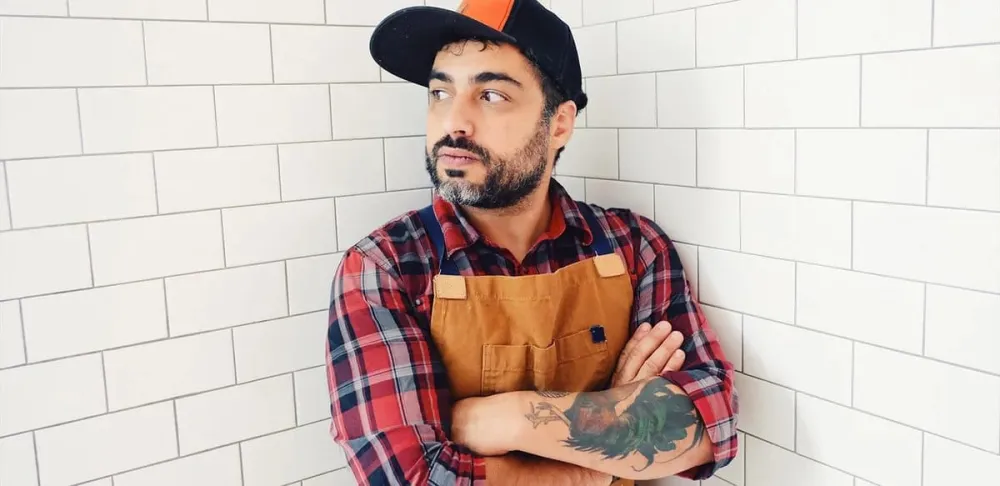
To celebrate 50 years of ICE, we’re honoring 50 distinguished ICE alumni. Meet Chef David Viana, three-time James Beard Award nominee, Top Chef season 16 contestant, and the chef/owner of four popular New Jersey restaurants.
In the first episode of our “From ICE To ICON: My Restaurant Story” video series, Chef David gives viewers a tour of Heirloom Kitchen, his chef’s counter and cooking school in Old Bridge, New Jersey.
The 2005 Culinary Arts graduate, whose previous workplaces include Eleven Madison Park and two Michelin-starred Villa Joya, lights up when he talks about Heirloom Kitchen — and it’s not just because that’s where Top Chef producers found him (later whisking him to Kentucky for filming) or because it’s the spot responsible for one of his three James Beard Award nominations (for Best Chef Mid-Atlantic).
Rather, it’s because the restaurant’s concept and setup lends itself to hospitality.
“When you walk in the door, I want you to feel like you’re in your best friend’s living room or [at their] kitchen counter,” says Chef David (whose last name, btw, is pronounced like Vienna).
A cooking school three days per week and a chef’s counter the remaining four, Chef David describes the counter as “Hibachi 2.0” with “stadium seating” that facilitates conversation between strangers who become friends and regulars.
“People sit in our open kitchen and are invited to be a part of the experience,” he says, “to ask the chefs questions and to open and broaden their horizons on food.”
Behind the counter is a Jade industrial range, two Wolf wall ovens, two refrigerated drawers (for mise en place) and two warming drawers (that hold items at 200 degrees). It’s a small but mighty space, according to Chef David, that’s both a great staging area and an effective pass.
Dry storage and salad / cold prep are behind the scenes. Of the former, Chef David highlights the fact that Heirloom Kitchen’s partial function as a cooking school means it has more “fun ingredients” than other restaurants. He believes a healthy, varied pantry facilitates creativity and yields “opportunities for really cool menu items.”
As for decor, it’s eclectic: plates are Scandinavian-ish; there’s a prized cutting board signed by Chef Daniel Boulud on display; and a large format, mixed media work by Joey Africa, whom Chef David met years ago at the Miami Food & Wine Festival, hangs on a feature wall in the dining room. (The work was a surprise gift that the artist shipped to Chef David post-festival.)
The meat of the video, however — and this is both literal and figurative — kicks off at the nine minute mark. That’s when Chef David makes one of his most popular dishes: Octopus with Chermoula and Polenta (garnished with garlic scape pesto, Scamorza cheese, and pickled pepperoncini and Swiss chard).
The chermoula starts with sun-dried tomatoes in the broiler. While those char and blister, Chef David toasts spices including oregano, coriander and fennel seeds, later combining them with Calabrian chilies; sweet smoked paprika; homemade harissa; GGS (his staff’s affectionate acronym for the always-in-use combination of ginger, garlic and shallots); lemon juice and zest; olive oil; and white balsamic vinegar. A few rounds in the food processor, and you have a lovely rust-red chermoula paste.
Next is the white corn polenta, which requires GGS; dried spices (including ginger, onion powder, garlic powder and black pepper); chicken stock; Worcestershire sauce; and coconut milk.
The octopus, poached in red wine and water and simmered two hours, comes last. Outline the suckers (so they don’t fall off during cooking) then sear the tentacles with oil and a hit of chermoula. (It doesn’t take long for them to become golden and lightly charred.)
Chef David says the dish is emblematic of the Heirloom Kitchen cooking style.
“There’s bright acidity, there’s spice, there’s heat. [It’s] a very dynamic dish,” he says, adding, “I like opinionated food. I like food that makes you think. Food that makes you smile.”
“The worst thing that you could ever say about a dish at Heirloom Kitchen is that it’s bland. That would be heartbreaking for me.”
Watch the video above for the full “From ICE To ICON” experience, and read on for Chef David's insightful gems on developing recipes, staying curious in the kitchen, and what he learned at ICE.
On Cooking with Guests' Eyes on Him
"I never really got fazed by the guests being so close and in front of me. It didn’t make me nervous. I know that the guests are watching me, but I’m also watching them. It’s really fun to catch the moment when they take that first bite. I’m almost addicted to looking out for that. Especially when they slice into a steak and I know I perfectly nailed it. Those are really rewarding moments, and this job has been very good to me in that respect."
On His Time at ICE
"I think my time at ICE was so special. I really had a love for my chef-instructors and the way they made me feel. They really broke down what cooking is and distilled it in a way that — looking back on it — I use as a reference for how I approach all of our guests when they come in for cooking classes. [ICE is] still the inspiration for how I treat my guests when they’re here and how I go about inspiring them and teaching them."
On Continuing His Culinary Curiosity
"Thanks to ICE I have a passion for continuing my education. The understanding that this is a lifelong career and that the learning never stops is alive and well and breathing here."
On Why He Loves Being a Chef
"My favorite part of being a chef is how food brings people together. It’s the anti-internet ... an opportunity for community and communication — true communication — and I think we need restaurants now more than ever. I’m really proud of being a chef. I think it’s more meaningful than it’s ever been."
On Menu and Recipe Development
"My menu developing process is highly rooted in seasonality, and that’s the genesis of it. But [inspiration] can come from anywhere. It can come from conversations with guests. It can come from conversations with the team. I love to call on the farmers and find out what they’re really excited about, what they love that they’ve been growing recently. That’s the beauty of food. [Inspiration] can start with a memory or a conversation, a cookbook or a plate."
* Experience varies by student, with outcomes contingent on factors including graduate aptitude, job market, place of residence and work history, among others.