
Food Photography 103: 5 Tips for Infusing Your Images with Texture and Movement

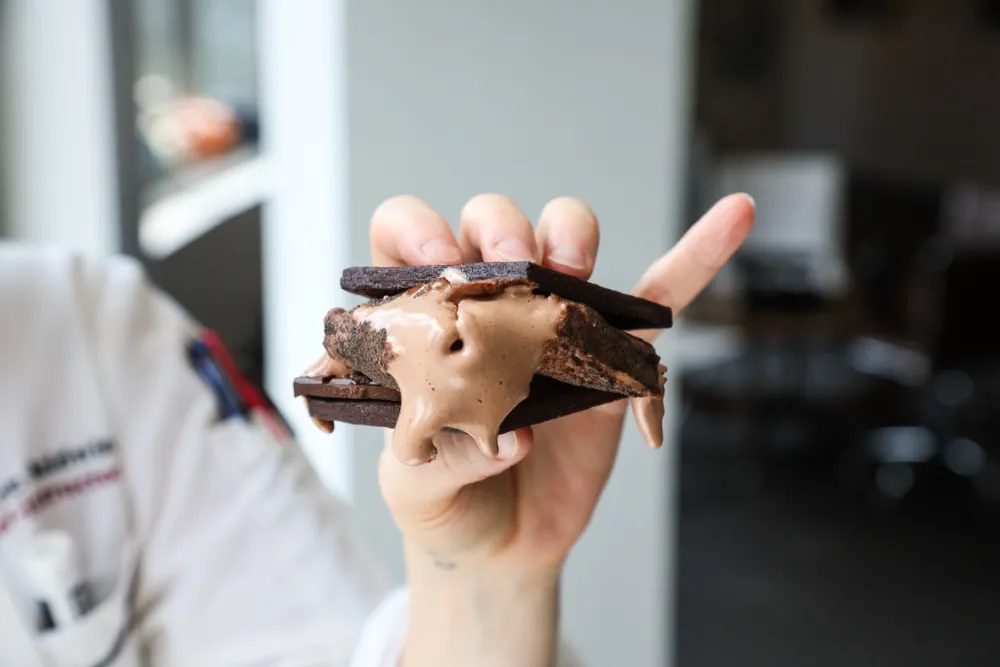
Even a perfectly composed food photo can feel lifeless. What separates a nice picture from an image that makes you hungry is texture — and often, motion.
A dusting of powdered sugar, a glossy glaze cascading down a cake or hands ripping into a loaf of bread all signal something powerful to the photo’s viewer: that food is fresh and meant to be eaten.
“Texture is what makes food feel tangible in a photograph,” says Anthony Leo, Assistant Director of Social Media at ICE. “When you can almost feel the crunch, the steam or the silkiness, that’s when a photo really works.”
Restaurant chefs, caterers, private chefs, cookbook authors and food media professionals — many of whom train at culinary schools like ICE — rely on images to communicate quality and attract opportunities. Knowing how to visually express texture and motion makes your work cut through crowded social media feeds and competitive industries.
In this installment of ICE’s food photography guide — part 3 in a 4-part series — we’ll explore how to use texture, movement and depth of field to create dynamic, delicious-looking images.
Showcase Fluffy, Crunchy and Gooey Textures
Food is sensory — it’s one of the reasons why culinary memories are so powerful. When you sit down for a meal, all of your senses are engaged. Food photography, however, engages just one sense: sight. Texture helps bridge this gap.
Take, for example, a great photo of crispy duck skin. It evokes the sounds of a chef’s knife scraping its surface and the crunch of said knife slicing through it. Seeing the inherent texture of food makes said food more tangible, and thus invites the viewer into the moment.
Some foods naturally do the work for you — the key is recognizing what makes each dish special. Consider:
- A gooey, cheesy lasagna with crispy, burnt edges
- The flaky layers of a croissant
- Toasted marshmallow and molten chocolate on a s’more
Capture Movement
Another way to bring food photography to life is by introducing movement. Motion adds energy and tells the story beyond the plate.
It doesn’t have to be as big as flambéing — though that certainly is eye-catching. Subtle movement adds realism and appeal, try:
- Sprinkling salt or powdered sugar onto a dish
- Spooning or pouring sauce
- Slicing into a pastry or protein with a knife
According to Leo, “These are often the most creative moments of a shoot. When something is happening — when food is in motion — that’s usually the money shot.”

Chocolate, for example, is one of the most pleasing foods to see in action: poured, melted or stirred — get a glimpse of Chef Daniel Corpuz (ICE’s Chocolatier and the chef behind ICE NY’s Chocolate Lab), working with this ingredient in the video below.
Add a Human Touch
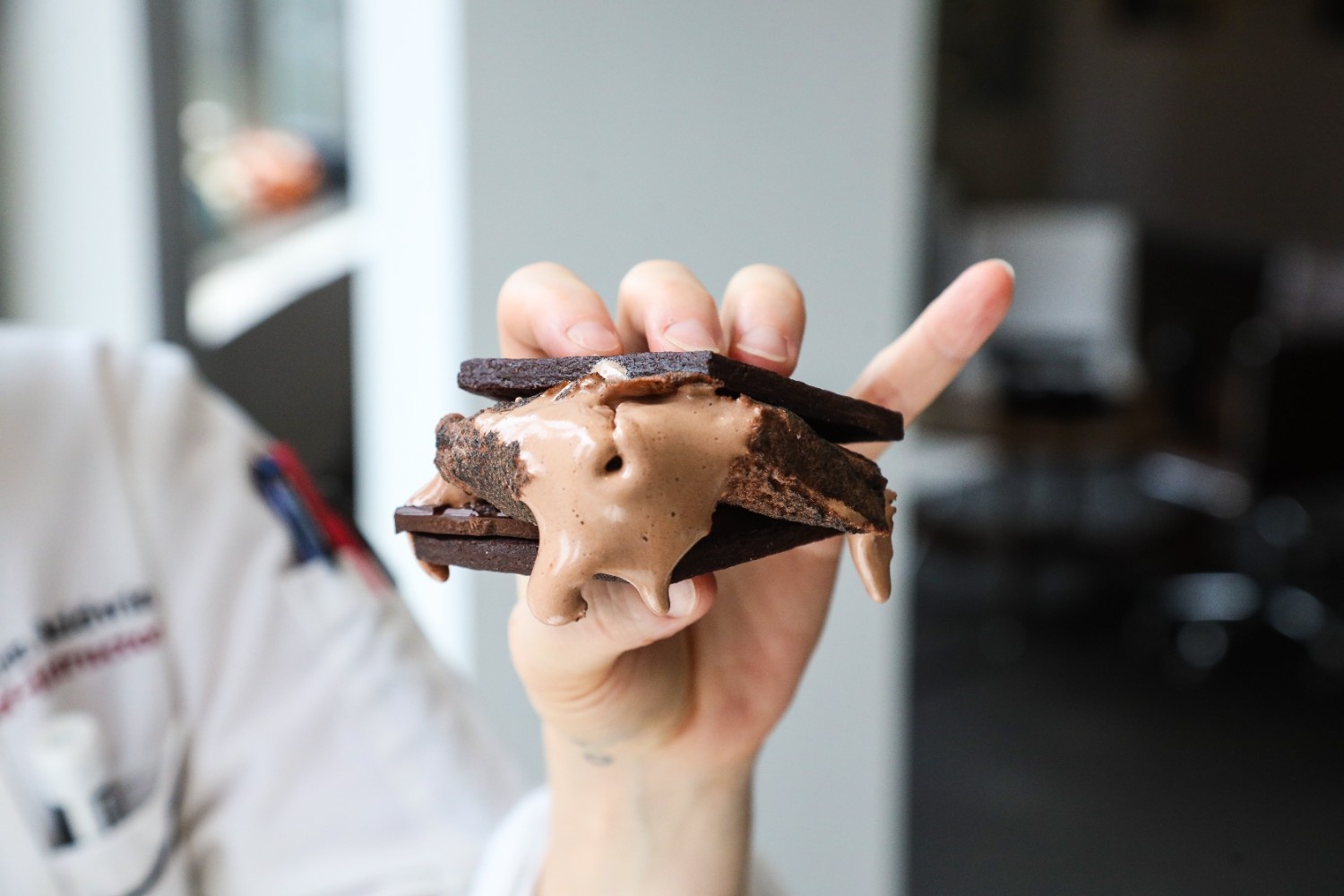
Hands are a powerful tool in food photography. They introduce a human element that instantly makes an image feel warmer and more relatable.
A hand sprinkling herbs, holding a fork or steadying a bowl reminds the viewer that food is meant to be shared and eaten — not just admired.
Take a look at how Gage & Tollner, where James Beard-nominated ICE alum Sohui Kim sits at the helm as chef/partner, incorporates hands to create a fun and inviting vibe in the photo below.

Incorporate Depth of Field
Texture doesn’t just have to be in the food — it can be added to the photo itself.
Leo often shoots with a wide aperture to create a shallow depth of field. This is known in the photography world as bokeh (portrait mode to the rest of us). It’s a technique that keeps the focus tight on the food while softly blurring the background, making textures pop.
“Narrowing the focus point directs the eye exactly where you want it to go,” he explains.
Many phones mimic this effect with portrait or cinematic modes, making it accessible even without professional gear.
That said, Leo recommends capturing both shallow-focus images and fully in-focus shots, so you have options for different use cases (like menus or social media).
Break the Rules
As with every tip in this series, there’s room to bend the rules.
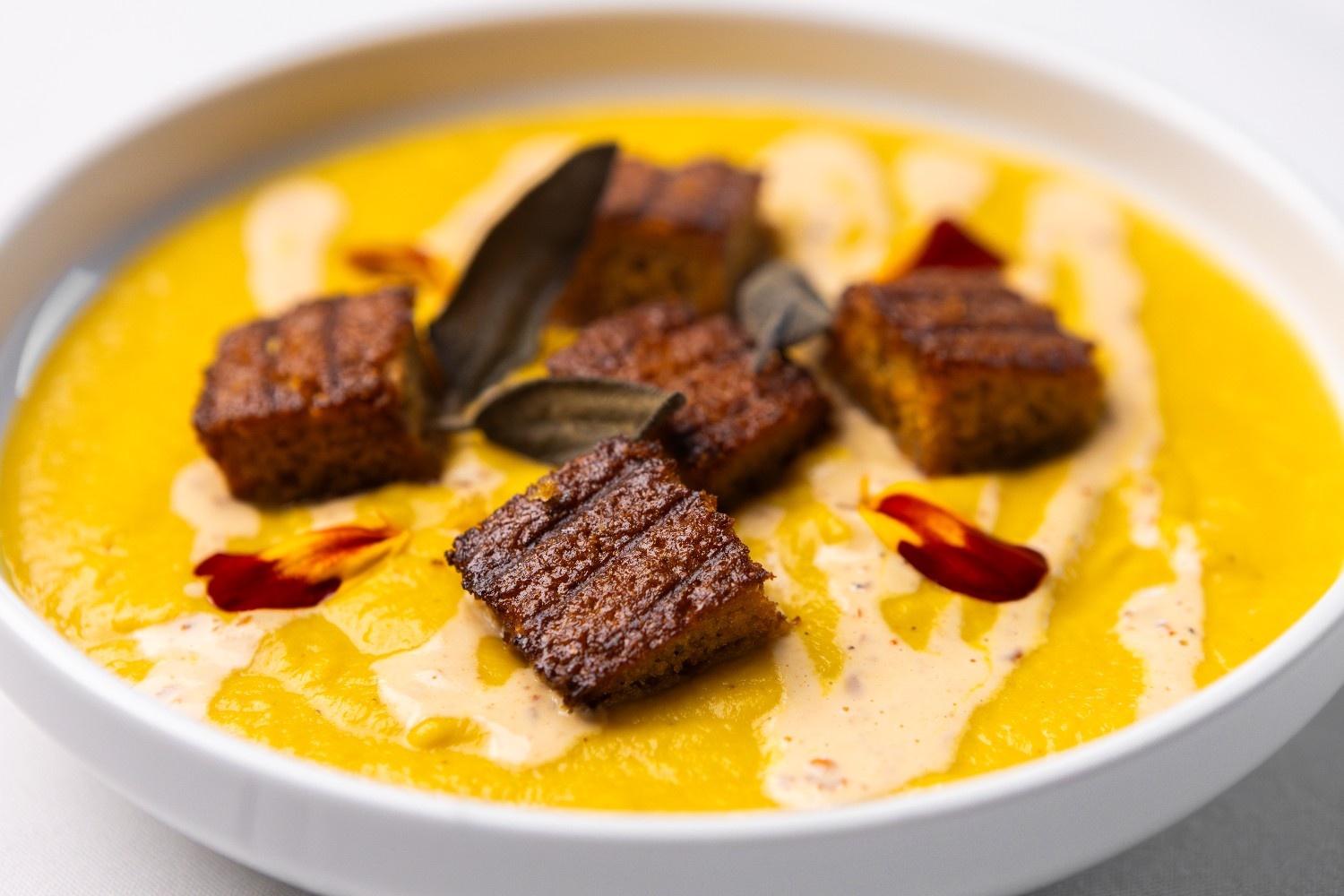
Exaggerated motion, extreme close-ups or heavy blurring can create dreamy, emotional or dramatic images. Sometimes oversaturation or intentional softness enhances the mood rather than detracting from it.
“If it’s intentional and it supports the story you’re telling, it can work,” Leo says.
Up next: The finishing touches — how subtle adjustments can elevate photos without overdoing it. Until then, keep experimenting and let your images move.