
A Holiday Memory from Alsace, France, and a Recipe for Tarte Flambée

Eating involves taste, smell, sight, touch and sound — with all the senses activated simultaneously, food has the power to create vivid memories. The holidays can be particularly nostalgic for this reason: the sizzle of frying latkes, the aroma of warming spices, or a single bite of a cherished family recipe can transport you to another time and place.
From our collection of holiday recipes from past and present ICE chef-instructors, today’s Alsatian Tarte Flambée is tied to a cherished culinary memory from the late Chef Ted Siegel.
Chef Ted, who passed away earlier this year, was a beloved Culinary Arts instructor at our New York campus, known for holding students to a high standard and believing they could achieve their culinary dreams. Though he is missed by students and colleagues alike, his legacy — and his culinary memories — live on at ICE.
Culinary Memories from New York to Alsace, France
Chef Ted grew up on New York’s Lower East Side, which set the stage for one of his earliest food memories.
In an interview on the ICE blog, he recalled walking into New York institution Russ & Daughters and reveling in the sights and smells of their smoked and cured fish, salads and prepared appetizers.
Fast forward to one of Chef Ted’s favorite Christmas memories, a cruise along the Rhine River in 2010. He shared the story back in 2012:
“The cruise began at the Swiss city of Basel and slowly worked its way up the Rhine to Amsterdam. One of our stops was Colmar, a beautiful medieval city in the French region of Alsace, known for its savory tartes.
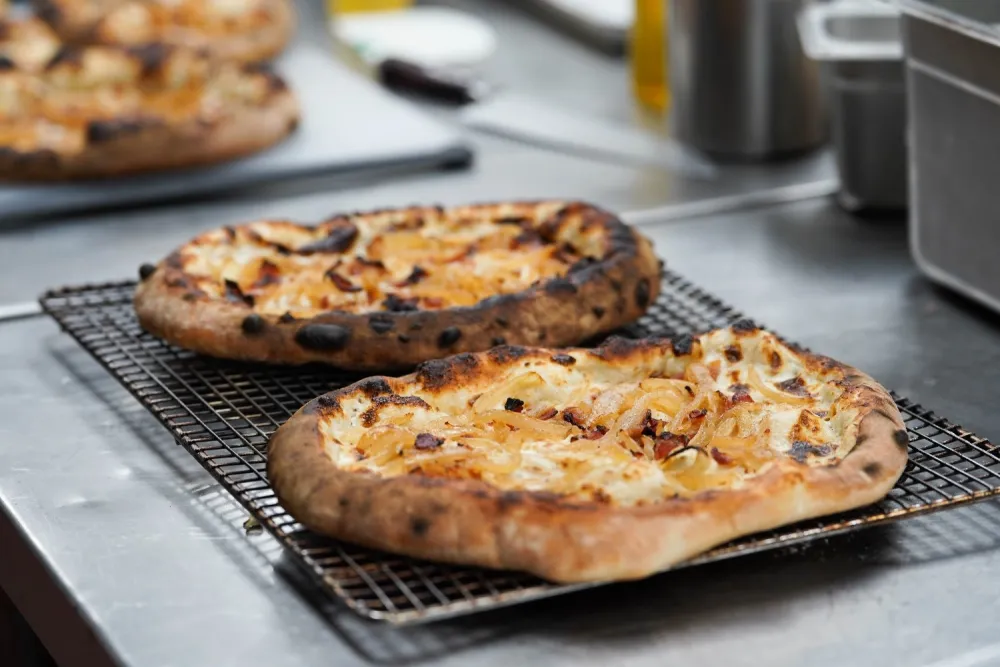
We came upon a "jewel box" of a Christmas market in the center of the old town, by the Dominican church at Place des Dominicaines. The scene was idyllic. There was a deep chill in the air, falling snow, and icicles hanging from old, shingled medieval buildings. The aromas were intoxicating — the sweet spices of mulled wine, the smoke of wood-burning fireplaces, and the smell of toasting tarte flambées oozing with melty, soft-ripened Muenster cheese, crème fraîche and crackling hunks of slab bacon.
Needless to say, we stopped at the first stand to warm ourselves with spiced mulled wine made from Alsatian pinot noir and to sample what was - by far - the most profoundly decadent tarte flambée one could ever hope to eat. The crisp texture and crunch of the baked dough topped with rich cheese and smoked bacon left us breathless. It was one of those rare experiences where time stands still and everything is absolutely perfect.”
Food and cooking are powerful ways to remember places, people and experiences. Just as Chef Ted’s Tarte Flambée sat at the heart of his holiday experience in Alsace, Chef Kathryn’s Mince Tartelettes and Chef Sabrina’s Swedish Meatballs will always remind them of the holiday season.
Bring a taste of Alsace to your holiday table with the recipe below. Happy holidays!

Ingredients
- 7 ounces pâte à pain ordinaire (recipe follows)
- 1 ounce canola oil, divided
- 4 ounces cottage cheese
- 1 tablespoon all-purpose flour
- 4 ounces crème fraîche
- 2 ounces bacon, cut crosswise in ¼" strips
- 4 ounces onion, thinly sliced
- Salt and pepper, to taste
- 4 ounces Alsatian Muenster cheese, sliced thinly and trimmed of rind
For Pâte à Pain Ordinaire:
Yield: 1¼ pounds
- ⅓ ounce fresh baker's yeast or ⅔ envelope active dry yeast
- 10 ounces water, lukewarm
- 1 teaspoon sugar
- 1 pound all-purpose flour, sifted
- Dusting flour, as needed
- 1 teaspoon salt
Directions
- Divide the pâte à pain ordinaire into 4 equal parts, and roll dough into rounds, each 8" in diameter. (The circles of dough will be quite thin.)
- Oil a baking sheet, using very little oil. Place dough on baking sheet. Pinch a very small edge around circumference of each circle. Refrigerate.
- Process cottage cheese in food processor until smooth, about 30 seconds. flour, 1 tablespoon oil, crème fraîche and salt and pepper to taste. Process again until smooth, about 30 seconds.
- In a skillet, sauté bacon and onion in remaining oil, until onion is barely tender.
- Remove dough from refrigerator, and spread cheese mixture on top, leaving a ½" uncovered between mixture and edges of tart. Sprinkle bacon and onions on top, followed by a layer of Muenster cheese.
- Bake tarts in a 425°F oven for 12-15 minutes, or until tarts are golden brown.
For Pâte à Pain Ordinaire:
- In a bowl, dissolve yeast in water and add sugar.
- Mound flour on a work surface, then form a well in center. Add salt to well. Little by little, incorporate water mixture into flour, kneading with fingers at first, and then hands, until a smooth paste forms, about 5-8 minutes of kneading total.
- Form dough into a ball, and place into a bowl and cover with a damp cloth. Let rise in a warm place for about 1½ hours.
- With lightly-floured hands, knead dough to deflate, 1-2 minutes. Reform dough into a ball. Using a knife, cut two incisions about ½" deep in a cross shape at top of dough.
- Return dough to bowl and cover with a damp towel. Let rise in a warm place for another hour or so.
A Note From Our Chef
Alsatian Muenster cheese should be 1-4 months old and soft-ripened.