
So You Think You Can Somm[elier]? Jhonel Faelnar, Bev Director at NAE:UN Hospitality, Explains What It Takes

The most memorable dining experiences have as much to do with service as with food.
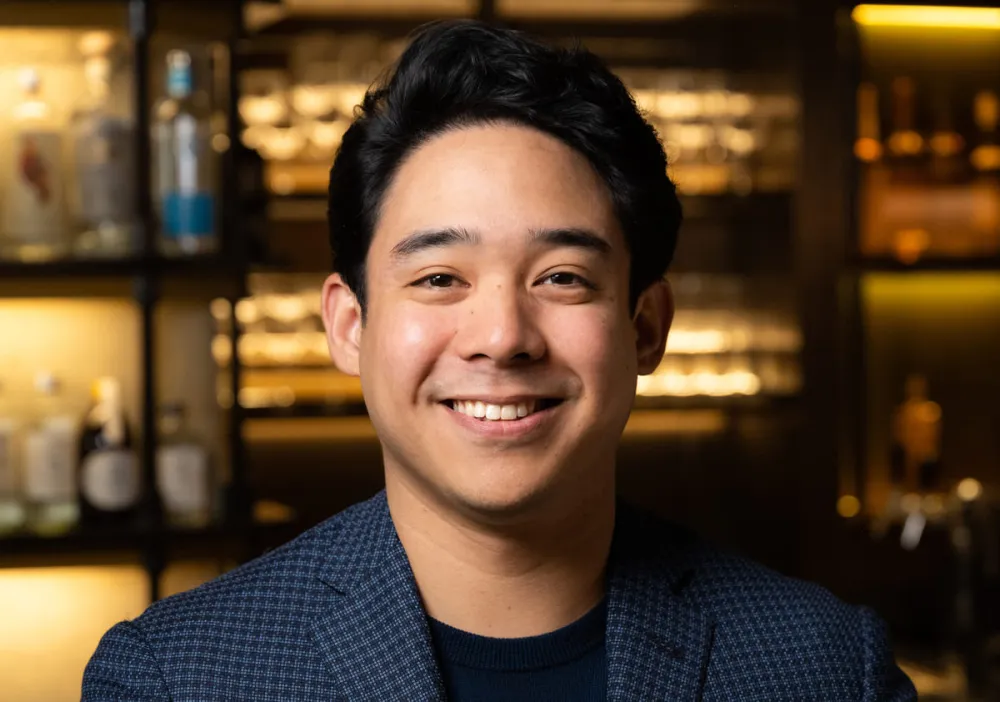
Jhonel Faelnar, alum and class valedictorian of his Intensive Sommelier Program at ICC (whose curriculum was implemented at ICE in 2020) took an unconventional route — moving from Manila, Philippines, to New York City via Japan and starting with a background in business (versus hospitality).
Today, he is the Beverage Director for NAE:UN Hospitality, overseeing critically acclaimed wine programs for several of New York’s most renowned restaurants. Among these are Atoboy and Atomix. (The latter was just named the #2 Best Restaurant in NYC by The New York Times.)
We sat down with Jhonel to talk about his experience in the intensive sommelier training program, his restaurant sommelier background, and his advice for aspiring wine professionals. Here’s what he had to say.
ICE: What sparked your interest in wine and hospitality?
Jhonel Faelnar: I grew up in Manila, and before moving to New York, I spent time in Japan. While I was there, I got really into food and beverage — not necessarily fine dining, but exploring different flavors and cuisines. I started developing an interest in wine, and when I moved to New York in 2013, I thought, “Maybe I can turn this into a career.”
At that point, I had no formal training in hospitality. I studied business in the Philippines, and my first restaurant job was actually from a Craigslist ad for a position at Amali on the Upper East Side. That experience gave me a solid foundation in restaurants and hospitality, though.
ICE: You also interned at Wine & Spirits Magazine. How did that shape your wine knowledge?
JF: Yes, I landed an internship at Wine & Spirits while I was still working at Amali. Josh Greene, the editor-in-chief, was a regular at the restaurant and was looking for a database intern. I had some programming experience, so I jumped on the opportunity.
While I was there, I helped migrate their database, but the biggest perk was getting to taste 40 to 80 wines per session. That was my real introduction to global wines. Even though I had no context for most of them at the time, it was an invaluable way to train my palate.
ICE: What led you to pursue intensive sommelier training?
JF: After my internship at Wine & Spirits, I had a moment where I was deciding between a more traditional career or diving into wine. I knew that if I wanted to succeed, I needed to build my knowledge quickly. That’s when I found the Sommelier Intensive at ICC. [The Intensive Sommelier training course is now offered at ICE.]
I joined the October 2013 cohort, which wrapped up in January. The program was exactly what I needed — it gave me a structured space to study and learn from master sommeliers while I was working full-time as a bartender and part-time at Wine & Spirits.
ICE: What was your experience in the program? Any standout moments?
JF: The program was intense, but I was completely focused. The early morning classes followed by long nights at the restaurant were exhausting, but I loved it. I’d often study in the school library ... for a few hours before heading into work.
One of the biggest turning points came through my connections at the school. Roger Dagorn, MS, one of my instructors, was looking for a sommelier at One Five Hospitality. One thing led to another, and by the time I graduated, I had my first official sommelier job at The Fourth at the Hyatt Union Square.
ICE: How did your career progress after graduation?
JF: After One Five Hospitality, I moved on to The Nomad, which really solidified my experience in high-level wine service. From there, I took over the wine program at Atomix, a two-Michelin-starred Korean fine dining restaurant, where I built the program from scratch.
Since then, I’ve grown into my role as Beverage Director at NAE:UN Hospitality, where I oversee the wine lists for Atomix, Atoboy, and Naro. Each restaurant has its own identity — Atoboy has a more natural wine focus, Atomix is high-end and collector-driven, and Naro is somewhere in between.
ICE: You were also named to Wine Enthusiast’s 40 under 40 list. What makes a great sommelier today?
JF: The best sommeliers aren’t just encyclopedias of wine knowledge — they listen. You need to read the room, understand your guests, and tailor your recommendations to the moment. Wine is emotional. It is about memory, connection, and experience.
ICE: How do you approach building a wine program?
JF: It starts with an open mind. Every restaurant is different, so I listen closely to what the chef envisions, what the space feels like, and what the guests want.
At Naro, which opened in 2022 at Rockefeller Center after Atomix, the wine program was an extension of what we had built before — just on a larger scale. With a bigger space, budget, and cellar, the goal was to differentiate while staying true to the restaurant’s identity.
Naro became a destination for collectors, with a strong focus on Champagne, Burgundy, and other rare wines. Atoboy, by contrast, is all about fun, approachable wines — bottles that are easy to drink and don’t break the bank. Naro falls somewhere in between, catering to guests who might be out for a casual Friday night or those looking to explore our deep cellar selections.
ICE: What industry trends are you paying attention to right now?
JF: The biggest shift I’ve seen in recent years is the rise of low-ABV and non-alcoholic beverages. More diners are drinking less alcohol, but they still want an elevated experience.
Consumers today are more conscious of what they’re drinking, where it comes from, and how it’s made. In New York, particularly in Brooklyn, Manhattan, and parts of Queens, we see incredibly knowledgeable buyers, even outside the industry. Transparency, sustainability, and farming practices — whether organic, biodynamic, or otherwise — are playing a bigger role in purchasing decisions than ever before.
ICE: Do you have any advice for aspiring sommeliers?
JF: Be honest with yourself about what excites you. Wine is a huge industry — you don’t have to work in restaurants to have a fulfilling career. Try a little bit of everything — retail, distribution, writing, production — before deciding on a path.
Most importantly, keep learning. The best sommeliers never stop studying, tasting, and asking questions.
ICE: Looking ahead, what is next for you?
JF: I recently launched Likha Wine Co., my own winery based in Santa Barbara, California. “Likha” means “to create” in Filipino, and it’s been an amazing journey crafting my own wines. Our first vintage, from 2022, just launched with my own charcoal sketch on the label.
I’ll also be sitting for my Master Sommelier theory exam in 2025. It’s a long road, but I’m excited for what’s ahead.
* photo courtesy of Charissa Fay