
What Happens When You Drop Pre-Med for Culinary School? The True Story of Chef Steve Samson


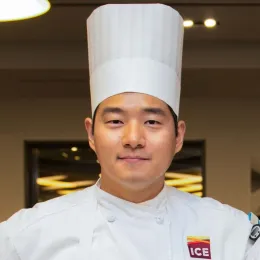
To celebrate 50 years of ICE, we're honoring 50 distinguished ICE alumni. Meet Steve Samson, chef/owner of iconic Los Angeles restaurants Rossoblu and Superfine Playa. (The former was a five-year Michelin Guide Bib Gourmand pick and earned the #10 spot on the last of legendary food critic Jonathan Gold’s 101 Best Restaurants list.)
For chef and ICE 50th anniversary distinguished alum Steve Samson, childhood summers spent in the idyllic countryside of Bologna, Italy laid the groundwork for a storied and successful culinary career in America. Surrounded by the renowned cuisine of Emilia-Romagna, the famed Food Valley of Italy, Samson developed a keen palate and an appreciation for quality ingredients at an early age.
Today, he’s the executive chef and owner of iconic Los Angeles restaurants Rossoblu and Superfine Playa.
Name any industry accolade and Samson has likely earned it. From coveted spots on the late, great food critic Jonathan Gold’s 101 Best Restaurants list to recognition from both the James Beard Foundation and The Michelin Guide, Samson’s achievements span 25-plus years of cooking in LA. And yet, his culinary career almost didn’t happen.
Samson initially went to school to be a doctor, not a chef. Luckily for the restaurant world, his detour through medical school at New York’s Columbia University was short-lived and followed by a course-correcting culinary program at ICE.
After graduating ICE, Samson spent years perfecting the art of Neapolitan pizzas and pasta a mano.
These days, he’s cultivating a new generation of kitchen talent. He was a speaker, alongside Curtis Stone, at ICE LA’s commencement in May, and is balancing the rigors of restaurant ownership and the joys of parenting.
ICE asked him to catch us up on his busy life and to share his thoughts on how the industry has changed over the years — for the better. Here’s what he had to say.
* The following interview has been condensed and edited for clarity.
ICE: What do you consider your biggest professional achievements?
Chef Steve Samson: My greatest achievement has been overcoming numerous obstacles to keep our restaurant open and our team employed. We opened with almost no working capital, so we had to be successful from day one. We’ve overcome a kitchen fire that closed the restaurant for three months and the pandemic. We’ve constantly reinvented ourselves to keep the restaurant open.
I’m proud that I’ve fostered an inclusive and kind restaurant culture. We have very low turnover, and every team member is treated with respect and compassion.
ICE: To what do you attribute your success so far?
Chef Steve: Hard work and consistency.
ICE: When did you realize that you wanted to pursue food as a career?
Chef Steve: I studied pre-med at Columbia before attending ICE. I always knew I had a passion for food, but it wasn’t until I set foot in a professional kitchen that I knew I had found my passion.
ICE: Has the industry changed since you first began working in restaurants?
Chef Steve: [It’s] much kinder now, in a good way. Creating a non-toxic work environment used to be an afterthought, now it’s essential.
ICE: What does a typical day look like for you now?
Chef Steve: Since I have an amazing team, I’m able to focus on family first. I get my kids up in the morning, I make them breakfast, pack their lunches and then take them to school. I have taken over sfoglino (pasta maker) duties at Rossoblu so most of my prep work revolves around that. Every Wednesday morning, I go pick up produce from our local farmers at the Santa Monica farmer’s market. It’s a great way to keep track of seasonal produce and find inspiration.
ICE: What would you say to people looking to follow a career path similar to yours?
Chef Steve: Follow your passion. Mise en place is king. Don’t get caught up in day-to-day restaurant drama. You control your own path.
ICE: When you think of ICE, what is the first word that pops into your mind?
Chef Steve: Launchpad!
ICE: Before you enrolled, what was it about ICE that suggested it was a good fit for you?
Chef Steve: I learned that being organized and dependable is as important as desire and talent.

ICE: How do you use mentorship, which is a value that most chefs and people in the industry really care about, especially at a culinary school. Did you have mentors?
Chef Steve: Piero Selvaggio was my first real mentor. Even though he isn’t a chef, Piero taught me that exceptional hospitality means much more than just excellent food.
ICE: Are you mentoring anyone now?
Chef Steve: I hope that everyone who has worked with me learned something that’s been vital to their own careers. More importantly, I hope they feel as if they were treated fairly, with respect and compassion.
QUICKFIRE QUESTIONS
Favorite kitchen tool? A mattarello (rolling pin).
Salty or sweet? Salty.
Favorite food holiday? Easter.
Favorite food city? Bologna, Italy.
In order of preference: cook, bake, eat? Cook, eat, bake
Favorite cuisine? Japanese.
Go-to “easy” recipe? Spaghetti carbonara.
Go-to “wow” recipe? Tagliatelle al mattarello.
Most frequently used non pantry essential ingredient? Parmigiano Reggiano.
Summer, spring, fall or winter, which one is your favorite food season? Summer.
* Experience varies by student, with outcomes contingent on factors including graduate aptitude, job market, place of residence and work history, among others.