
Sauce-Making 103: Managing Reduction, Emulsification, and Temperature in Béarnaise Sauce

A big part of being a chef is cooking under pressure. It’s a balancing act of managing incoming requests, executing dishes, timing orders, tracking mise en place, and much more. It’s hard and it takes practice — and the same holds true for making sauces.
The third and final lesson in our sauce-making series incorporates techniques used in vinaigrettes (lesson one) and pan sauces (lesson two), and puts them into a pressure cooker environment.
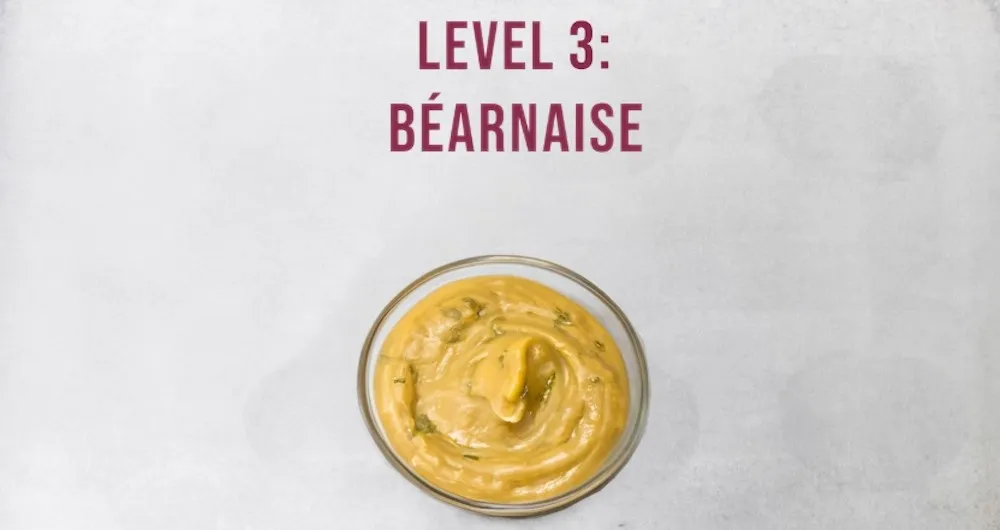
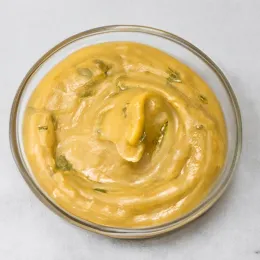
Today, we’re making Béarnaise. This classic French sauce is an emulsion of butter and egg yolk flavored with lemon, vinegar, tarragon and shallot.
To make this recipe, “You need to reduce, emulsify and control heat, and if you get one variable wrong, the Béarnaise will break,” says ICE Lead Recreational Chef Samantha Landwehr. Use her pro tips as your guide for making this sauce.
Common Mistakes to Avoid When Making Béarnaise
Here are four common mistakes Chef Sam sees when home cooks make Béarnaise, and how to avoid them:
- Overcooking the eggs: “People often take it too far when beating the eggs over heat,” says Chef Sam. Her recommendation? “Once the eggs are frothy — indicating that they’ve started to cook — immediately remove the bowl from the heat.” If the eggs overcook, they can curdle.
- Not having the butter at the same temperature as the eggs: The recipe calls for melted butter that is warm, which means a little warmer than body temperature. “The butter and eggs need to be the same temperature so the butter molecules emulsify with the egg properly,” advises Chef Sam. If the butter is hot, it may cook the eggs, and semi-cooked eggs prevent emulsification — meaning the sauce won’t come together.
- Adding all the butter at once: In this recipe, the butter is added in four additions — and is slowly streamed in while whisking each addition. Just like with the vinaigrette from lesson 1, if all the butter is added at once, the fat molecules can’t break up enough to be incorporated, and this will result in an oily layer on top of the sauce.
- Trying to reheat Béarnaise: The sauce must be kept warm to serve — neither piping hot nor left to cool after making — or the emulsion can break. Store the Béarnaise in a warm spot in your kitchen until ready to serve. “Béarnaise is such a delicate emulsion that it can’t be saved or reheated,” adds Chef Sam.
Still uncertain? “Don’t be afraid,” says Chef Sam. “The ingredients are not expensive, and the worst that can happen is the sauce will break and you start over.”
If you’re planning to make it at home, Chef Sam recommends practicing ahead of the day you want to serve it. “Once you’ve made Béarnaise once, it’s not challenging to replicate.”
Serving Béarnaise
According to Chef Sam, this rich sauce goes well with proteins and is traditionally paired with steak. She also suggests serving it alongside grilled vegetables as a dip.
Related: See how an ICE chef prepares steak and Bearnaise on Epicurious
The three recipes in this series are not all-encompassing, but they act as a base to build out your sauce arsenal. From here, create your own variations to these foundational recipes or try your hand at modern sauces like foams, gels and spherification. (These are just a few of the topics explored in ICE’s Advanced Contemporary Cuisine & Technique program.)
Ingredients
- ½ cup champagne vinegar
- 2 shallots, minced
- 1 teaspoon cracked black pepper
- 3 tablespoons tarragon leaves, chopped and divided
- 4 egg yolks
- Juice from 1 lemon, divided
- 1½ cups butter, melted and warm
Directions
- Combine vinegar, shallots, black pepper, and half the tarragon in a small pot.
- Reduce over medium heat until almost all vinegar evaporates, leaving about 2 tablespoons in pot.
- Meanwhile, prepare a double boiler. (Fill a medium pot halfway with water and bring to a simmer over medium-high heat.)
- In a medium bowl, vigorously whisk egg yolks, half the lemon juice, and vinegar reduction liquid until yolks begin to froth.
- Place bowl over double boiler and whisk constantly to cook eggs gently. Monitor the sides to prevent any egg from sticking and scrambling. Cook until eggs thicken slightly and lighten in color.
- Remove from heat and slowly stream in a quarter of the butter while whisking constantly.
- Return bowl to heat and whisk 30 seconds to keep egg mixture warm.
- Repeat steps 6 and 7 until all butter has been added and mixture is homogenous.
- Whisk in remaining tarragon and lemon juice.
- Adjust seasoning to taste with salt and pepper, and serve immediately.