
Culinary School Advice: 5 Tips for Future Students (From a Former Student)

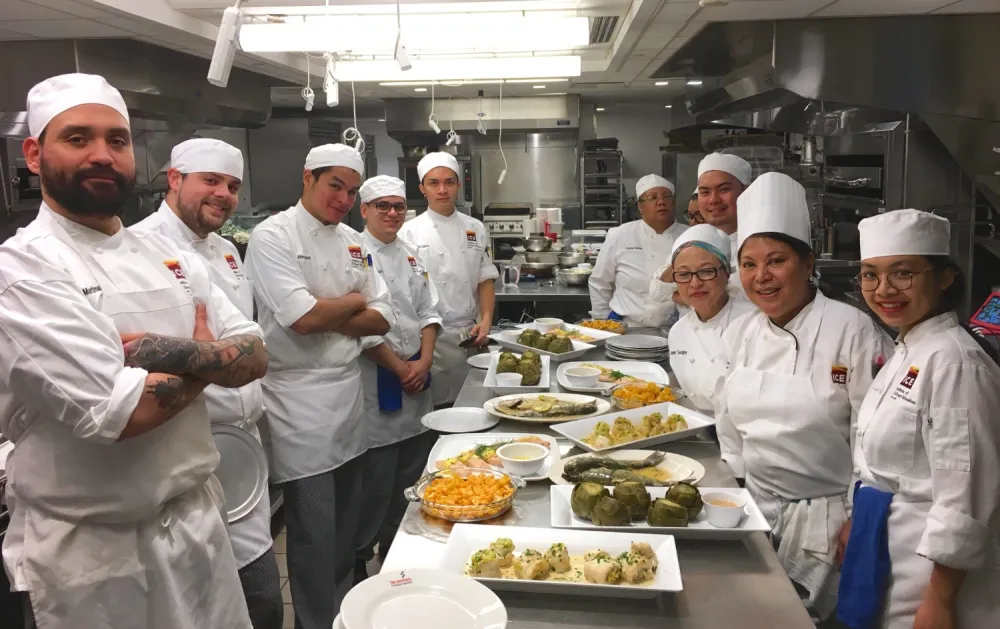
Culinary classrooms are designed to provide a rich learning environment. There are, however, additional ways to prepare yourself for school.
That's because culinary school is about more than practicing knife cuts and perfecting sauces. The way you spend your time outside of class — the habits you build, the events you attend and the opportunities you say yes to — can have a tremendous impact on your career.
Looking back on my time as a student at ICE, some of the most important lessons I learned didn’t come from a recipe, but from the experiences I sought beyond the kitchen.
Here are five tips for enriching your culinary school experience.
1. Get to Class Early
In the restaurant world, “on time” is late. If class starts at 8 a.m., you need to be in your uniform with your tools, scrap pan and cutting board set up at your station at that time. (A notebook, pen and Sharpie are essential, too.) The kitchen’s dish station and sanitation buckets also need to be prepped before the lesson begins.
In addition to having time to complete the physical setup, arriving early helped me prepare mentally. I was able to clear my mind so I could focus on the day’s lesson, leaving thoughts of my commute and any outside life stressors behind.
Arriving to work on time is greatly valued in the restaurant industry, so it was really helpful to build the habit while I was still a student.
2. Explore Campus
One of my favorite spots on ICE’s New York City campus, where I studied, was the library. Filled with hundreds of titles ranging from cookbooks and memoirs, to food magazines and reference books — it enabled me to thumb through my favorite ice cream book (David Lebovitz’s “The Perfect Scoop”) at my leisure. I also used the library as a quiet space to read lectures and complete homework assignments.
The NYC campus also houses a Hydroponic Garden and Chocolate Lab — two places that piqued and heightened my senses. While harvesting herbs and flowers from the garden (in order to practice plating), I refined my palate and olfactory discernment by tasting fresh cinnamon, lemon, and Thai sweet basils and more. (See what the garden looks like in full bloom in the video below.)
3. Attend Demonstrations & Discussions
ICE hosts demonstrations, panel events and Q&A sessions with chefs, restaurateurs, cookbook authors and other industry experts. Not only did I meet my culinary heroes, ICE alum Gail Simmons and Chef Daniel Boulud — who tasted the dish I made for my practical exam — they also told us the steps they took to achieve their renowned culinary careers. (Listen to Simmons reflect on her journey in the video below.)
Attending these events gave me an insider’s perspective on the industry. Many of the guests shared stories about their successes and challenges, in addition to what they’d wished they’d known before getting into the industry. I even saw fellow students networking with chefs to arrange trials or asking for career advice.
I recently chatted with fellow grad Steven Gao, who agreed that it’s important to take advantage of the school’s industry connections. “There are many events and opportunities to meet other restaurant groups, restaurant owners and established chefs — and that’s all through ICE,” he said.
4. Volunteer
Volunteering is a great way to gain industry experience while broadening your culinary horizons. It puts the skills studied in school into practice and provides networking opportunities with culinary professionals across a range of careers.
Through ICE, I volunteered at New York EATSS, an event hosted by the American Indian College Fund featuring indigenous foods from Native American chefs. While learning about Navajo culinary traditions from Chef Freddie Bitsoie, I plated samples of his dish with speed and precision, staying calm under the pressure. It was my first experience of the fast pace of restaurant work in a setting with real stakes — and the first time I felt the jubilant high of working on the line.

5. Walk at Commencement
Though it felt superfluous before the ceremony, walking at graduation was one of the highlights of my student experience. It was an acknowledgment of all the hard work I had put in and my commitment to pursuing my passion.
Chef Marcus Samuelsson was the keynote speaker, and Chef Orlando Soto (lead pastry chef at three Michelin-starred Le Bernardin) was the alumni speaker. I was inspired listening to their speeches — especially knowing that Chef Orlando had sat where I was not too long ago. Watch a recap of my commencement ceremony below.
The habits you build, the people you meet and the experiences you have outside of class can shape your knowledge and career just as much as your knife skills.
Education doesn't stop at the classroom — getting involved on campus can add depth to your experience long after class ends.
If all this culinary school talk ignites your professional passion, you don’t have to wait long. New classes start as early as next month — get info here.