
Ozempic Is Reducing Restaurant Check Averages — These 4 Tactics Curb Losses

An estimated 12 to 13 percent of American adults have taken a GLP-1 (glucagon-like-peptide-1) drug*. That number increases when referring to New York City, which exceeds the national average, particularly in affluent areas where weight loss prescriptions are prolific**.
With restaurants already navigating higher-than-ever cost of sales, labor and occupancy costs, adjusting to the dining shifts driven by GLP-1s presents a significant hurdle.
It’s no secret that restaurants are struggling with the effects of diners taking Ozempic and other GLP-1 drugs. They affect both the brain and the gut, lessening appetite and cravings while making certain foods less appealing. As a result, diners are eating — and ordering — less.
In response, restaurants have adjusted menus and portion sizes.
But, as I teach in ICE’s Restaurant & Culinary Management program, the concepts of menu design and purchasing are vital for the success of any culinary operation. Chefs and owners must understand and be strategic when it comes to labor management; food and beverage costs; and revenue control — and they must know how each of these can be used to adapt to dining trends.
For more than 20 years, I have opened, operated, managed, licensed and consulted over 30 food and beverage venues in New York City. I also serve as the Executive Director of Industry Relations, and I am a board advisor and instructor at ICE. As such, I’m both privy to the struggles restaurants are facing and sufficiently experienced to recommend strategies that can be used to address them.
Additionally, having taken GLP-1 drugs myself, I understand firsthand how diners’ preferences can be impacted by them.
Here are four ways operators can offset a reduction in check averages owing to Ozempic and other GLP-1s.
Smaller Menus
Smaller menus were on the rise before COVID, and the pandemic only hastened the trend.
When diners are eating less overall, fewer choices on the menu may be financially beneficial. Costs decrease because fewer ingredients are needed to cover every dish (often reducing waste). Additionally, less labor may be required to execute the smaller menu.
Cross-utilization of products (using the same ingredients across multiple dishes) will only add to that benefit — less waste and fewer products to purchase.
While revenue may dip, profitability will likely increase.
Meal Composition
Knowing your audience comprises a decent number of people on GLP-1s means dishes need to be carefully appraised.
If an entrée contains five ounces of beef, consider lowering it to four ounces and adding more vegetables. For someone on a weight-loss drug, the latter may look more appetizing and allow them to finish their meal (and have less guilt that they’re wasting food).
In this example, you may drop the price by a few dollars but make more contribution margin (the difference between the cost of the dish and what you charge for it). This is because the gross profit on your accoutrements is less costly than the one ounce of protein. So, your steak dinner, which was initially priced at $72, can be reduced to $65, and you actually net more dollars (in contribution margin).
This has the added bonus of making your menu appear more price-sensitive in a challenging economy.
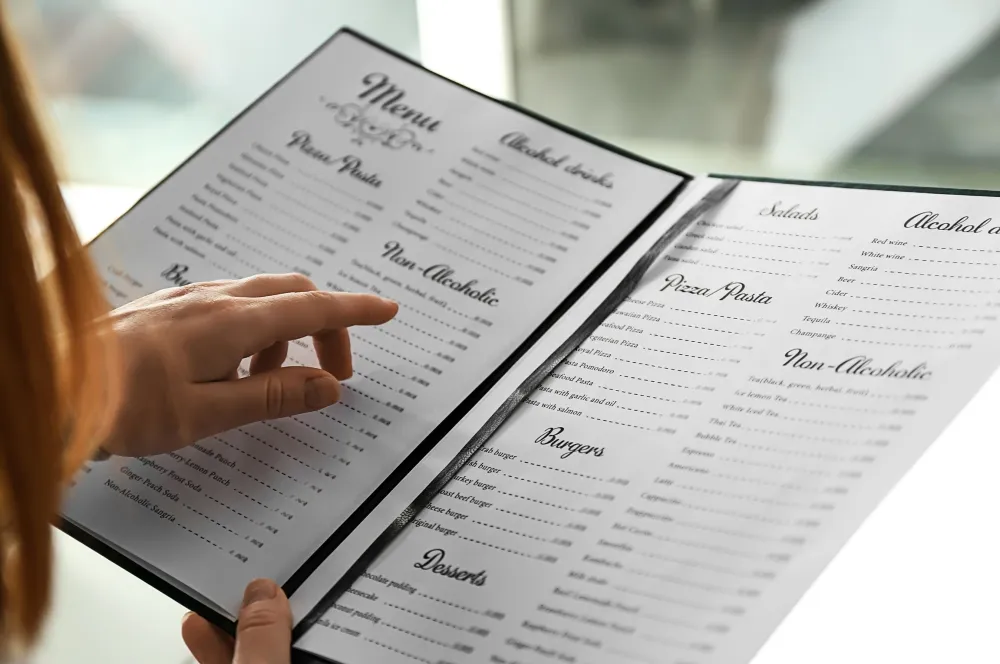
Low and Non-Alcoholic Drinks
Generally speaking, alcohol consumption falls off while taking a GLP-1 drug. Where someone not on the drug could easily start with a cocktail and share a bottle of wine between two people, doing so on the drug would be quite difficult (and may actually make one sick).
There is already a trend towards low and no-alcohol drinks, so there’s no reason not to expand upon that to satisfy the needs of GLP-1 users.
While many factors come into play, including whether your liquor is high- or low-end, here’s an example:
Assuming your drinks (juices) are not all freshly squeezed (which adds to the product cost and labor component), your cost for a non-alcoholic drink will be less expensive.
- A $16 non-alcoholic drink may cost you $2, netting you a $14 contribution margin.
- An $18 alcoholic drink may cost you $6, netting you $12.
So, while revenue is lower, your contribution margin is higher.
Better still, low-alcohol may have higher sales for GLP-1 diners as they can likely tolerate more (two cocktails as opposed to one).
In summary, while revenue may decrease, you can manage your cost of sales to improve your contribution margin, likely netting you greater profit.
Smaller Desserts
For people on GLP-1s, dessert is less desirable. There's also a reasonable chance that your diner has Type II diabetes (which could be the reason they’re on the drug). For these diners, smaller desserts with less sugar or alternatives to sugar (like Stevia) are preferred. Desserts designed to share are also smart.
Again, you may be able to sell smaller portions and charge less, but your food cost percentage will be lower.
If a piece of cake is $16 on your menu and costs you $4 to purchase, you can cut that piece in half and charge $10, thus lowering your cost to $2. Patrons will pay less and be sated, and your food cost percentage will shrink from 25 to 20 percent.
These strategies only skim the surface of contribution margins, menu design and cost of sales percentages.
For those looking to build the skills needed to adapt to trends like GLP-1 dining habits and the many others shaping today’s industry, ICE’s Restaurant & Culinary Management program offers a deeper dive. The program is offered at ICE’s New York and Los Angeles campuses as well as fully online — request more information here.