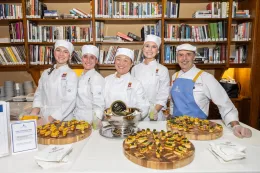

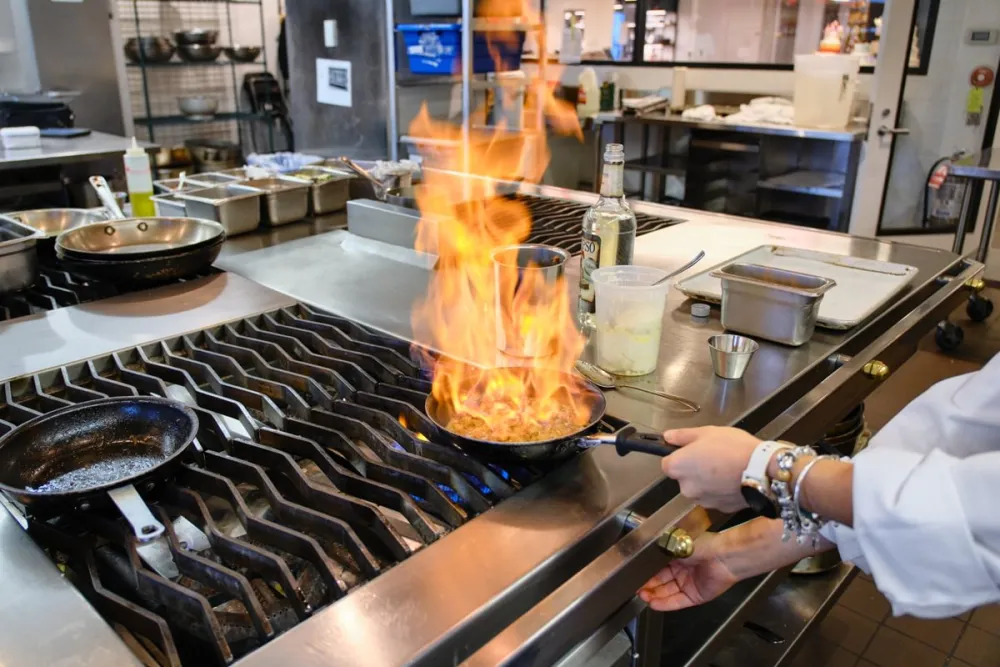
Whether it’s a tableside dessert or a pan sauce, flambé adds flavor and drama to every dish.
Flambé isn’t just about the flame — it’s about control. Behind the brief burst of fire is an understanding of how alcohol interacts with food and a technique rooted in timing and heat management.
For culinary students, it’s less about spectacle and more about learning how to build depth quickly and intentionally.
What Is Flambé?
Meaning “flamed” in French, flambé involves adding alcohol — typically Cognac or rum — to a hot pan and igniting it.
As the alcohol burns off, the sauce reduces, concentrating flavor and encouraging caramelization.

Though often associated with tableside presentation, flambé has its roots in classical French cuisine, where it’s used to deepen sauces and integrate spirits into both savory and sweet dishes.
From a scientific standpoint, the process is simple but impactful. When alcohol ignites, much of the ethanol burns away while aromatic compounds remain, enhancing the overall flavor of the dish. At the same time, the heat helps deglaze the pan, lifting the browned bits — known as fond — that carry concentrated flavor.
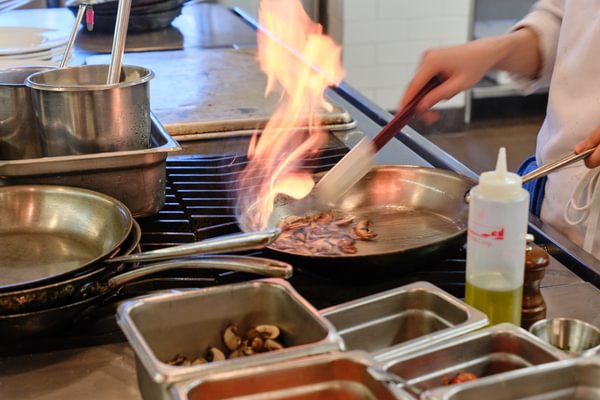
“Flambé is about balance,” says Director of Culinary Affairs, Chef Hervé Malivert. “You’re not trying to burn the dish — you’re trying to enhance it.”
In professional kitchens, the technique is used with intention. Too much alcohol can overpower a sauce, while too little heat won’t achieve the desired effect. Learning how to control that balance is part of developing confidence on the line
How Do You Flambé Safely?
Because the technique involves an open flame, control matters. In professional kitchens, preparation is just as important as execution. Chefs often warm alcohol slightly before adding it to the pan to help it ignite more evenly, and they avoid pouring it directly from the bottle to prevent flare-ups.
It's also important to keep a clear workspace. Loose towels, crowded burners or distractions can quickly turn a controlled technique into a hazard.

“Take your pan away from the flame, add your brandy, put it back and let it go,” says Chef Hervé.
He prefers Cognac, brandy and whiskey — in that order.
Keeping alcohol levels measured, maintaining distance from direct heat when pouring and staying aware of your surroundings are all essential. It’s a technique that rewards focus and reinforces the importance of precision in the kitchen
Where You’ll See Flambé
Flambé is often associated with classic dishes and desserts like Bananas Foster, Cherries Jubilee and Crêpes Suzette, many of which are prepared tableside.
Beyond presentation, the technique plays a functional role in building flavor. Students see this firsthand in dishes like Lobster Américaine, where flambé helps create a rich, layered sauce.
Techniques like this are introduced early in culinary training because they build foundational skills — timing, control and flavor development — that carry through every station in the kitchen. It’s not just about mastering a single method; it’s about learning how small decisions shape the final dish.