
Private Chef Interview Prep: 3 Tips For Landing the Gig

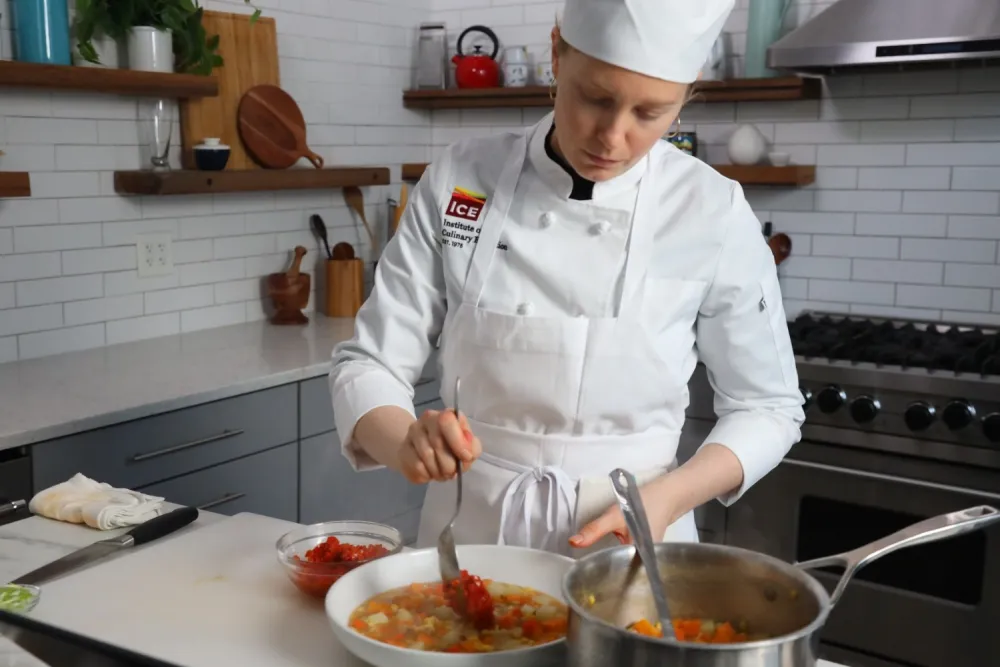
The skills required to be a private chef don’t always match those of their restaurant counterparts. Private chefs need technical expertise, strong interpersonal skills, a professional demeanor — and the ability to demonstrate all of this in an interview.
Private cheffing can be an attractive career for chefs who seek jobs outside restaurant kitchens. Though the term personal cheffing is used synonymously with private cheffing, the two are not the same. The difference? Personal chefs typically meal prep and cook for multiple clients each week, while private chefs are employed by a single household and cater to all of the client’s culinary needs. The insights that follow can be applied to both career paths.
But First, the Benefits of Private & Personal Cheffing
Both of these unique careers offer increased scheduling flexibility and creative license without the demands of the restaurant environment.
There isn’t one route into either role, and the following stories show just how varied personal and private cheffing can be:
- Maddy DeVita, who managed Chef Daniel Boulud's social media presence as her ICE externship, landed a job as a private chef directly after graduation.
- Leslie Lipton, a career-changer lawyer turned chef, initially worked in restaurants and catering after graduating from ICE. She now works as a private sailboat chef.
- Adrienne Cheatham, a Top Chef finalist and ICE alum, cooked her way through the fine-dining kitchens of Chefs Eric Ripert and Marcus Samuelsson before transitioning to private cheffing.
(For more insights on this career path, check out advice and insights from four private chefs.)
Whether you’re researching these careers for the first time or have an interview next week, here are a few tips for securing a personal or private chef gig.
Gain Resume-Worthy Experience
Like many job interviews, prior experience is one of the first things employers look for.
Formal culinary training can set candidates apart as having a strong, formal knowledge of culinary fundamentals and techniques — and graduating from a top-ranked culinary school lends credibility. (ICE was ranked the #1 culinary school in America by USA Today.)
Restaurant experience can also help a candidate stand out. Cooking in restaurants reinforces the technical, organizational, and time-management skills that can help a private chef be successful.
Experience at a Michelin-starred or acclaimed restaurant can signal that a chef is comfortable executing at the highest levels — and the name association lends aspiring private and personal chefs an advantage.
Tiana Tenet, founder of Culinastas (a service that matches clients with private chefs for short- and long-term gigs), agrees. “It makes it a lot easier when you’re sharing all the amazing restaurants a chef has worked at. The client sees the name of a restaurant and associates it with the chef,” she says.
“Clients will always pick the resume with high-profile names on it,” adds Tenet.
So how does one acquire restaurant experience? Pounding the pavement to land a job working the line is one way. Another is through a culinary school externship. Most ICE career-training students*, for example, work in a real-world food business as part of their curriculum — and with campuses in New York City and Los Angeles — ICE has connections with top chefs like Stephanie Izard and Tom Colicchio. (See what Colicchio has to say about how real-world experience shapes lasting careers in the video below.)
Don't Just Sharpen Your Knives
Treat private and personal chef interviews just like you would a business interview. Prepping materials well in advance can be the difference between applying for a last-minute gig or missing out.
- Make sure your resume is up-to-date and your headshot is recent. “[I’ve] seen chefs not get jobs because of spelling errors in [a] resume,” says ICE graduate and private chef veteran, Dave Shamoon.
- “Show up in nice clothing [with a] professional demeanor,” he adds.
For private chefs, resumes aren’t just on paper. “[Social media] is a good visualization of your resume,” says Tenet.
Building a visual portfolio can showcase a range of culinary skills, including plating and experience with a range of cuisines and ingredients. In addition to advertising, social media is a great networking tool to find clients.
Tenet cautioned that clients almost always look up private chef candidates, so “stay private or stay professional.” (Here are some tips to improve your food photography so your social media reflects your culinary skills.)
Showcase Soft Skills
Owing to the unique nature of this career, wherein chefs work inside a client’s home, demonstrating specific soft skills to employers is crucial.
This begins even before the interview starts — most private and personal chef interviews comprise two parts: a standard Q&A session and a trial (during which clients assess culinary skill and ways of working). At a minimum, be professional, organized, punctual, and communicative via text and email.
Regarding trials, for Chef Ayla Ochoa, who has worked as a private chef for over five years, cleanliness and organization are two musts. “You want clients to feel like they are getting gourmet treatment,” she says.
That said, technical ability isn’t the only thing being evaluated here. So, too, are your behavior and interactions.
- Be warm and personable: make sure the client likes having you in their home with their family.
- Be mindful of their home kitchens: take care of appliances and kitchen equipment, be conscious of how you wash the dishes and treat their counters.
- Be proactive: clean the kitchen well and take out the trash at the end of the trial.
Ultimately, trials are an opportunity to demonstrate soft skills that can influence a hiring decision.
With these tips top of mind, private chefs can showcase real-world experience, polished materials, and a demeanor that shows (not tells) the rest of the story — positioning you more strongly for the next interview.
For more insights about this career path, speak with your Career Services Advisor or request information here to learn how culinary school can help you take the first step.
*Experience varies by student, with outcomes contingent on factors including graduate aptitude, job market, place of residence and work history, among others.