

How to Make Vinegar: Experimenting with Fermentation Is Key


Fermentation is responsible for a lot of wonderful things. Among these are the discovery of wine and vinegar.
Archaeological evidence shows the discovery of wine occurred in ancient civilizations across North Africa and the Middle East; specifically, around 5,000 B.C. in modern-day Iran. Here, people observed vats of grapes appearing to “boil” as yeast consumed their natural sugars and produced alcohol.
The discovery of vinegar, however, was initially accidental. When alcoholic beverages were exposed to air, they could transform into a sour liquid the French later called vin aigre, or “sour wine.”
Over time, people realized this transformation was useful. Vinegar’s antimicrobial properties made it valuable for preserving vegetables, which helped establish pickling traditions across many cultures.
The Two Stages of Vinegar Fermentation
Vinegar production relies on two fermentation processes.
- The first stage is alcoholic fermentation, wherein yeast consumes the natural sugars found in fruits or grains and converts them into alcohol.
- The second stage is acetic fermentation. In this step, bacteria from the genus Acetobacter convert alcohol into acetic acid, the compound that gives vinegar its sour flavor. This conversion requires two conditions: oxygen and the presence of Acetobacter, a bacteria commonly found on the surface of fruits and other plant materials.
Related Read: Black Vinegar
Why Alcohol Levels Matter
The success of vinegar production depends largely on the strength of the initial alcoholic fermentation.
Alcohol by volume (ABV) influences how much acetic acid can develop during the second stage. For example, an alcohol level of about 5% ABV typically produces roughly 4% acidity, which is the legal minimum required for vinegar.
Many culinary vinegars, such as wine vinegar or balsamic vinegar, contain around 6% acidity. Stronger vinegars — 10% acidity and higher — are typically intended for cleaning rather than cooking and should not be consumed.
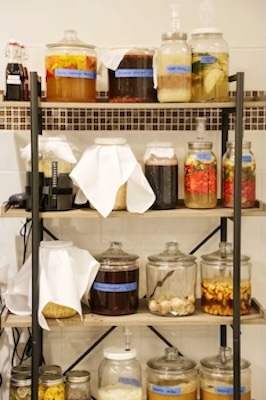
How is vinegar made at home today?
One can start with an alcoholic beverage, such as wine, and create an aerobic environment.
Adding a mother or an unpasteurized vinegar starts the acetification process.
A breathable material, such as a towel or cheesecloth, is often secured over the container of wine to allow for oxygen while preventing bugs and other bacteria from interfering with the process.
The liquid is kept in a dark, fairly warm environment (77 F), untouched.
For months, the Acetobacteraceae metabolizes alcohol into acetic acid and over time, the harshness reduces, producing an all-round mellow-flavored vinegar.
Making Vinegar at Home
Home vinegar production begins with an alcoholic liquid, such as wine or fruit wine. To encourage acetification, a small volume of unpasteurized vinegar or a mother of vinegar is added to introduce beneficial bacteria.
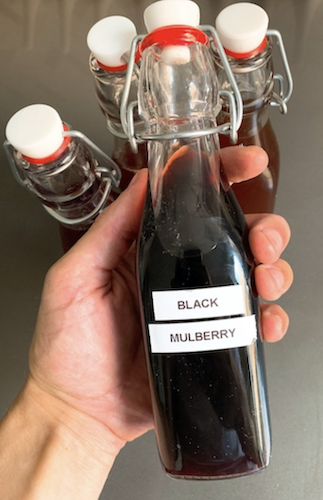
The liquid is placed in a container covered with breathable fabric, such as cheesecloth. This allows oxygen to enter while protecting the mixture from insects and contamination.
The container should be stored in a warm, dark place — ideally around 77°F — and left undisturbed for several months. During this time, Acetobacter bacteria convert the alcohol into acetic acid.
As the process continues, the sharp acidity gradually softens, producing a more balanced vinegar.
Experimenting with Fruit Vinegars
In my own experiments, I wanted to understand the process from the beginning, so I started by making fruit wines.
I tested a variety of fruits including apples, pineapple, blackberries and blueberries. My first attempts used wild fermentation, allowing naturally occurring yeast to convert sugars into alcohol. While this produced alcohol, the results were inconsistent and the flavors were often unpleasant.
To improve the process, I switched to a controlled approach using added yeast and measured sugar levels.
Learn More: How to Buy Balsamic Vinegar
Many fruits naturally produce alcohol levels that are too low for stable vinegar production. Apples may reach 5 to 6% ABV, but fruits like blueberries and blackberries may only reach about 2% ABV. To achieve a target of roughly 7% ABV, additional sugar often needs to be added.
Once fermentation reached the desired alcohol level, the mash was strained and gently heated to remove remaining yeast before beginning the acetification stage.
Basic method:
🫙Alcoholic Fermentation
- Wash and clean fruit, mash to a pulp.
- Add ⅓ volume of water.
- Add turbo yeast to specification per liter.
- Add pectinase to break down the fruit structure.
- Add sugar in two installments: ⅓ on day one and ⅔ on day seven.
- Calculate ABV to a desired 7%.
- If a higher ABV has been attained, dilute to 7%.
🫙Acetification
- Strain mash.
- Heat liquid to kill yeasts.
- Cool and back slop with 20% unpasteurized vinegar or a mother of vinegar.
- Cover jar with cheesecloth.
- Leave 2 to 3 months until flavor has mellowed.
- Test titration to ensure minimum 4% acidity.
- Strain again, bottle and store.
Using this method, fermentation began quickly and produced consistent results. Over time, the vinegar developed balanced acidity and aromatic fruit flavors.
Vinegar offers a fascinating look at fermentation science and the long history of food preservation. For cooks interested in exploring fermentation, making vinegar is a practical way to see how ingredients transform through time, microbes and technique.
Try more fermentation at home and explore food science in Culinary Arts.

More by Barry Tonkinson, VP of Culinary Operations


