

Celebrating Feast of the Seven Fishes? Here’s Your Guide to Buying the Best Fish

The Feast of the Seven Fishes is an Italian-American Christmas tradition centered on serving a variety of seafood dishes. For many home cooks, preparing multiple seafood dishes is intimidating — especially when there are seven on the menu.
The first step is sourcing. Knowing what to look for — and what to ask — when purchasing seafood is the best place to start.
ICE Lead Chef-Instructor of Online Culinary Arts & Food Operations Shawn Matijevich and ICE alum, former instructor and Top Chef finalist Adrienne Cheatham (who perfected fish cooking at Chef Eric Ripert’s three-Michelin-starred Le Bernardin) answered our top questions about shopping for fish.
How To Buy the Freshest Fish
Before the knives come out, there are a few steps to consider when cooking seafood. In ICE’s Culinary Arts program, students study how to assess the freshness of fish; review best practices for storing it; and practice cleaning and prepping a variety of fish, shellfish and crustaceans.
For a more topline guide to buying fish, Chefs Shawn and Adrienne shared their top tips here.
Where should I buy fish?
“I almost always go to a fish market so I can have a conversation and take a good look at the fish I'm buying,” says Chef Shawn. “I want to know where it came from [and] I want to have a good relationship with the person I buy from.”
How can I tell if fish is fresh?
“You need three of your five senses to check if any fish is fresh. You need to be able to touch it, smell it and look at it,” explains Chef Shawn.
- Smell: “The biggest clue is the smell — it should smell like the ocean, and there shouldn’t be any fishy smell whatsoever.”
- Touch: “When it comes to touch, when gently pressed on, the meat should bounce back and not leave an indentation.”
- Sight: “Visually, the fish should appear bright and moist.”
These signs don’t change based on the type of fish, so if you’re buying salmon, snapper or haddock — go forth!
Which red flags should I watch out for when buying fish?
“I always have a discussion with the fishmonger and ask when the fish came in and where it came from, if that's not listed. The biggest red flag is if they can't, or won't, share that with you,” warns Chef Shawn.
He also advises against pre-marinated fish. “I'm not saying this is always the case, but you can disguise fish that's on its way out with strong marinades. You also can't see the natural moisture content of the fish if it has been prepared in that way,” he says.
Chef Adrienne recommends looking for fish with a high turnover so you know it’s fresh. She cautions that if the store doesn’t sell a lot of that type of fish, chances are the selection might be a bit older.
What should I ask about the fish I’m buying?
“Ask when it came in, [and] ask where it came from,” says Chef Shawn “If you're unsure how to cook it, ask that too. The folks at the counter usually love to talk about their product.”
What cuts should I buy?
You can find a filet cut of almost any fish, from arctic char to trout, sea bass, striped bass and black bass. Many people opt for filets because they are quick and easy to cook, but Chef Adrienne recommends trying something new, like a whole fish, steak cut or fish collar.
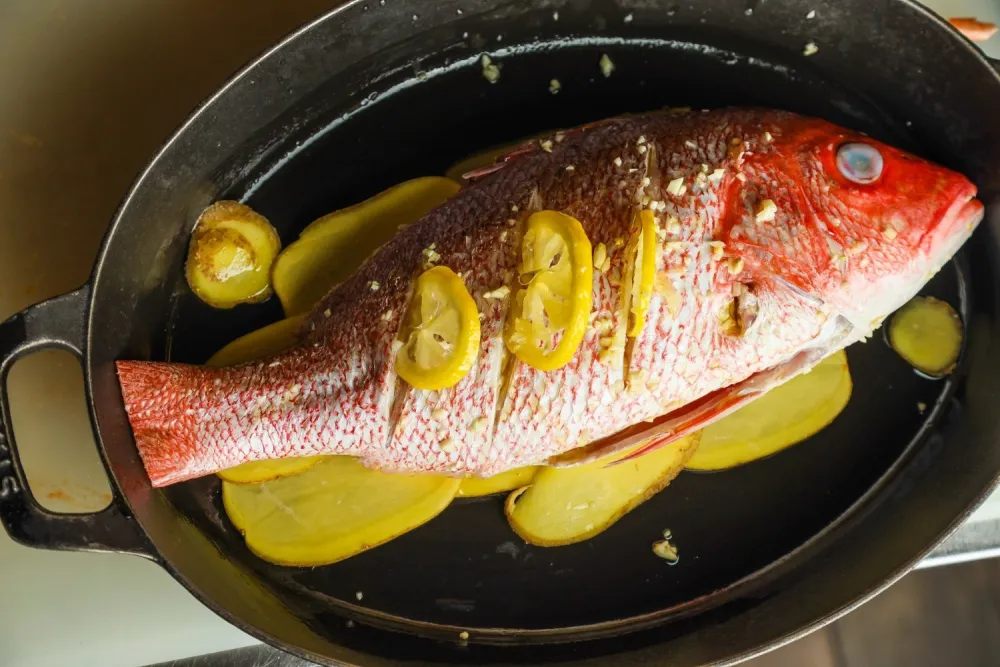
- Whole fish: Whole fish are forgiving because the bone protects the meat, so there is less risk of overcooking and drying out. “When the fish is finished cooking, the bone comes out easily, and you get a deep flavor,” says Chef Adrienne, who also recommends saving the head! “Fish heads have a lot of good flavor and collagen, and make great stews and soups, especially tomato-based soups,” she says. Good whole-fish options include porgy, branzino and red snapper.
- Steak cut: Steak cuts, like salmon steaks, are great cooked on a grill or a grill pan. “You want a fast, easy sear on a hot pan. Using the grilling technique, as opposed to sautéing, means you don’t have to worry about as much oil splatter or a residual fishy smell,” she says. (The oil holds onto the fish aroma, making it linger longer). You can also look for steaks of thicker white fish, like cod or halibut, which are best baked in the oven or poached.
- Fish collar: This lesser-known cut “has a ton of rich, fatty meat and isn’t very expensive,” explains Chef Adrienne. “Rub the fish collar with miso or oil and put it in the broiler for a few minutes until the outside is blackened and crispy, and the meat inside is nicely cooked and tender,” she says.
What should I do if my fish isn’t as fresh as expected?
“Always inspect your fish as soon as you can,” says Chef Shawn. “I know they wrap it at the market, but get it home and give it a good smell before you put it away. If it isn't fresh, take it back to the store. Don't repurpose it. If it's just a little fishy, you can make it into fish cakes, or something with a lot of garlic and lemon. But most times it’s not worth it,” he adds.
With the basics of buying fish on lock, you’re ready to prepare a memorable Feast of the Seven Fishes. We hope you enjoy the cooking and get to sit down with loved ones to savor the holiday. Buon appetito!
Recipe inspiration: