
Food Photography 102: Use These Angles to Level Up Your Images

Just like people, certain foods photograph better from certain angles — and knowing how to find them is a skill every culinary professional should develop.
“Before you even raise the camera, ask yourself what you want to highlight about a specific dish,” explains Anthony Leo, Assistant Director of Social Media at ICE. “Is it the layers? The symmetry? The height? The garnish?”
Examining how a dish is plated and answering these questions in advance can guide you to the best angle for capturing it.
In fact, there are many parallels between the art of plating and photography.
Just as students in ICE’s hands-on career training programs practice plating food to showcase balance, color, shape and texture — photographers use angles and composition to make these elements stand out.
For example, chefs often use leading lines (the real or implied lines in a photo that guide the viewer through the image) to guide the diner’s eye across a plate — a technique also used in photography. Just ask ICE alum and Executive Pastry Chef at three-Michelin-starred Le Bernardin, Orlando Soto. Take a look at how he incorporated leading lines in this plate of petit fours and composed desserts, in a photo he shared on Instagram.
Though there are countless photography principles surrounding angles and composition, we’ve distilled a few of the easiest — and most impactful — ways to elevate your pictures.
The 3 Most Flattering Angles for Food
Most dishes look best from one of three angles: overhead, side view or 45-degree.
Overhead
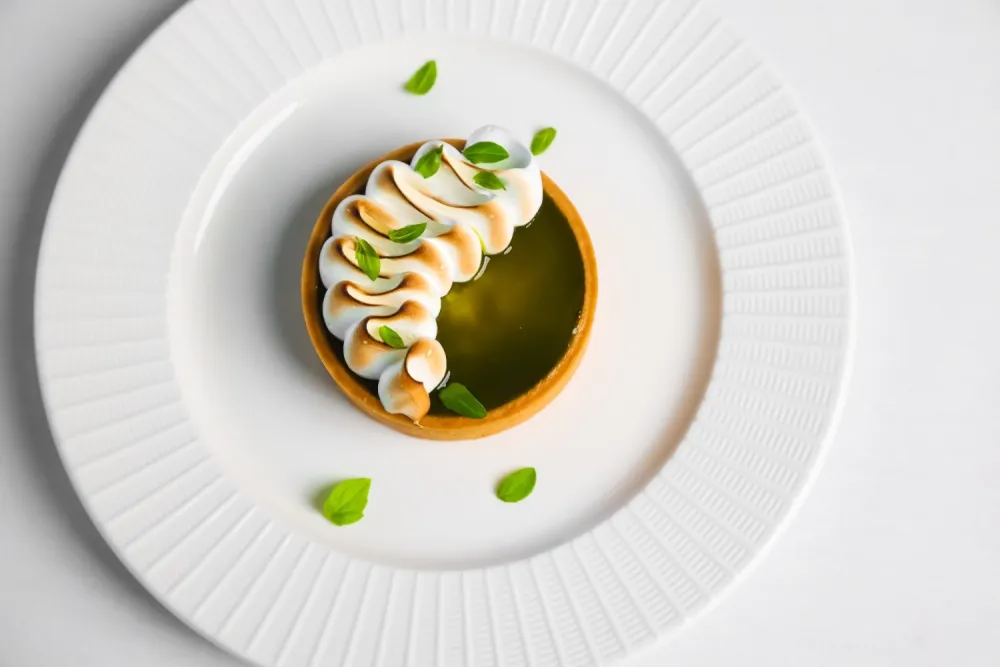
“Almost any dish will look good from an overhead angle,” says Leo. The top-down view is shot directly above the food and can be used to capture individual dishes or full tables, showing the whole plate or spread at once.
According to Leo, because this angle is great for highlighting symmetry, shapes and patterns, it works well for flat foods like pizza, soup or pie.

Side View
The side angle is captured by positioning the camera directly across from the food, which can showcase structure, height and layering.
“A burger photographed from above won’t show nearly as much detail as a shot from the side,” says Leo. An overhead angle will not capture a juicy hamburger patty dripping with melted cheese, stacked with crisp lettuce and bright red tomatoes between two buns. Leo recommends the side angle for foods like sandwiches, cakes and lasagna.
Side views also capture the background of the image, adding depth and context.
45-Degree Angle
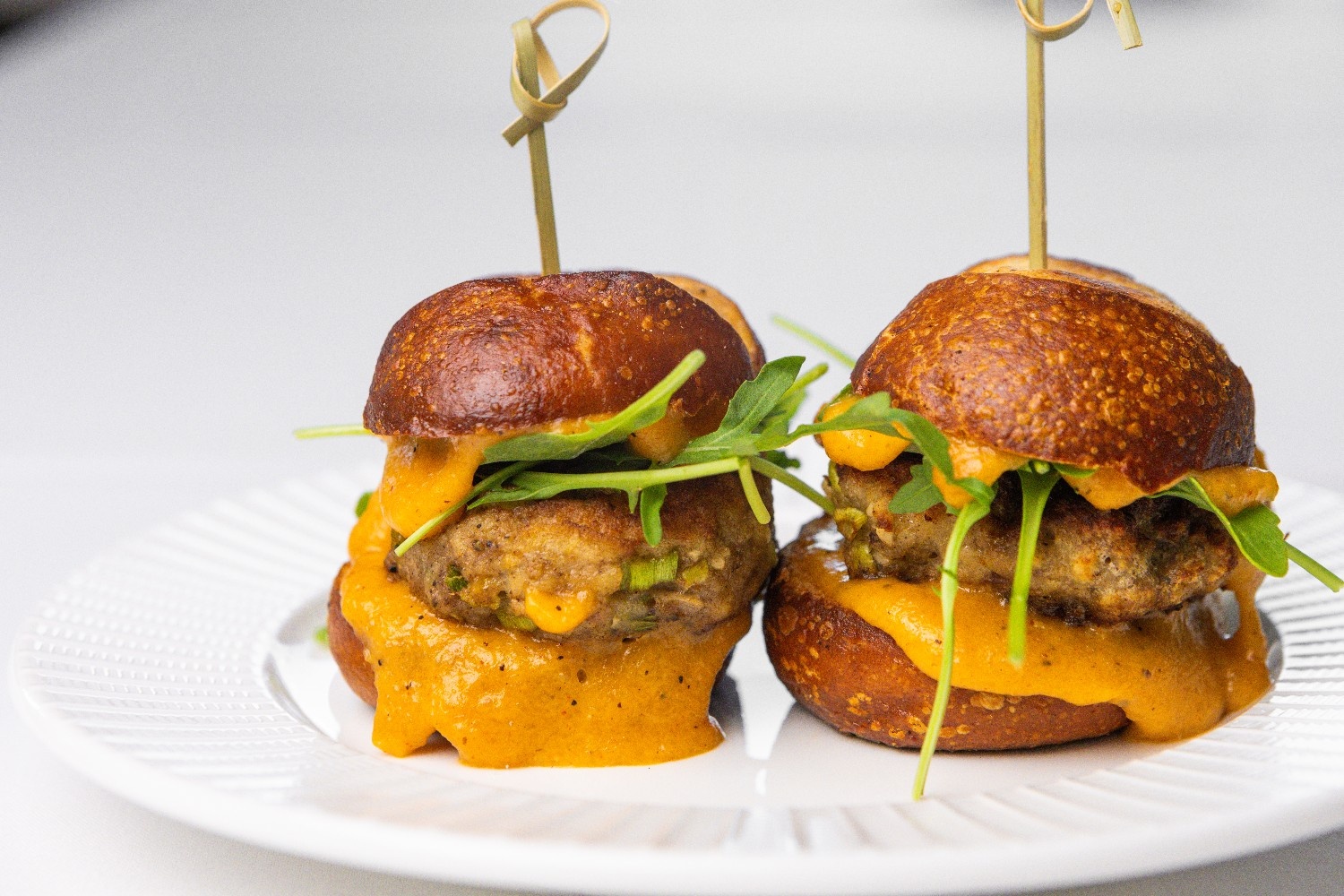
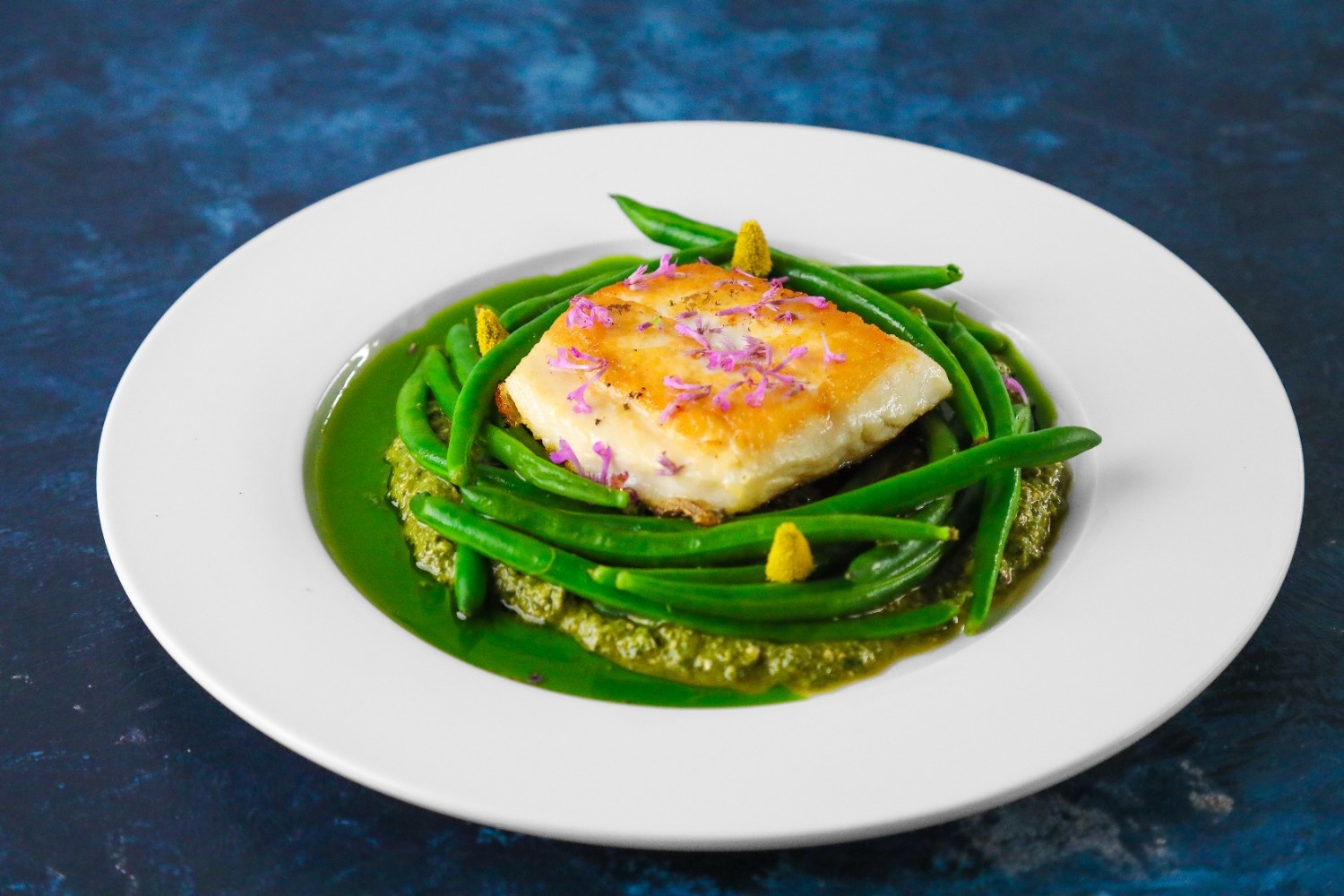
Taking a photo from a 45-degree angle provides a natural perspective as it mimics how diners view food on the table. It’s the middle ground between the overhead and side view, and works for a wide variety of foods. Like the side view, this angle also adds depth to the photo.
Rotate Between Angles
Leo recommends toggling between the different angles while photographing food. “Don’t just hone in on one; it’s easy to get stuck,” he warns.
Lastly, consider how you’ll be using the images and what orientation you need. Private chefs may want Instagram-friendly pictures that showcase their work, whereas culinary entrepreneurs (like ICE alum and Levain Bakery co-founder Connie McDonald) may need uniform images to include in websites and menus.
Composition Matters
Composition refers to how a photo’s visual elements are arranged. For culinary professionals who want their food to stand out, whether on a menu, website or on social media, here are two principles to keep in mind.
Set the Scene
Before you start clicking away, look at what is behind and around the plate. Remove dirty dishes, crumbs and other detritus that can detract from the photo.
You can also use props to set the scene and make photos feel more authentic. For Leo, shooting in ICE’s state-of-the-art kitchens in New York and Los Angeles conveys a professional kitchen environment. At home, he uses a wooden table to create a rustic vibe, or a marble countertop for something more modern.
Incorporate Leading Lines
Using the natural lines in food or creating them (with plateware and props) shows movement and guides the viewer’s eye across the picture. Examples include:
- Hors d'oeuvres placed in a circle on a plate
- Multiple plates arranged in a line
- A tray of salmon filets
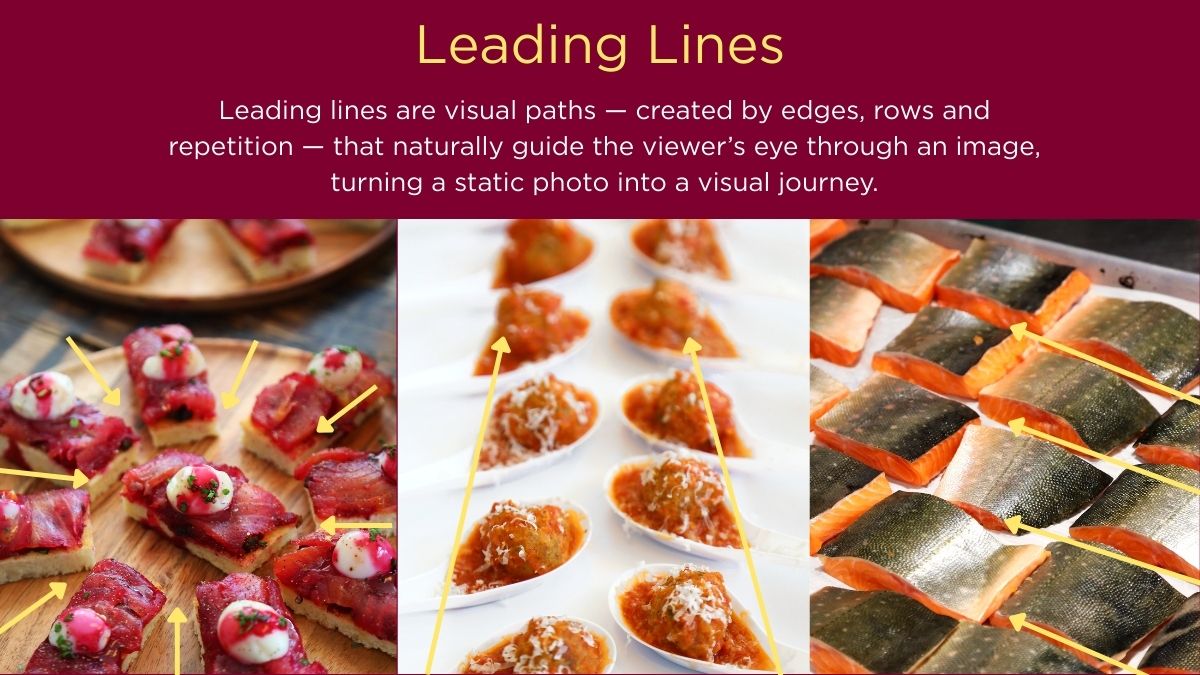
Incorporating leading lines can make photos appear more dynamic and interesting.
Break the Rules
There are no set rules in photography, and though the above tips can help elevate pictures, you don’t always have to follow them. Harsh angles, extreme close-ups and dramatic tilts can all make photos feel alive, as long as it’s done with intention.
Next in the series:adding motion to bring food photos to life.