
At LA’s Pijja Palace, Avish Naran Serves Slices of Indian-Spiced Heaven

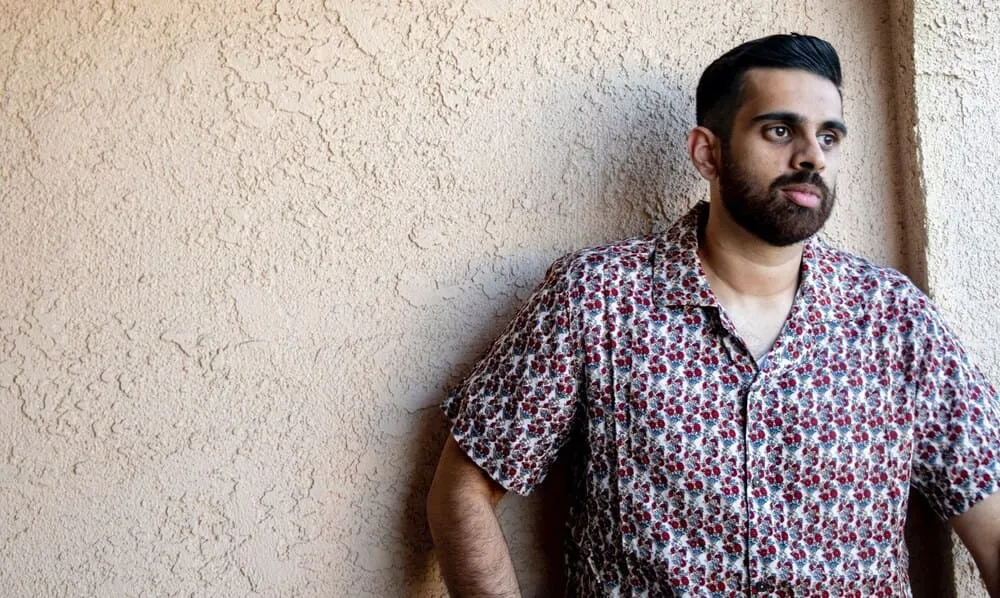
In 2025, the Institute of Culinary Education celebrated its 50th anniversary. To mark the occasion, we honored 50 distinguished alumni. Meet Avish Naran, the restaurateur behind Los Angeles’ genre-melding Pijja Palace. A graduate of the Institute's Restaurant & Culinary Management program, Naran combines business savvy with nostalgic Indian flavors and classic Italian fare — and serves them up with your favorite sports games on a TV behind the bar.
Avish Naran never set out to launch a viral restaurant. He just wanted to open a place that felt like home.
The Los Angeles native and graduate of the Institute's Restaurant & Culinary Management program opened Pijja Palace in 2022 following a simple revelation and several subsequent questions:
What if you could blend the energy of a sports bar with the flavors of Indian home cooking?
And what if the food was as craveable as it was personal?
And also, what if the whole experience felt like a place your friends and family could grow up with?
Two years on, Pijja Palace is a phenomenon. Named one of Bon Appetit’s Best New Restaurants in America and praised by the Los Angeles Times, it’s beloved by an LA fanbase that includes NBA stars, food writers, and the city’s most discerning diners.
It’s also profitable, a detail Naran doesn’t shy from. “I didn’t want to make something cool and close six months later,” he told GQ. “I wanted to make something cool that works.”
That balance of creative risk and business discipline is what sets Naran apart.
At Pijja Palace, his team serves dishes like malai rigatoni and green chutney wings in a room filled with flat screens and family photos. Together, the restaurant’s food and design reflect a career built on both operational savvy and culinary vision.
Naran developed the concept behind Pijja Palace while studying at the Institute's New York campus (before the program was offered at its Los Angeles campus), refining its business plan with the support of faculty and mentors.
“The Institute helped me articulate the vision and understand what it would take to get there,” he says.
After graduation, he worked front-of-house at the luxury steakhouse Pacific Dining Car and trained under chefs he idolized, gaining first hand experience in service, supply chains, and the human dynamics of running a kitchen.
For Naran, everything comes back to the idea of hospitality as storytelling.
“I want people to feel like they’re part of something when they eat here,” he says.
That vision, paired with real-world training and foundational business education, has helped him redefine what a sports bar can be.
In a recent conversation, we talked about how Pijja Palace came to life, the family recipes that shaped it, and what it takes to build a restaurant that’s both genre-defying and built to last.
* The following interview has been condensed and edited for clarity.
ICE: What do you consider to be your biggest professional achievement?
Avish Naran: A lot of people think it's the press or the accolades, or even the people I’ve gotten to meet. But the driving interest for me in becoming a restaurateur was building a legitimate business. We’ve been profitable every month since opening, even through things like the fires. That’s rare in this industry. It might seem like a silly metric, but profitability matters.
Also, my team’s happy, and we’re pushing boundaries, rethinking what a restaurant can be, and how management should work. My executive chef and managers have unlimited time off. Having a voice in this industry after being a fan for so long feels good.
ICE: Can you describe your creative process?
AN: A lot of third culture cooks get asked about our creative process, and for me, it just starts with how I grew up. My parents are immigrants from England by way of India, and we made meals out of what was accessible. We’d watch the game and eat Indian-style versions of American food — Indian pizzas, and spiced-up dishes.
That mindset of “anything can be Indianized” stuck with me. Then I went to culinary school and restaurant management school, and started thinking more critically about food, but kept it fun. Pijja Palace was actually the restaurant concept I pitched during the program at ICE.
ICE: To what factors do you attribute your success?
AN: I had great mentors and great teachers. I was inspired by people like Roy Choi, Eddie Huang, David Chang, and the team behind Animal, John Shook, and Vinny Dotolo.
When I was young and impressionable, I watched Vice’s Munchies channel and Chef’s Night Out. Those guys felt like superheroes to me. That lifestyle and approach to food influenced me.
ICE: What does a typical day look like for you? What do you love most about your work?
AN: These days I’m mostly taking care of my kid and checking in with managers. I don’t need to be in the restaurant every day because I’ve got a great team.
I’m focused on building out the next restaurant — dealing with contractors, real estate, and stuff like that. I don’t call myself a restaurateur anymore. I just do what I can to make money. But at the end of the day, it’s still a food business, and food is my favorite part.
I love working with food and serving people. I grew up in LA on the block where Pijja Palace is, and it’s a joy to do something here.
ICE: What would you say to people looking to follow a career path similar to yours?
AN: Ask a lot of questions. This industry is hard, but not because people are competitive. In my experience, everyone I’ve asked for help has given me honest answers. Be ready for feedback. Poke holes in your concept. Have a thick skin. Have a good story.
But also, there’s no one way to succeed. Restaurants can thrive even without a story. If it’s something you want to do viscerally, just go for it.
ICE: When did you realize you had a passion for food, and when did that turn into “I want to work in food?”
AN: My interest started with the Munchies channel. Then I worked at Pacific Dining Car, a steakhouse in LA. I had a great experience there, and that’s when I realized I wanted to do this for the rest of my life. I [decided to] go to culinary school after that, and the rest is history.
ICE: When you think of culinary school, what’s the first word that pops into your mind?
AN: Fun. Honestly, I had so much fun. I wasn’t good at school before, but I was genuinely interested in everything we were learning. It was a great time.
ICE: What made the Institute feel like the right fit for you?
AN: As someone who’s Indian, the pathway to becoming a chef wasn’t encouraged. My parents said, “If you’re going to do this, make it quick.”
I didn’t want to do a four-year program. The Institute offered a great program that got you ready fast.
At the time, there were a lot of culinary schools, but not many good business programs. ICE stood out because I had a lot of questions, and the program helped me find answers. Being in New York was great too. I had a ball.
ICE: Do you have a core memory from culinary school?
AN: Every day was a different hustle [so] it’s hard to pinpoint one moment. But the whole experience helped get me to where I am today.
ICE: Do you have a guilty pleasure food?
AN: I still like little kid food. Oreos, McDonald’s chicken nuggets, all the snacks. I’m a regular person. Pijja Palace isn’t some highbrow place. We make food for people: practical and tasty.
ICE: Conversely, is there a food or ingredient that no matter how hard you’ve tried, you just don’t like?
AN: Tripe. I’ve never been into it. It’s in a lot of dishes like menudo and pho, but I just don’t get it.
ICE: What did you learn at the Institute that helped you, specifically, at the start of your career?
AN: Before ICE, I was just a cook. I had never looked at a P&L. The program opened up a whole new world, understanding staffing models, legal issues, and all the non-food stuff that matters in restaurants. It helped me realize what I didn’t know.
ICE: How was the student-to-real-world transition for you?
AN: Easier, because I understood more. Education gave me context.
ICE: Who inspires you?
AN: The same folks I mentioned before: Roy Choi, Eddie Huang, David Chang, John Shook, Vinny Dotolo. I got to meet all of them through Pijja Palace.
John gave me a full-on business lesson after a conference. Eddie came in early to eat and has been like an older brother. I was even on David’s podcast. It’s been awesome.
ICE: Let’s talk mentorship. Who mentored you, and how do you pass it on?
AN: No one’s asked me that before. I still feel like I’m learning. But I know if I text any of those guys with a question, they’ll respond right away. There are so many great business minds in this industry who’ve helped guide me. I’m super grateful.
ICE: Is there any single lesson that you learned at the Institute that you still use in your work today?
AN: I still use the pro forma spreadsheet from my instructor, Vin McCann. It’s a great tool to plug in projections, check averages, covers, and so on, and see if a concept makes sense.
ICE: Do you have any advice for people considering culinary school?
AN: Some people say just jump into the industry. For me, culinary school helped. It wasn’t as intense as going straight into a kitchen. You’re not thrown into the fire.
QUICKFIRE QUESTIONS
Favorite kitchen tool? Vitamix.
Salty or sweet? Salty.
Favorite food holiday? Thanksgiving.
Favorite food city? New York.
Cook, bake, eat?... in order of preference? Cook, eat, bake. (Pastry school didn’t stick.)
Favorite cuisine? Indian. It’s what I know, love, and do.
Go-to “easy” recipe? Malai rigatoni, vodka sauce, Indian spices. It’s ridiculously easy.
Go-to “wow” recipe? Baby back ribs, long-smoked.
Most-used non-pantry ingredient? Vinegar. I’m big on acidity.
Favorite food season? Football season.
* Experience varies by student, with outcomes contingent on factors including graduate aptitude, job market, place of residence and work history, among others.