
[VIDEO] From ICE to Icon: Tour NYC’s Le Basque with Vegan Chef Guy Vaknin

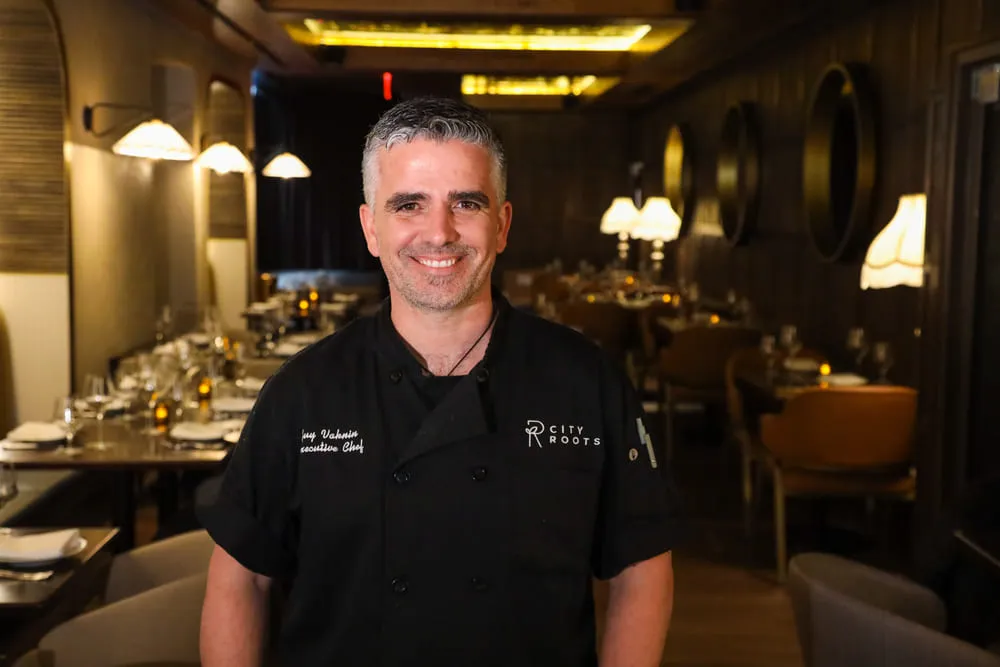
To celebrate 50 years of ICE, we’re honoring 50 distinguished ICE alumni. Meet Chef Guy Vaknin, a 2007 Culinary Arts program graduate; a "Hell’s Kitchen" and "Shark Tank" contestant; and the founder of City Roots, a vegan restaurant group with more than seven beloved restaurant concepts in its portfolio.
Welcome to another episode in our exclusive “From ICE To ICON: My Restaurant Story” YouTube series.
In this video, the third in the series, Chef Guy Vaknin pulls back the curtain on his vegan empire — specifically, the philosophy, design and operation of his popular Le Basque restaurant in New York City.
Located a short train ride from ICE NYC’s Brookfield Place campus, the vegan Spanish-French restaurant provides safe haven from the hustle and bustle of the city.
Raising the Bar
“The vibe at Le Basque is more refined than most of our restaurants,” says Chef Guy. “Every detail has been meticulously chosen.”
The first “detail” — and one that Chef Guy says is crucial to the success of any NYC restaurant — is the bar.
“That’s your welcome area, that’s the first thing you see when you come in, and it’s the first impression that you get of the restaurant. We wanted the bar to complement the restaurant and the region that it comes from.”
Complementing the restaurant means serving drinks like the croissant cocktail and other beverages made of liquors infused with house-made cashew cheesecake and strawberry — no animal products included.
“All of these [concepts] are pushing the boundaries of what plant-based is.”
At Le Basque, the bar’s colors, cocktails and setup are an invitation to an experience that is simultaneously elegant and approachable — like dining at your very chic neighbor’s house.
A Design “Movement”
As with all his restaurants, Chef Guy’s wife and sister designed Le Basque’s guest areas — and they had movement on their mind. There's a golden shimmer on the walls, and the second floor is crowned by a skylight and chandelier whose plush feathers float and sway in a state of suspended stasis.
Of the seating, Chef Guy says, “I wanted to create a room with loveseats where you look outward into the dining room versus at each other.”
The goal was people watching, like “the little cafes in France where you can sit outside on the sidewalk,” he says.
The effect is thoughtful, curated and deliciously evocative, just like Le Basque’s food.
“All the details in the restaurant really matter,” he says.

The Cornerstone of Culinary… But Plant-Based
“City Roots’ mission is rewriting what plant-based cuisine and plant-based food is about,” says Chef Guy, whose goal is "making it region-specific, country-specific, cuisine-specific and … delivered at a high level.”
At Le Basque, one part of that cuisine is French.
“French cuisine has been at the core of everything I learned — all the way back to ICE,” he says. “I believe it’s the cornerstone of all culinary.”

Le Basque’s kitchen reflects this respect for French cuisines, as well as for authentic Basque flavors — the restaurant imports all of its olive oil and almonds from Spain — and the unique conditions required for executing them in a plant-based format.
“Thinking about the menu and building the kitchen at the same time, knowing that we were going to do fresh bread, baguettes, brioche, sourdough,” says Chef Guy, “was an advantage.”
Becoming
City Roots launched seven years ago with a 320 square foot location comprising 12 seats and a counter. (That was the first of what would become two Beyond Sushi locations.) Fast forward to 2025, and the company’s 300-ish employees feed roughly 1,000 people per day.
“We go through a tremendous amount of food,” says Chef Guy, “which is a great indication [of] the interest that there is in plant-based cooking.”
As to what he learned at ICE, Chef Guy touts his ability to understand both sides of the restaurant business: the menus and culinary components, but also the money, operations, buildout and management.
“It’s an advantage,” he says simply.
For a full tour of Chef Guy’s Le Basque restaurant, including his top tips and takeaways from culinary school (for example, how different foods react to different cooking techniques) and a recipe for his popular mushroom paella recipe — wherein he employs king oyster mushrooms to replicate calamari and scallops — watch the above video.
* Experience varies by student, with outcomes contingent on factors including graduate aptitude, job market, place of residence and work history, among others.