


In restaurant kitchens, nothing goes to waste. Chefs maximize each ingredient, using leftover peels, stems and bones in soups, stocks and even beverages before anything is discarded.
I’m nearly two weeks into my journey to create zero food waste in January, and surprisingly, it’s going well. I expected to be throwing out a lot more food. There have been a few losses — like what to do with the food my toddler refuses to consume. (I don’t yet have an answer, other than compost.)
But, there have also been some unexpected wins, like an amazing facial scrub I made from coffee grounds and eggshells. Plus, dinner time is no longer a rotation of the same couple dozen dishes. Everyone in my family is pretty happy. The biggest secret to my success? My freezer.
The Unsung Hero of My Kitchen
A while back, I contributed to a great article by Marian Bull for Bon Appétit, “The Right Way to Freeze Basically Everything.” In short, I am obsessed with my freezer — I cannot emphasize that enough. Truly obsessed.
Before my family goes out of town, I freeze anything that might not last until our return. That might mean tossing a whole chicken I didn’t have a chance to roast into a freezer bag.
It could also mean putting a half-full gallon of milk directly into the freezer, plastic jug and all.
Before we left for our Christmas vacation, I asked my husband to clean out the fridge. Upon returning two weeks later to brown, slimy spinach, I sadly asked, “Why didn’t you freeze that?”
He thinks I’m a neurotic food hoarder, but really, I just hate seeing good food get dumped. As the Bon Appétit article indicates, you can freeze anything. So, if you notice something in your fridge inching closer and closer to its expiration date, do something about it! Eat it or freeze it.
Kitchen Sink Stock
What about kitchen scraps? Sure, you can compost them. But why not put them in the freezer? Each time I prepare a meal, I toss all my vegetable and meat scraps into freezer bags — everything goes in, from garlic and onion skins to herb stems and kale stalks.
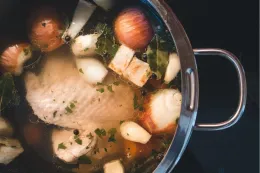
Once I have two gallon-sized freezer bags stuffed full, I make stock. I call it my Kitchen Sink Stock. It might have a variety of meat bones (chicken, pork, beef). It might also have veggies that most people wouldn’t add to stock, like broccoli stems and bell pepper seeds. But I don’t mind.
I toss it all into my pressure cooker and cover it with water. 20 minutes later, I have great stock. If it tastes too much like bell pepper to use for cauliflower soup, I use it for bean soup. If it’s not as flavorful as I’d like, I use it for cooking rice or couscous.
I’m sure some chefs will read this and weep, as stock making is a time-honored tradition and the backbone of many cuisines. (Making stock is, in fact, a foundational skill students practice in the Culinary Arts and Health-Centered Culinary Arts programs at ICE. As they hone their knife skills on onions, carrots and celery, as shown in the video below, those items are added to stock.)
But in my case, I just want to avoid spending money on store-bought stock — and cut down on food waste in my own home.
Once you’ve made Kitchen Sink Stock, try these thrifty, crowd-pleasing dishes that put it and other food scraps to good use.
Ingredients
Cream of Stem Soup
Yield: 6-8 servings
- 1 pound broccoli stems, chopped
- 1 pound cauliflower stems, chopped
- 2 tablespoons olive oil, plus more for garnishing
- 1 onion, chopped
- 2 stalks celery, chopped
- ½ stick unsalted butter
- 6 cups Kitchen Sink Stock
- 1 cup cream
- dash or two of nutmeg
- salt & pepper, to taste
- Parmesan cheese (optional)
Savory Mushroom Stem & Stale Bread Pudding
Yield: 10-12 servings
- 1 pound stale bread, cut into 1-inch cubes
- 1 large onion, finely chopped
- 3 stalks celery, thinly sliced
- 2 cloves garlic, minced
- 1 tablespoon fresh thyme leaves
- ¾ stick unsalted butter
- 1 pound mushrooms, sliced with entire stem intact
- 1 bunch kale, chopped
- ¼ cup Kitchen Sink Stock
- ¼ cup fresh parsley, finely chopped
- 2 cups heavy cream
- 2 cups crème fraiche or sour cream
- 8 large eggs
- 2 teaspoons salt
- 1 teaspoon ground black pepper
- ½ cup grated Parmesan or Gruyere cheese
Directions
Cream of Stem Soup
- Preheat oven to 425°F. Toss broccoli and cauliflower stems in olive oil, salt and pepper. Spread on a baking sheet and roast until golden brown and caramelized. Set aside at room temperature.
- In a large pot, sauté onion and celery in butter until translucent and tender. Add roasted veggies and stock, then cover and simmer 10 minutes.
- Working in batches, transfer the mixture to a blender and purée until completely smooth. (Do not fill the blender completely full and be sure to hold the top on with a kitchen towel to protect your hands — the steam from the hot liquid can push the lid off.)
- Return mixture to pot and stir in cream and nutmeg. Season with salt and pepper to taste. Serve warm, with freshly grated parmesan cheese and a drizzle of olive oil, if desired.
Savory Mushroom Stem & Stale Bread Pudding
- Preheat oven to 375°F. Lightly coat a 9 x 13-inch glass baking dish with butter.
- Place bread cubes in a large mixing bowl.
- In a large skillet, sauté onions, celery, garlic and thyme in butter until translucent and tender. Add mushrooms and sauté until tender and light golden brown. Add kale and stock, then cover and cook 2 minutes. Remove lid and cook until liquid has evaporated. Remove from heat and stir in parsley. Add sautéed vegetables to bowl with bread and stir to combine.
- In a second large bowl, whisk cream, crème fraiche and eggs until smooth. Add mixture to bowl of bread and vegetables and stir until combined. Add salt and pepper and mix well. Allow mixture to sit at room temperature 10 minutes, stirring occasionally.
- Pour mixture into prepared baking dish, sprinkle with cheese and bake until golden brown and slightly puffed, about 1 hour.
- Let stand 15 minutes to cool slightly before cutting and serving.