
The Secret Sauce: What to Look for When Hiring Restaurant Staff


It’s easy to overlook the obvious when writing a job description.
Like most employers, restaurant operators craft detailed job descriptions and create interview checklists. However, they often ask prospective employees the wrong questions, screen for the wrong skills and prioritize criteria that don’t actually predict success.
So while the process feels organized, it’s often misguided, leaving employers surprised when the hire doesn’t work out.
This happens because a résumé can tell us where someone has worked, but it can’t tell us how they show up — and in hospitality, the gap between a good hire and a great one is often behavioral (versus technical).

Experienced operators know to look beyond credentials and focus on patterns.
How, for example, does a candidate talk about challenges? Do they take ownership? Are they curious or just compliant? These signals tend to surface early — and they’re far more predictive than a list of skills.
➡️ Post a job listing to hire ICE alumni.
Job postings often include requirements like these (from a New York City restaurant):
- Familiarity with POS systems such as Micros, Aloha, Posi Touch or Rpower
- Strong food and beverage knowledge (wine knowledge a plus)
- Ability to upsell
- Awareness of guest needs on the floor
- Flexible scheduling, including nights, weekends and holidays
- Attention to detail in service and table maintenance
- Basic understanding of polishing, marking and table upkeep
- Ability to lift up to 50 pounds
Now ask yourself this: Which of these “skills” can’t be taught? The answer, of course, is “almost none of them.” POS systems can be learned in a day. Menus can be taught in a week. Upselling can be trained. Polishing a table? That’s not a long learning curve.
One exception is awareness.
You can teach someone to scan a room — but you can’t always teach them to notice what matters. Some people see it immediately. Others never do. That’s the difference between learned skill and instinct.
If you're hiring kitchen and FOH teams, skip the “Years of Experience” and look for these eight non-negotiable traits instead.
The Traits That Matter Most
- Curiosity
- Perception
- Energy
- Enthusiasm
- Drive
- Ambition
- Problem-solving
- Conflict resolution
Most of these can’t be manufactured, and yet, they’re the traits that define success in hospitality.
The strongest teams are built on people who can read a room, anticipate needs and adapt in real time. Awareness, presence and mindset aren’t bullet points — they’re instincts shaped over time.
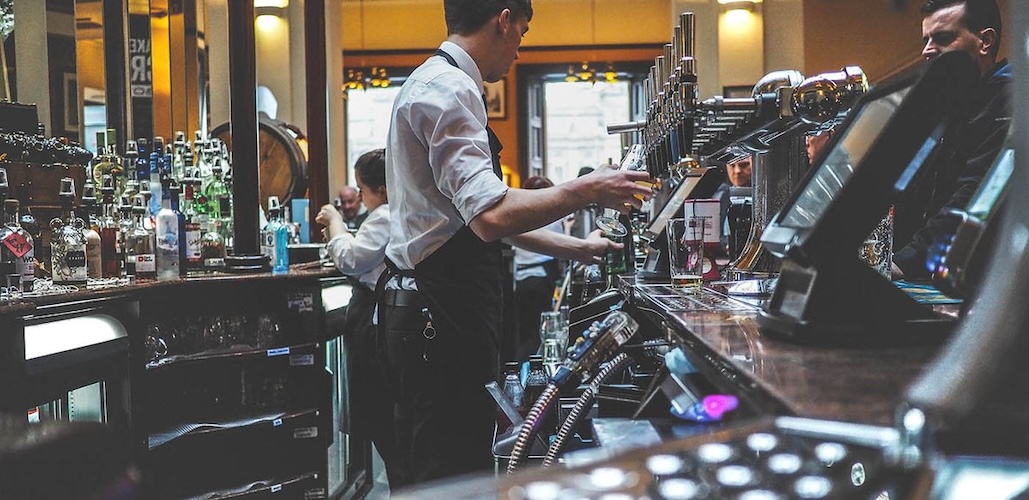
A technically skilled hire who lacks awareness or drive doesn't just underperform, they impact service, team dynamics, and ultimately, the guest experience. In an industry where every interaction counts, these gaps reveal themselves quickly.
The best operators hire for traits then train for skill. They build teams around people who elevate the environment, not just execute tasks. Because when you get the instincts right, everything else becomes easier to teach and far more likely to stick.
Ultimately, rethinking how you hire isn’t lowering the bar — it’s raising it.
🍴 Ready to scale your hospitality career? Dive into restaurant staffing, HR, and essential business skills in our Restaurant & Culinary Management program.